Key takeaways
- Identify the moisture source: outside water, slab vapor or condensation.
- Test the slab in several spots before choosing a floor.
- Fix liquid water problems before any flooring goes down.
- Porcelain tile on an uncoupling membrane is one of the most durable options.
- Check LVP moisture ratings and avoid hardwood on a damp slab.
Finishing a basement floor is one of the most common flooring projects in the Wilmington area, and it's also where the wrong material fails fastest. A slab that looks dry in March can be damp by August, when humid air meets cool concrete. Older homes often have no vapor barrier under the slab at all, and some have seasonal water that shows up only after heavy rain.
Porcelain tile is one of the most forgiving choices for these conditions, but it isn't automatic. The slab has to be tested, water problems handled, and the right setting materials chosen. This guide covers each step in the order it should happen.
Where basement moisture comes from
Moisture in a basement floor usually comes from one or more of three sources, and they call for different fixes.
Water from outside
Rainwater that pools against the foundation, clogged or short gutter downspouts, and yards that slope toward the house all push water into the basement. In older Wilmington neighborhoods with stone or block foundations, water can come through the walls and run across the slab at the base. This is liquid water, and no flooring should go down until it's controlled.
Vapor through the slab
Concrete is porous. Ground moisture moves up through the slab as vapor, especially in houses built before plastic vapor barriers under slabs became standard. The floor may never look wet, but trap the vapor under a non-breathing floor or a rubber-backed rug and it condenses.
Condensation from humid air
Delaware summers are humid. When warm, moist air reaches a cool concrete floor, water condenses on the surface the way it does on a cold glass. This is why many basements feel damp and smell musty in July and August even without any leak. A dehumidifier addresses this directly.
Test the slab before choosing a floor
A quick first check is the plastic sheet test: tape a square of clear plastic to the slab on all four edges and leave it for a day or two. Moisture under the plastic points to vapor coming up through the slab. Moisture on top points to condensation from the room air. This test is rough, but it tells you which problem you have.
For a more reliable reading, flooring installers use calcium chloride tests or in-slab relative humidity probes, following ASTM test methods. Many flooring and adhesive manufacturers state maximum moisture levels for their products, and their warranties may depend on meeting them. It's worth testing in more than one spot, since moisture often varies near walls, drains and cracks.
Look for other clues too: white powdery deposits on the concrete (efflorescence), rust marks under old furniture legs, peeling paint on the slab, or old tile that has popped loose. Each one is evidence of moisture moving through the concrete.
Fix water problems first
Flooring is not a waterproofing system. If water enters the basement as liquid, whether through walls, cracks or at the cove joint where wall meets floor, deal with that before any finish goes down.
Often the fixes are outside and simple: clean gutters, extend downspouts well away from the house, and regrade soil so it slopes away from the foundation. Some homes need more, such as a sump pump, interior drainage, or crack repair. Those are separate specialties, and a basement waterproofing contractor can assess them.
Once liquid water is under control, run a dehumidifier through a full summer if you can. A basement that stays at a reasonable humidity level is a better environment for any flooring and for the things you store there.
- Gutters clean and downspouts extended away from the foundation
- Soil and paving sloped away from the house
- Active cracks and wall leaks addressed
- Sump pump working, if the house has one
- Dehumidifier running during humid months
Why porcelain tile works in damp basements
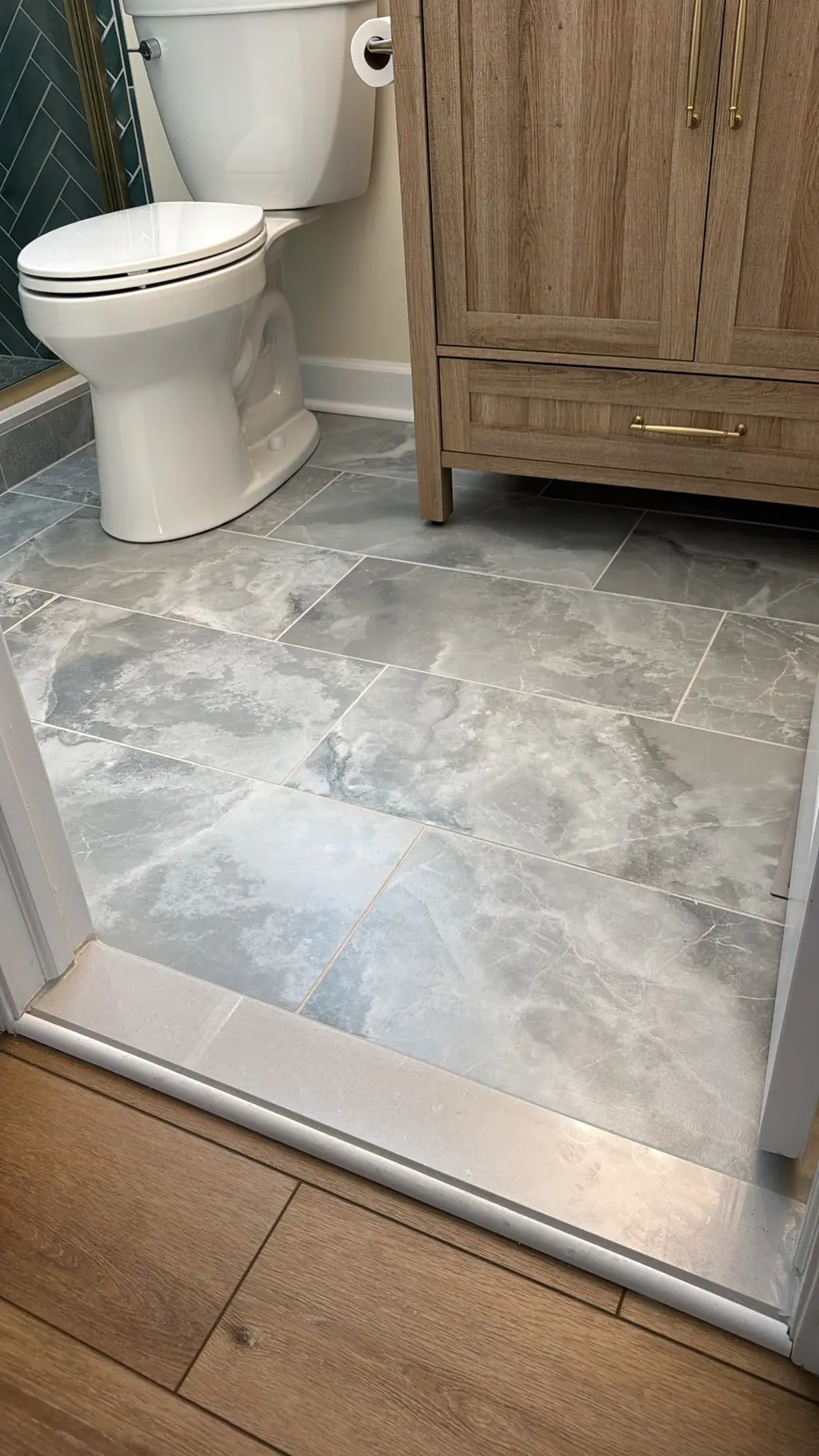
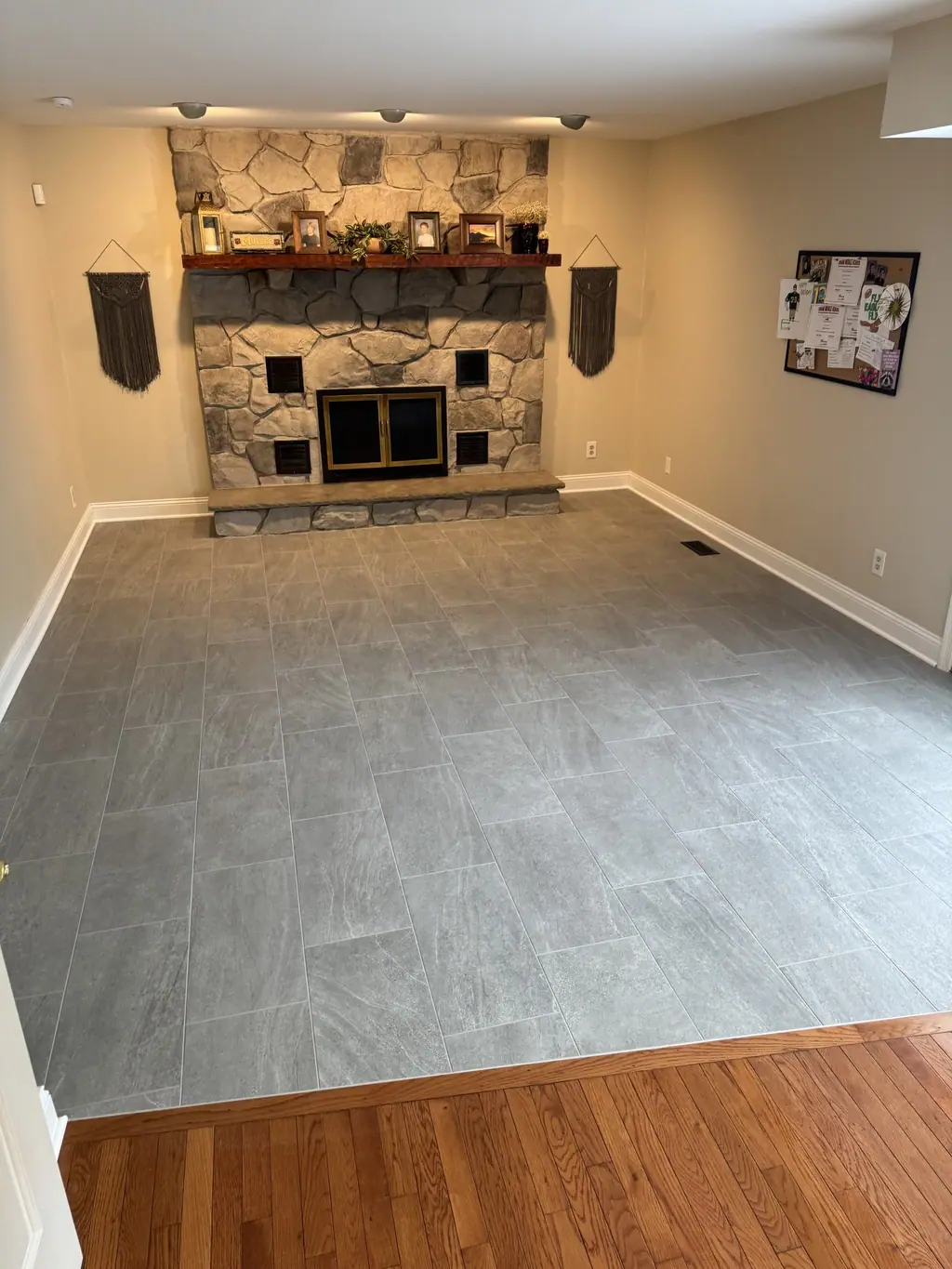
Porcelain tile absorbs very little water, doesn't rot, doesn't feed mold and isn't damaged if it gets wet. Set in cement-based thinset directly on concrete, it lets the slab breathe instead of trapping vapor under a sealed layer. That makes it one of the most durable basement floors available.
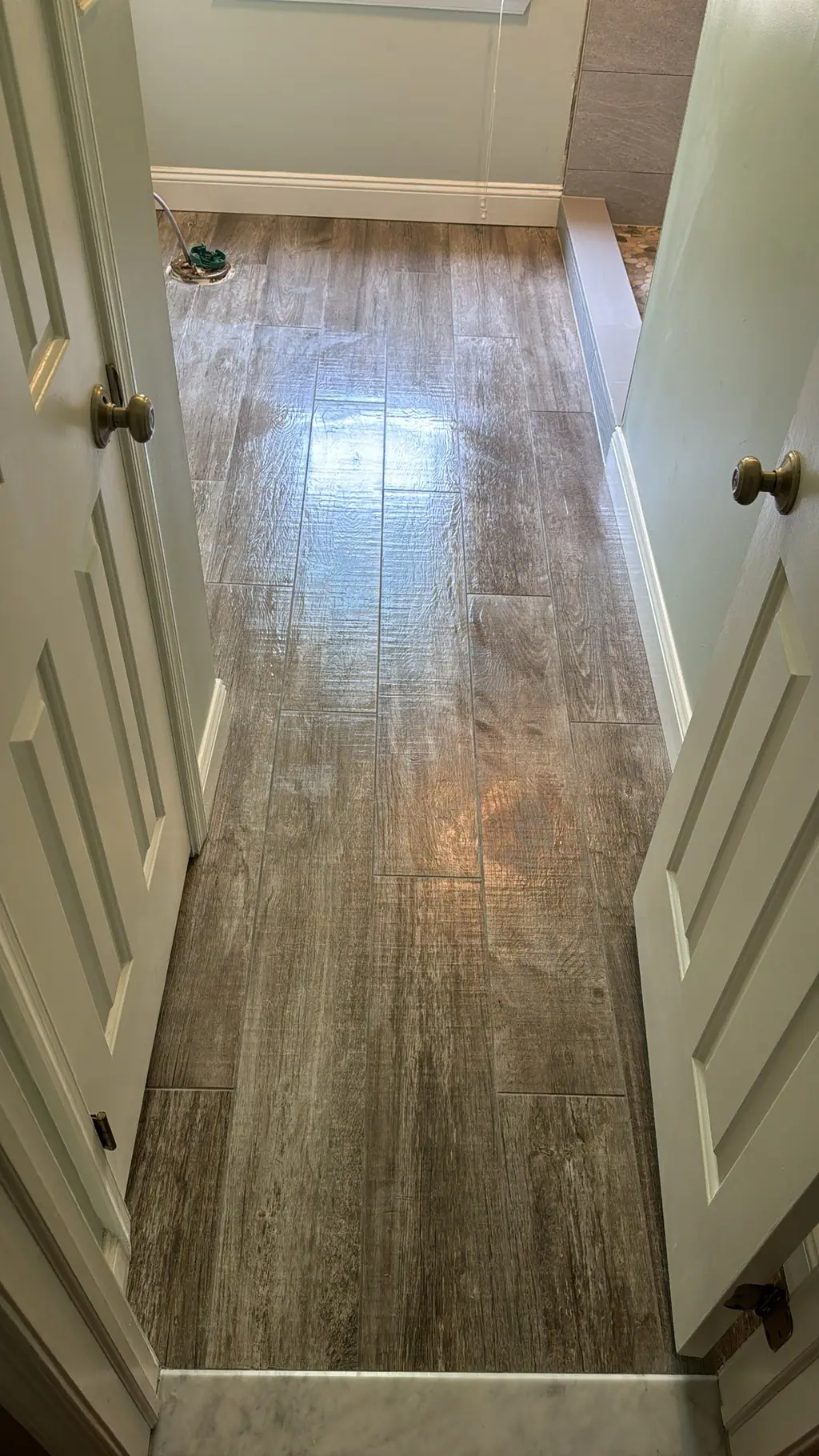
Ceramic tile works too, but porcelain is denser and more resistant to chipping, which matters in a basement that doubles as a workshop, laundry or kids' play area. Wood-look porcelain planks are a popular way to get the look of hardwood without the moisture risk.
The trade-offs are comfort and warmth. Tile on a slab feels cold underfoot for much of the year. Area rugs with breathable backings help. Electric radiant heating mats under tile are another option, and they need a dedicated circuit installed by an electrician.
Setting materials and membranes
How the tile is set matters as much as the tile itself. Concrete slabs crack, and old basement slabs often have several cracks already. An uncoupling membrane between slab and tile lets the slab move slightly without cracking the tile above it. Some membranes also act as a vapor management layer.
The thinset should be suited to the tile size and the membrane manufacturer's requirements. Large-format tiles need a flat slab, and basement floors are rarely flat, especially near floor drains where they were sloped on purpose. Self-leveling compound can flatten low areas, but it has to be compatible with the moisture levels in the slab.
Movement joints are easy to skip and important not to. Tile needs soft joints at the perimeter and at intervals across large floors, following industry guidelines. Without them, expansion can cause tile to tent or crack.
What about luxury vinyl plank?
Some rigid-core luxury vinyl plank products are rated for basement slabs, and they install faster and feel warmer than tile. Read the manufacturer's moisture limits and underlayment requirements closely. Vinyl itself tolerates water, but a floating floor can trap moisture beneath it, which can lead to odor or mold if the slab is damp.
Hardwood and standard laminate are not good choices on a basement slab in this climate. Engineered wood is sometimes marketed for basements, but it still reacts to humidity.
Planning a basement floor in the Wilmington area
A basement floor project usually starts with a look at the slab, the walls and the grading outside, then a moisture test. From there, the choice between tile and a rated vinyl product becomes clearer.
F2 Home Improvement installs porcelain tile, luxury vinyl plank and uncoupling membranes as part of our flooring installation work in Wilmington. If you have a basement you're ready to finish, contact us and we'll come look at the slab with you.
Frequently asked questions
Can tile go directly on a basement slab?
It can, if the slab is sound, flat enough and free of active water. Many installers still use an uncoupling membrane over older slabs because it keeps existing and future cracks from telegraphing into the tile.
Should I paint or seal the slab before tiling?
Paint and many sealers prevent thinset from bonding and should be removed. Some membranes are designed to go over slabs with moisture, but coatings and sealers should only be used if the tile and membrane manufacturers approve them.
Will a dehumidifier alone solve a damp basement floor?
It handles condensation from humid air, which is a big part of the problem in Delaware summers. It won't stop water leaking in from outside or vapor coming through the slab, so check for those too.
Planning a flooring installation project in Wilmington?
Get a free in-home estimate from F2.