Key takeaways
- Porcelain absorbs 0.5 percent or less water and is the safest choice for wet floors.
- Ceramic is well suited to walls; check ratings before using it on wet floors.
- Natural stone works in wet rooms if sealed and maintained.
- Look at wet DCOF and finish, not just looks, for slip resistance.
- Tile is not a waterproofing layer; a membrane behind it is.
Tile is the go-to finish for rooms that get wet, but not all tile behaves the same once water is involved. Two tiles that look nearly identical in a showroom can differ a lot in how much water they absorb, how well they hold up to foot traffic and how slippery they get when wet.
In a humid area like the upper Chesapeake around Elkton, where basements and crawl spaces stay damp through the summer, these differences show up faster. This guide covers the three main tile families, the ratings printed on the box, and how to match them to specific rooms.
Porcelain, ceramic and natural stone at a glance
All three can work in a wet room. The question is where, and with how much care.
Porcelain
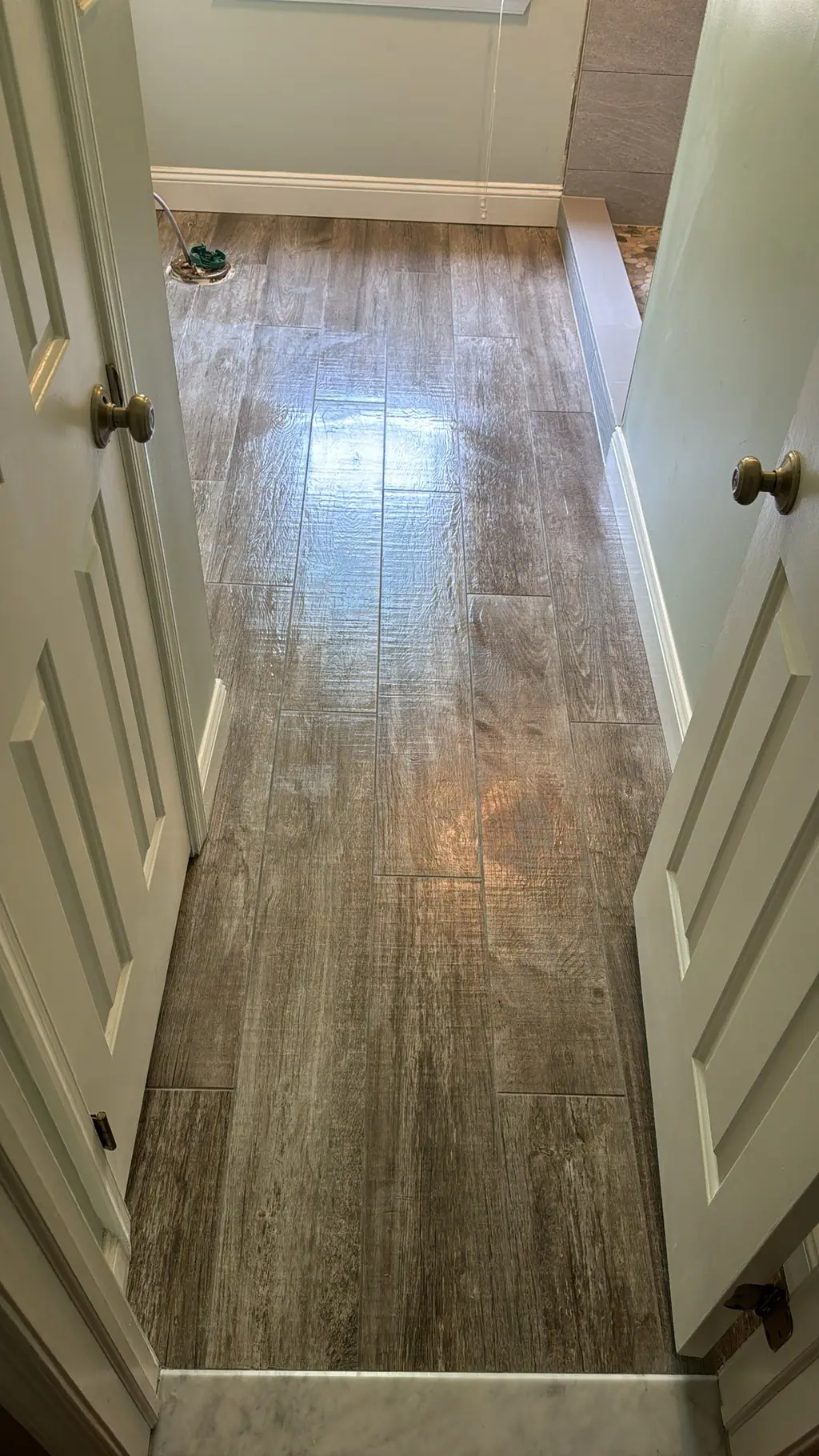
Porcelain is made from refined clay fired at high temperature, which produces a dense body that absorbs very little water. Under the ANSI A137.1 standard, a tile must absorb 0.5 percent or less of its weight in water to be called porcelain. Many porcelain tiles are through-body or color-body, so a chip shows less. It is the safest all-around choice for shower floors, bathroom floors, entries and basements.
Ceramic
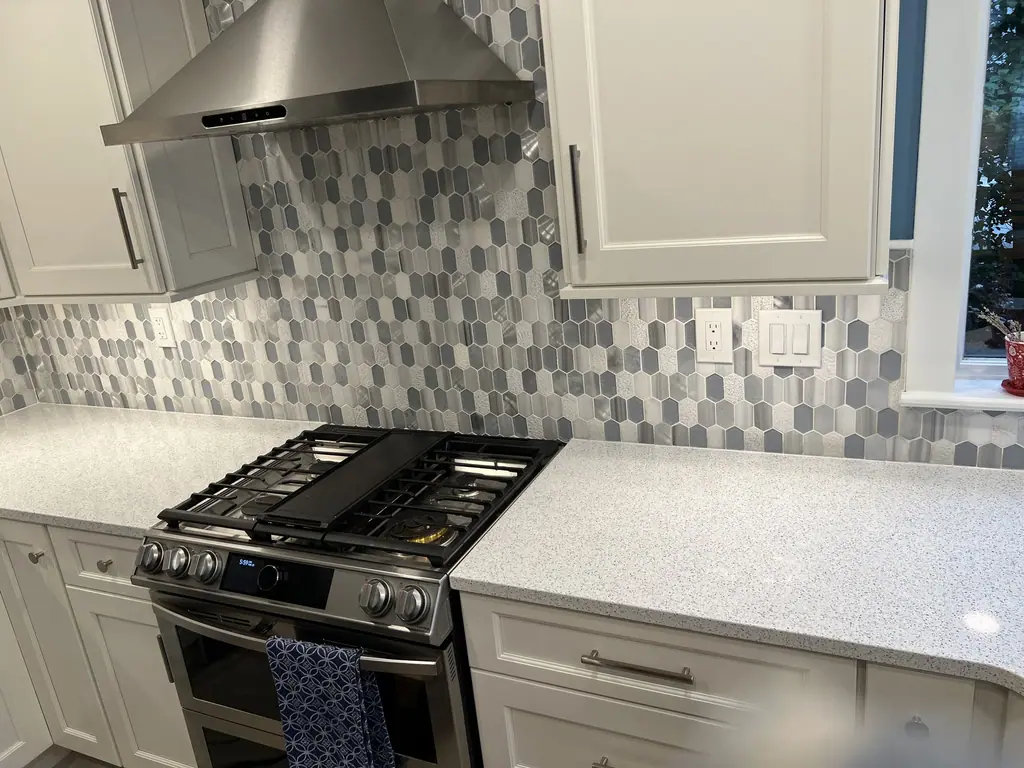
Ceramic tile has a softer, more porous body under a glaze. The glaze keeps the surface from absorbing water, but the body behind it can take on moisture at chips and cut edges. Ceramic is a good, cost-effective choice for bathroom and shower walls and for backsplashes. For floors in wet areas, check its absorption and wear rating before committing.
Natural stone
Marble, travertine, slate and limestone vary widely. Dense stones like many granites and slates absorb little. Marble, limestone and travertine are more porous, stain more easily and can be etched by acidic cleaners. Stone can work in a bathroom if it is sealed and maintained, but it asks more of the owner than porcelain does. Iron-rich well water, common in parts of Cecil County, can leave rust-colored stains in lighter stones.
Water absorption: the number that matters most
Water absorption is measured as a percentage of the tile's weight. Tile is grouped into four classes based on that number. The lower the absorption, the better the tile handles wet areas and freeze-thaw exposure.
- Impervious: 0.5 percent or less. Includes porcelain. Suited for showers, floors and exterior use in most cases.
- Vitreous: more than 0.5 up to 3 percent. Good for most interior wet areas.
- Semi-vitreous: more than 3 up to 7 percent. Better kept to walls and dry floors.
- Non-vitreous: over 7 percent. Wall tile for dry or lightly splashed areas.
Absorption is not waterproofing
Even impervious tile does not make a shower waterproof. Grout joints let water through to whatever is behind them. The tile's absorption rating tells you how the tile itself behaves; a membrane or pan behind it keeps the wall and floor dry. Both matter.
PEI rating: will the surface wear through?
The PEI rating describes how well a glazed surface resists wear from foot traffic. It applies to glazed tile only. Unglazed porcelain doesn't carry a PEI rating because the color runs through the body.
In general terms, lower classes are meant for walls or bare-foot residential floors, middle classes cover most residential floors including kitchens and entries, and the highest classes are meant for heavy commercial traffic. For a bathroom floor, a mid-range rating is typically plenty. For a mudroom or entry that sees boots, sand and gravel tracked in from the yard, lean toward the higher end of the residential range. A high PEI number doesn't make a tile better in every room; it just means the glaze is harder.
Slip resistance and DCOF
Slip resistance for tile is commonly reported as DCOF, the dynamic coefficient of friction. ANSI A137.1 sets a minimum wet DCOF of 0.42 for level interior floors expected to be walked on when wet. It's a useful floor for comparison, but it's measured in a lab, and real-world grip also depends on soap, oils and how the floor is cleaned.
A few practical rules help more than the number alone:
- Smaller tiles on shower floors give more grip because the grout joints add texture underfoot.
- Matte, honed or textured finishes are safer than polished in wet rooms.
- Polished marble and glossy ceramic are best kept to walls.
- In entries and mudrooms, a textured porcelain plus a mat at the door works well.
- For aging-in-place bathrooms, pair a slip-resistant tile with a curbless or low-curb shower.
Matching tile to specific rooms
Here's how these ratings translate into choices for rooms that see water.
Shower floors and walls
Porcelain floor tile in a small format or with a textured finish, or larger tile with a linear drain. Walls can be porcelain, ceramic or sealed stone. Everything goes over a waterproof membrane.
Bathroom and laundry floors
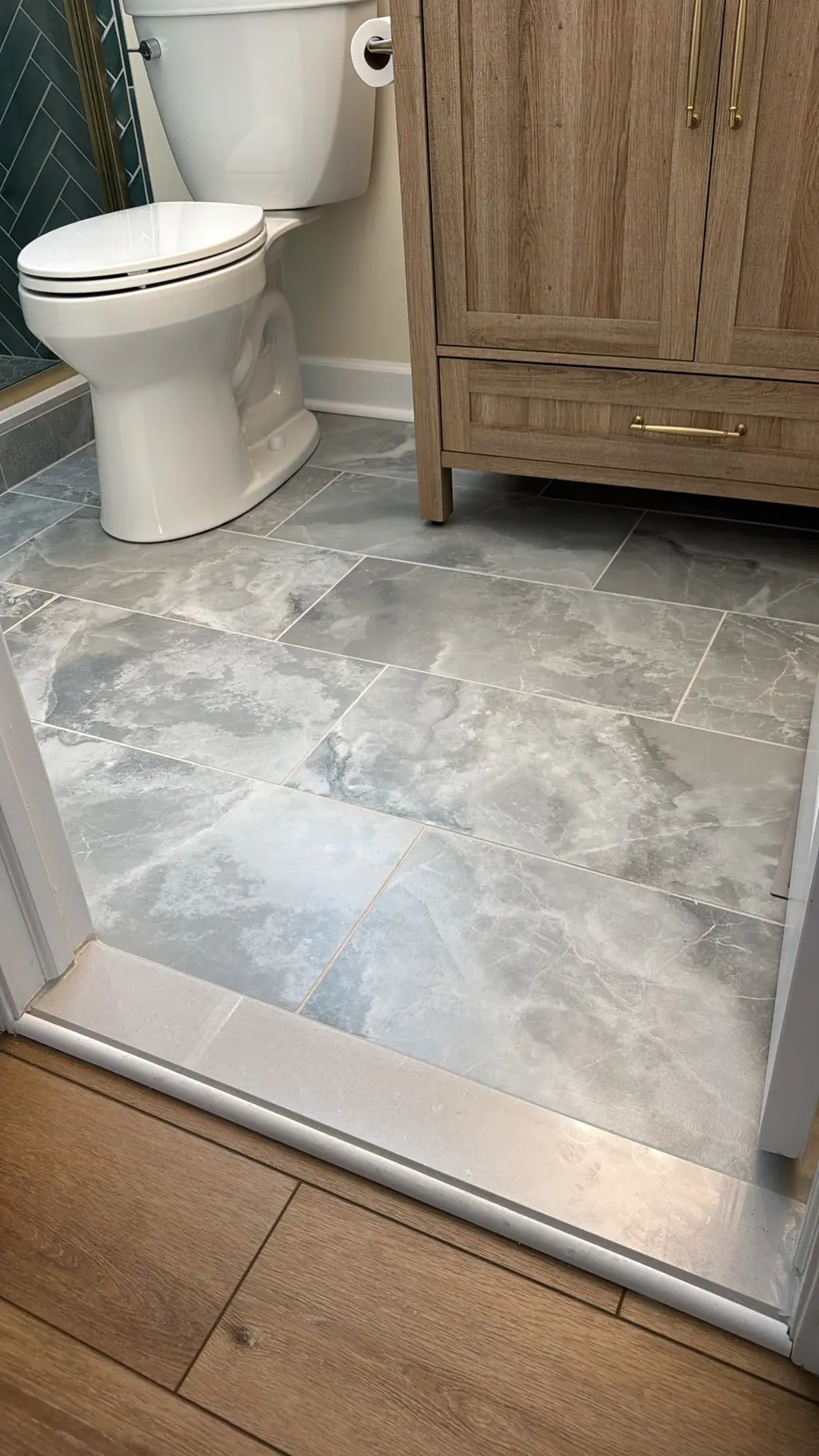
Porcelain with a mid-range PEI rating if glazed, and a matte or lightly textured finish. Laundry rooms benefit from the same approach since washer leaks happen. An uncoupling membrane under the tile helps on wood subfloors.
Mudrooms and entries
Through-body or color-body porcelain handles sand, grit and wet boots. Darker, varied colors hide dirt between cleanings. On properties near the water or with gravel drives, this makes a real difference.
Basements
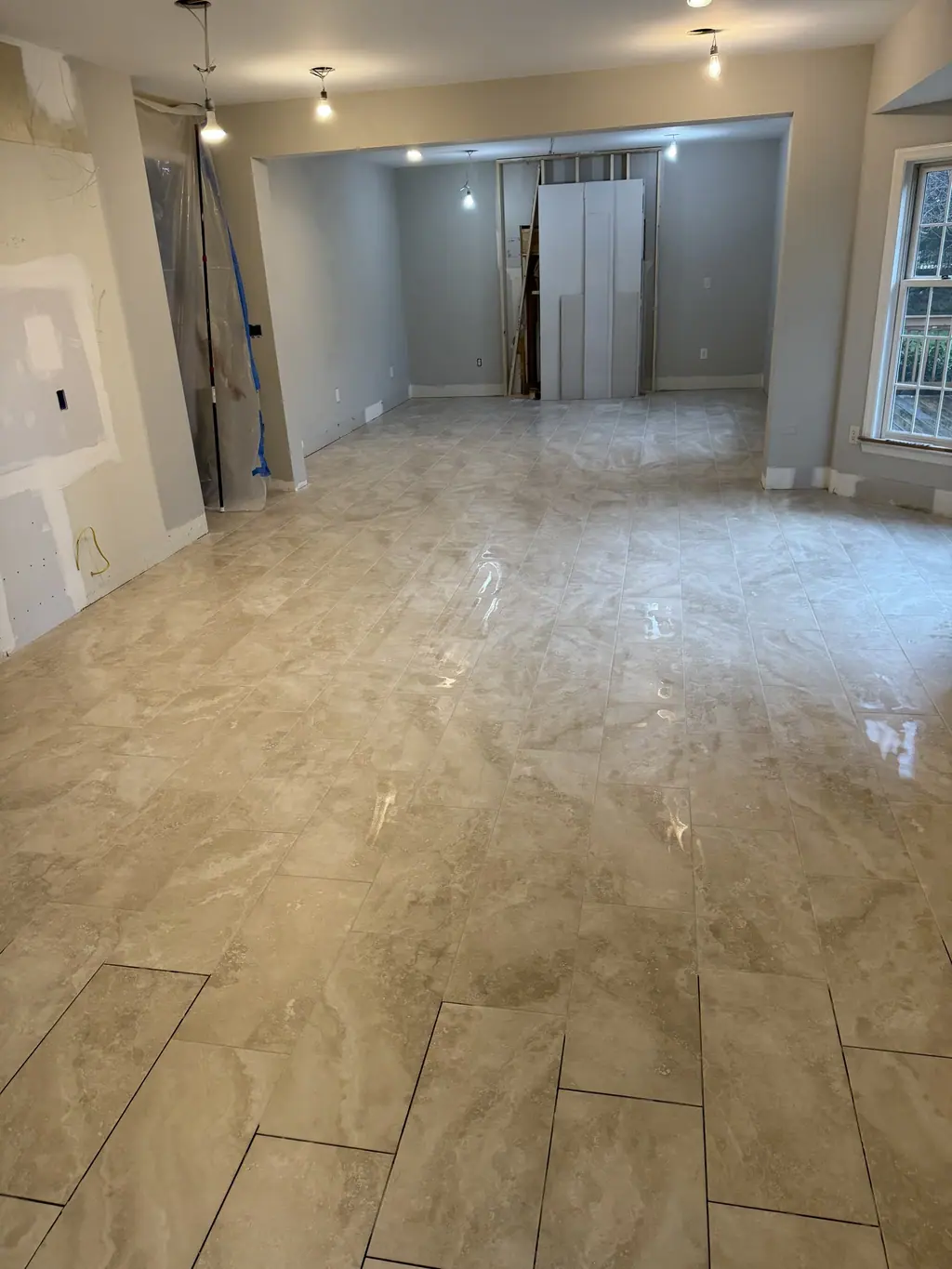
Porcelain set with a suitable thinset over a clean slab, often with an uncoupling membrane to handle minor slab movement. Test the slab for moisture first; tile tolerates damp better than most floors, but standing water still points to a drainage problem to fix first.
Installation details that make tile last
The best tile fails if the installation is weak. Floors need to be stiff and flat, especially for larger tiles, or grout will crack and tiles can pop loose. Thinset has to cover the back of the tile fully in wet areas, which usually means back-buttering. Movement joints are needed at perimeters and changes of plane, filled with flexible sealant rather than grout.
Grout choice matters too. Cement grout needs sealing to resist stains. Pre-mixed urethane and epoxy-type grouts resist staining better and suit bathrooms with iron or hard well water.
If you're planning new tile in Elkton or elsewhere in Cecil County, F2 Home Improvement does flooring installation in Elkton, MD and tile work for bathrooms in the Elkton area. Contact us to set up a free estimate.
Frequently asked questions
Is porcelain always better than ceramic?
For wet floors and exterior use, porcelain is usually the better choice. For walls, ceramic performs well, costs less and is easier to cut. Many bathrooms use both.
Can I use polished tile on a bathroom floor?
It's possible, but polished finishes get slippery when wet. A matte, honed or textured finish is safer on bathroom and laundry floors.
Does natural stone need sealing every year?
It depends on the stone and how the room is used. Porous stones like marble and travertine in showers need resealing more often. A simple water-drop test shows when the sealer is wearing off.
Will tile work in a damp basement?
Porcelain handles damp conditions better than wood or laminate. Test the slab for moisture first, and fix any active water entry before installing any floor.
Planning a flooring installation project in Elkton?
Get a free in-home estimate from F2.