
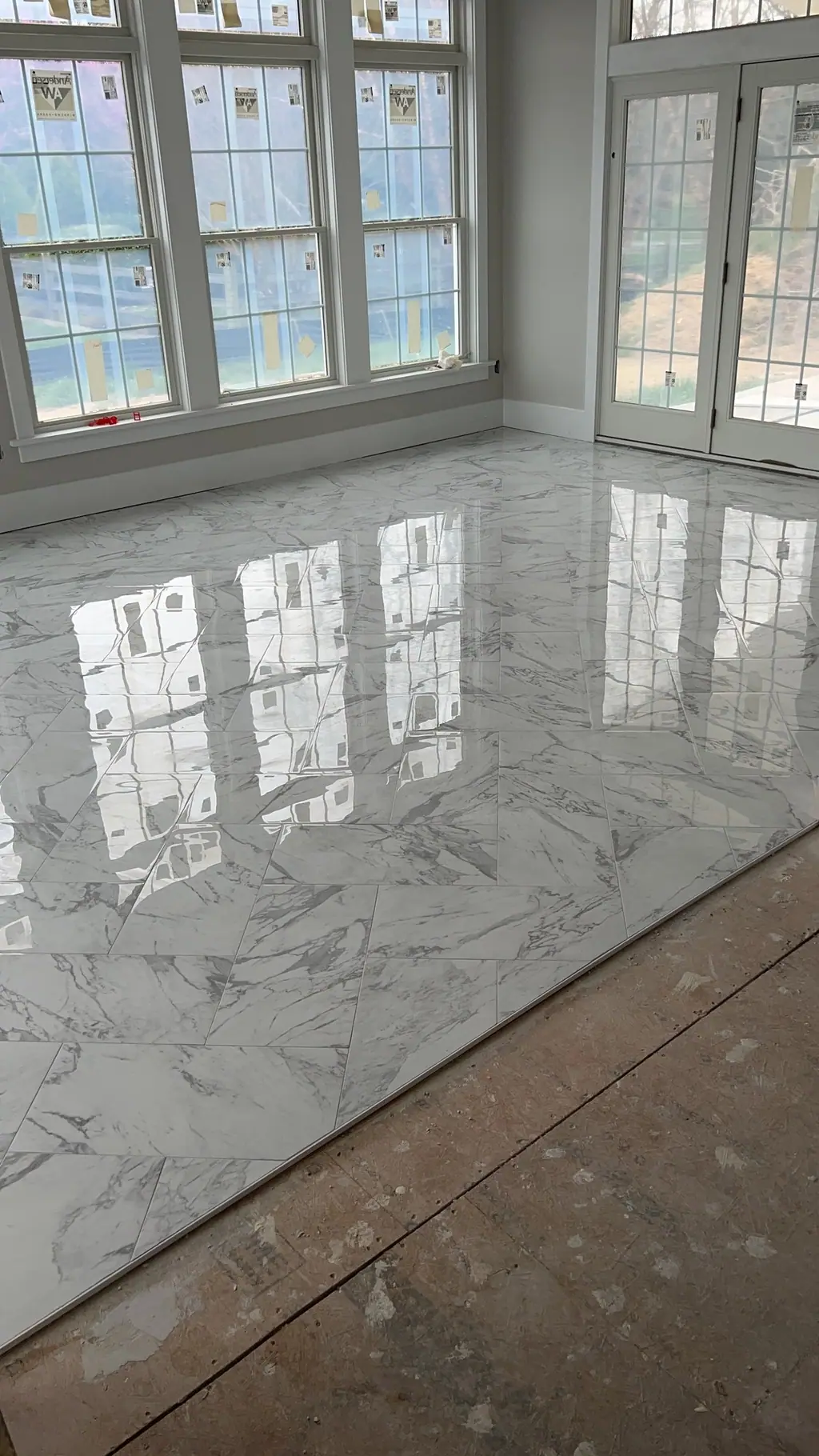
Flooring installation is where F2 Home Improvement began. The company started as F Tile in 2019, and the crew has more than ten years of experience setting floors. We install tile, luxury vinyl plank (LVP) and hardwood for homeowners in Greater Philadelphia, Delaware and northeastern Maryland.
A floor is only as good as what is under it. Tile cracks when joists deflect, LVP telegraphs every dip in the subfloor, and hardwood cups over damp basements. Most of the work that makes a floor last happens before the first tile or plank goes down: checking the subfloor for flatness and stiffness, fixing squeaks, and choosing the right underlayment or membrane.
We give free in-home estimates. We look at the rooms, check the subfloor and talk through which material fits how you use the space, then provide a written scope.
Signs it's time for new floors
- Cracked tiles or grout lines, especially cracks that run across several tiles in a line.
- Floors that bounce, squeak or slope noticeably between rooms.
- Carpet in kitchens, baths, entries or basements where it traps moisture and stains.
- Worn-through finish on hardwood or laminate that is peeling at the seams.
- Vinyl that is lifting, bubbling or curling near exterior doors and appliances.
- Mismatched flooring from past repairs that you want to replace with one continuous floor.
What our flooring installation includes
Old floor removal
Taking up tile, vinyl, carpet or wood down to the subfloor, and hauling the debris away.
Subfloor repair and leveling
Replacing damaged plywood, adding screws to stop squeaks, and using self-leveler where the floor is out of flat.
Uncoupling membranes and underlayment
Uncoupling mats under tile to absorb movement, and the correct underlayment or vapor barrier under LVP and wood.
Tile floors
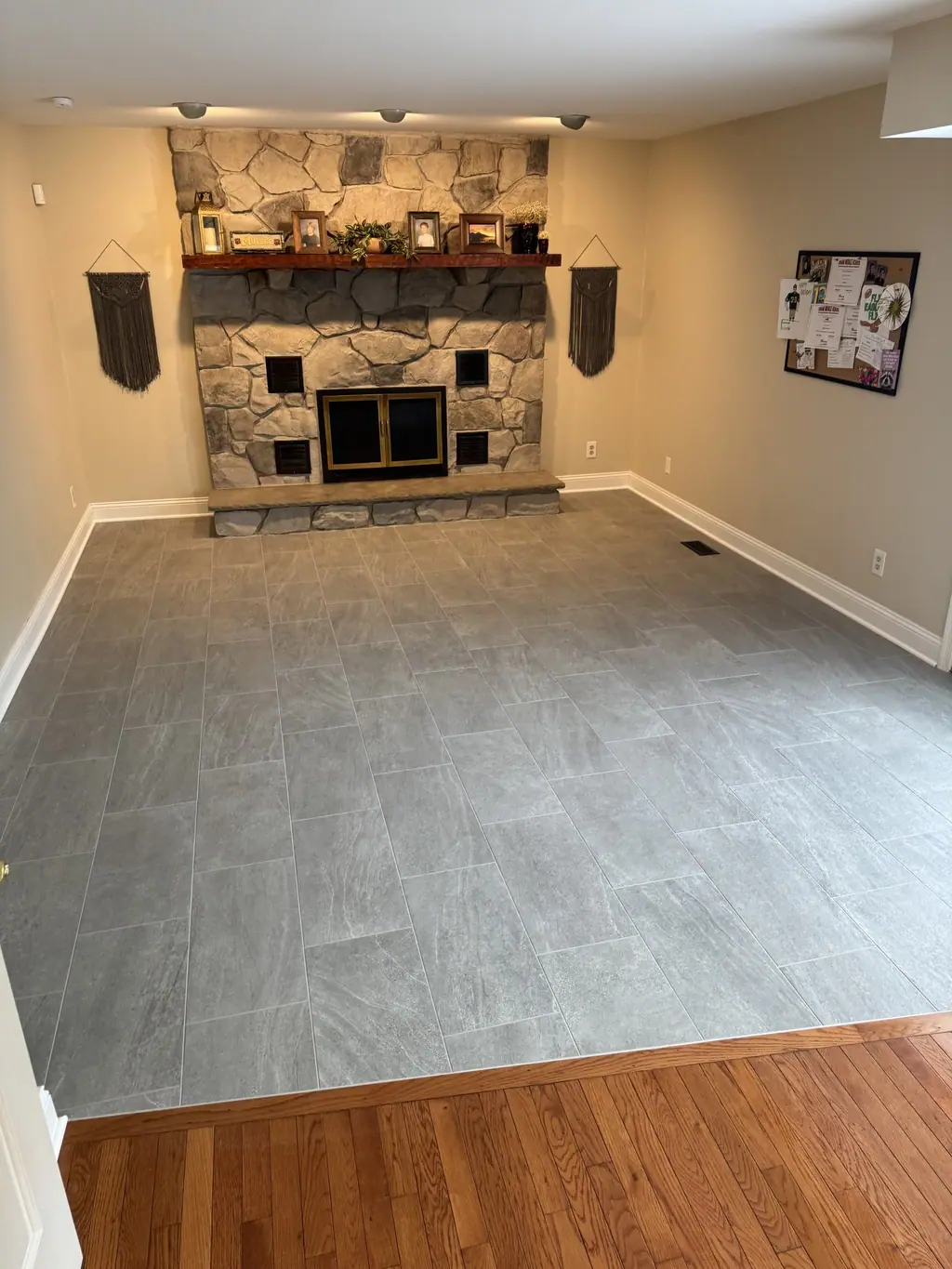
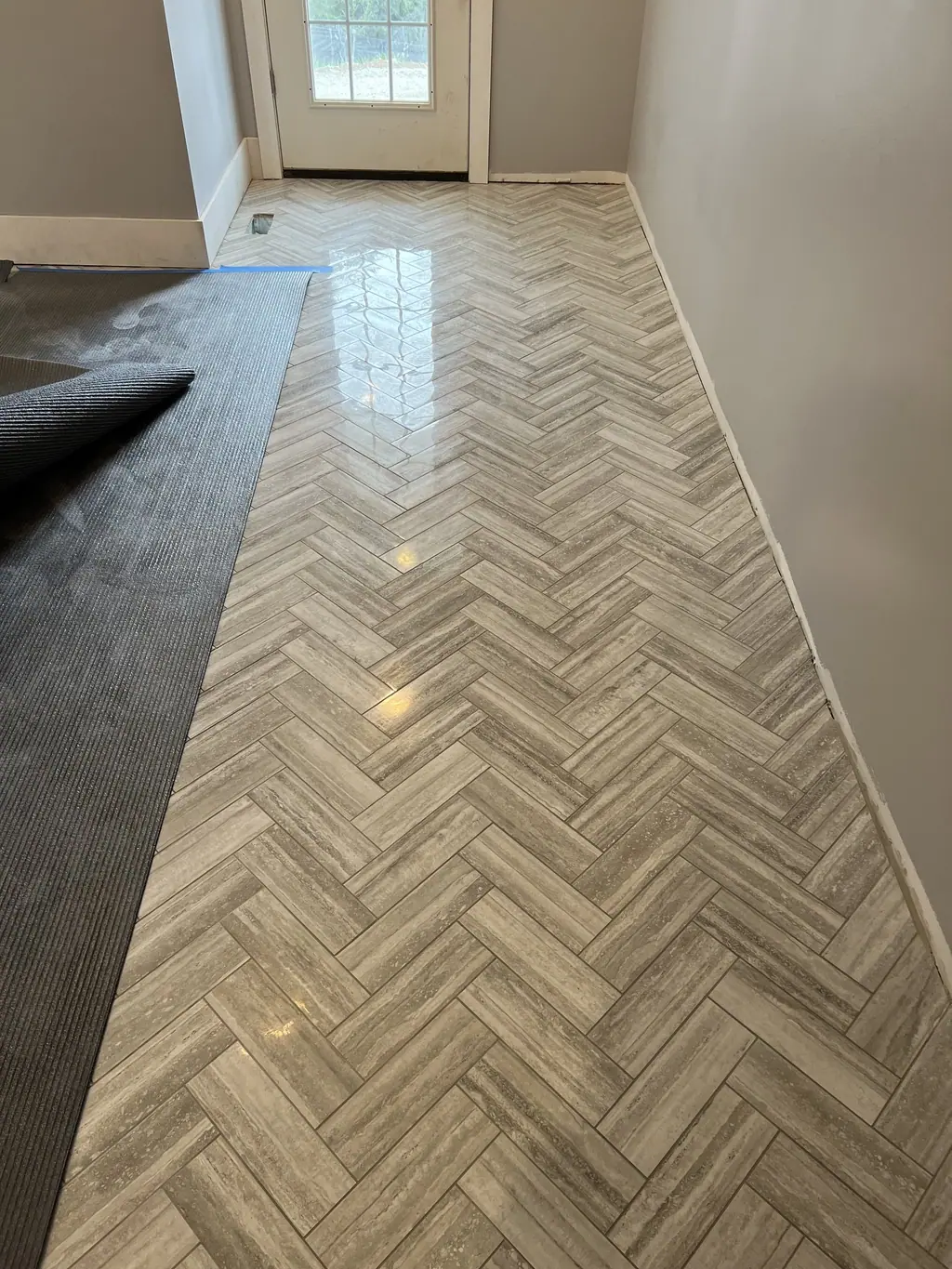
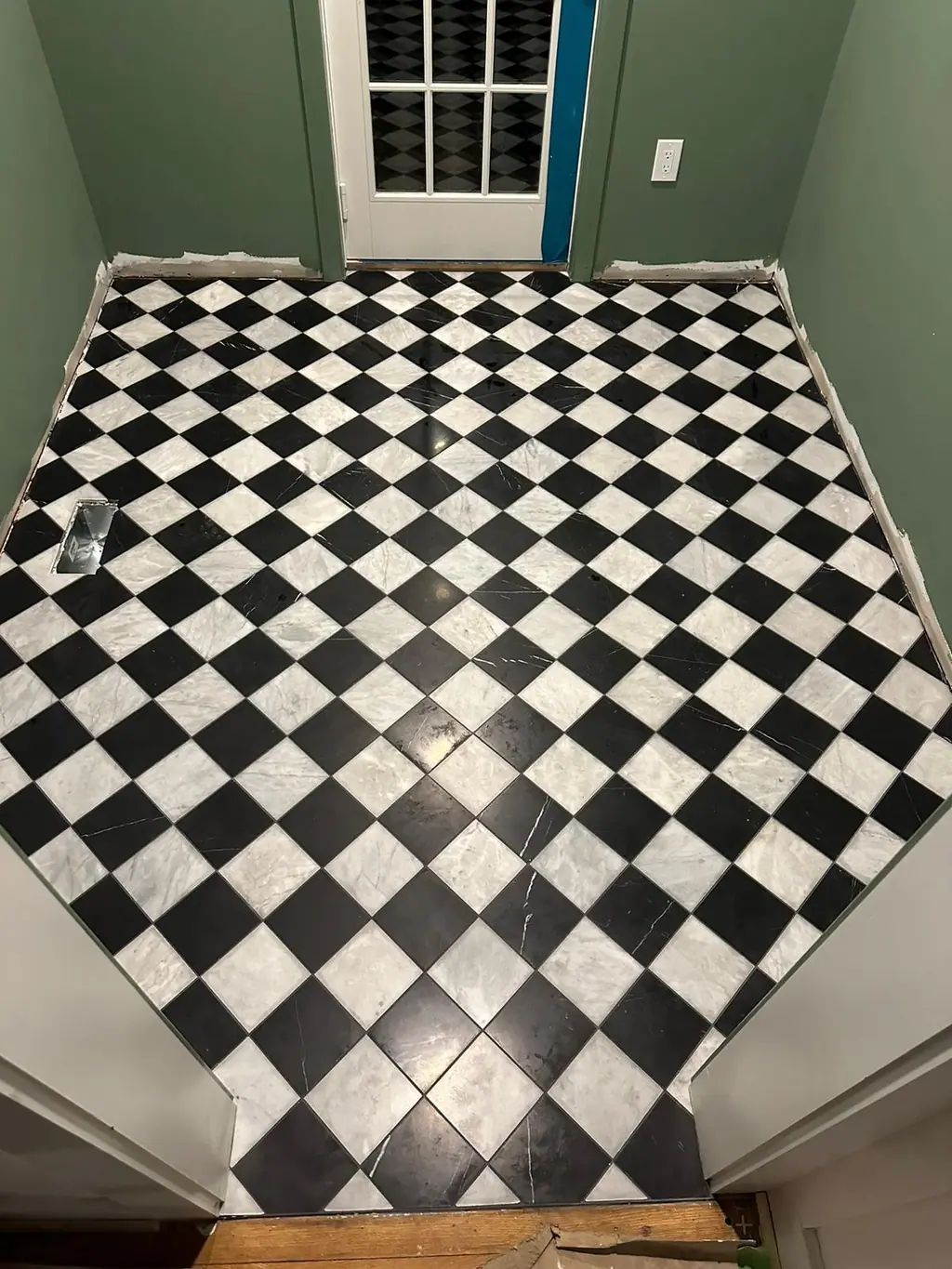
Porcelain, ceramic and natural stone, including large-format, herringbone and checkerboard layouts, with lippage kept tight.
Luxury vinyl plank
Click-lock and glue-down LVP for kitchens, basements, rentals and busy family rooms.
Hardwood
Solid and engineered hardwood installation in living areas and bedrooms, with transitions planned at every doorway.
Trim and transitions
Thresholds, reducers and baseboard or shoe molding so the new floor meets doors and adjoining rooms cleanly.
Flooring materials we install
Porcelain tile
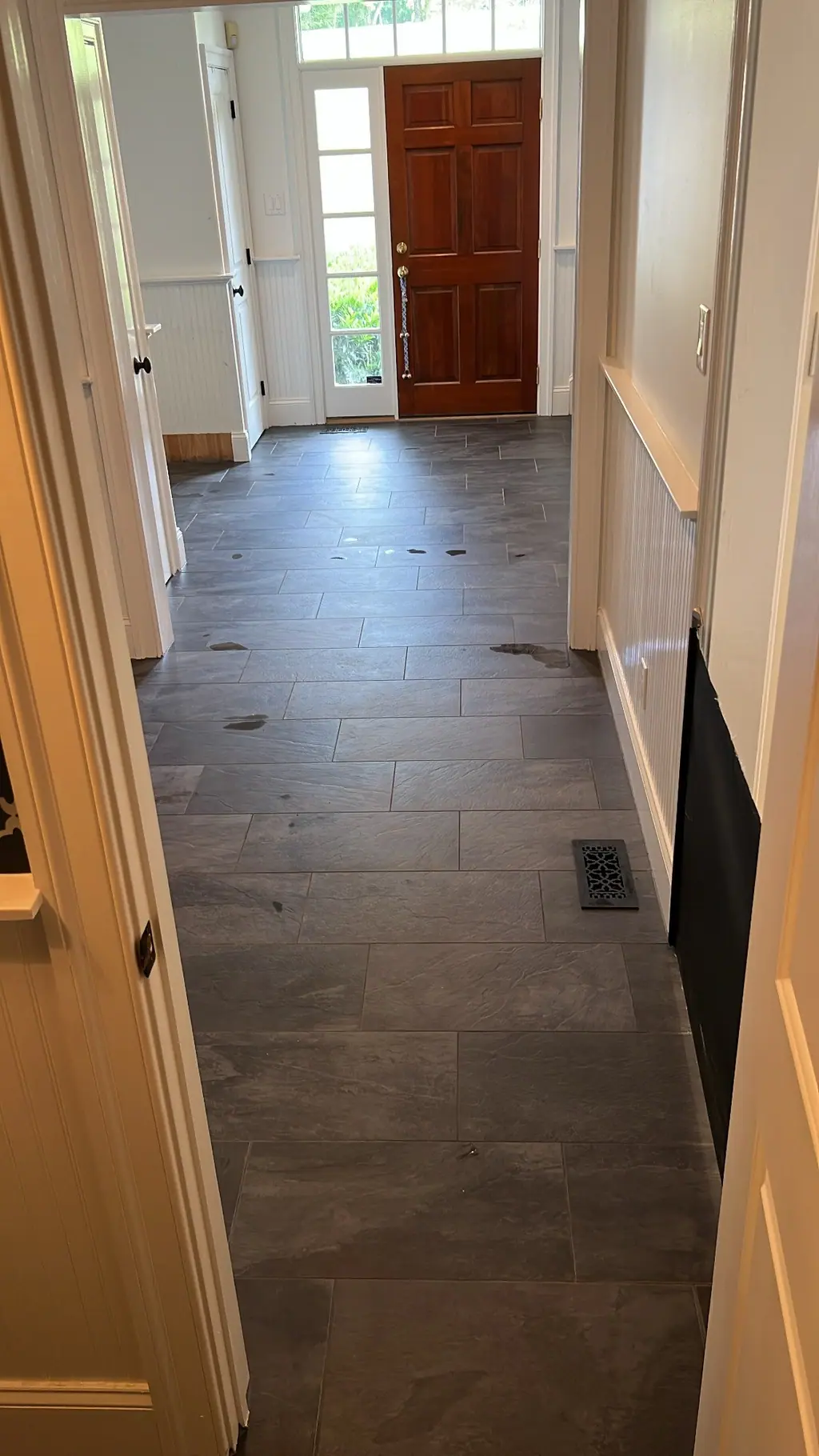
Dense, water-resistant and very durable. Available in stone and wood looks, and in large formats that need a flat substrate.
Ceramic tile
A cost-effective tile for lighter-traffic rooms and bathrooms.
Natural stone
Marble, slate and similar stones for a traditional look. Needs sealing and a stiff floor structure.
Luxury vinyl plank (LVP)
Water-resistant, warmer underfoot than tile and quick to install. A practical choice for basements and rental units.
Engineered hardwood
A real wood wear layer over a stable core. Handles seasonal humidity swings better than solid wood.
Solid hardwood
Can be sanded and refinished many times. Best above grade in rooms without moisture problems.
How the project runs
Walkthrough and estimate
We measure, check the subfloor for flatness and bounce, look for moisture, and help you compare materials.
Material selection and ordering
You choose the flooring; we confirm quantities including waste for pattern and cuts, and let wood and LVP acclimate where the manufacturer calls for it.
Removal and prep
Old flooring comes out, the subfloor is repaired and leveled, and membranes or underlayment go down.
Installation
Tile is set and grouted, or planks are laid, starting from a layout line so the pattern stays square to the room.
Trim and walkthrough
Transitions and trim go in, we clean up and walk the finished floor with you.
Choosing the right floor for your home
The right material depends on the room and the structure under it. Tile is our first recommendation for bathrooms, entries and kitchens. LVP works well in basements and rentals where moisture or wear is a concern. Hardwood suits living areas above grade. Our guide to LVP vs. tile vs. hardwood compares them in more detail.
Older homes need extra attention. Philadelphia rowhomes often have long joist spans and old plank subfloors that flex under heavy tile; we cover that in tile floors for Philadelphia rowhomes and on our Philadelphia flooring installation page. If you are weighing electric radiant heat under a new tile floor, our page on flooring installation in West Chester covers how it is planned. Basement slabs and ground-level floors raise moisture questions, which we address on our Elkton flooring page.
Layout is the other half of a good floor. We snap reference lines from the room's main sightline, usually the entry or the longest wall, so pattern and grout lines look straight where you notice them most. In hallways and connected rooms we plan where the floor changes direction or material, and we set transitions at doorways rather than in the middle of an open space. Herringbone and large-format tile get a dry layout before anything is set.
Cost depends on square footage, the material, the pattern, and how much subfloor repair or leveling is needed. Herringbone and large-format tile take more layout and prep time than a straight lay. We do not publish prices and quote after an in-home visit. For Delaware and Maryland projects, any permit requirements are confirmed with the local jurisdiction.
Flooring Installation FAQ
Can you install tile over my existing floor?
Sometimes, but we usually recommend removal. Tiling over old vinyl or tile adds height at doorways and hides problems in the subfloor. We look at the existing floor and explain the options during the estimate.
Why do tile floors crack?
Most cracks come from movement: a subfloor that flexes, joists that deflect, or no uncoupling layer over a surface that expands and contracts. Fixing the structure and using the right membrane prevents most of it.
Is LVP really waterproof?
Many LVP products resist water on the surface, but water can still get under the planks at seams and edges. In basements we also check for moisture coming up through the slab before recommending a product.
Can you install large-format tile?
Yes. Large tiles need a flatter substrate than small ones, so we check and level the floor first. We also use leveling clips to keep edges even.
How do I schedule an estimate?
Call (856) 895-8791 or contact us. Estimates are free and done in your home.
Related reading
LVP vs. Tile vs. Hardwood: Choosing Floors for a Family Home
How luxury vinyl plank, porcelain tile and hardwood compare on water, wear, comfort and repair, and how to match each one to the rooms in a family home.
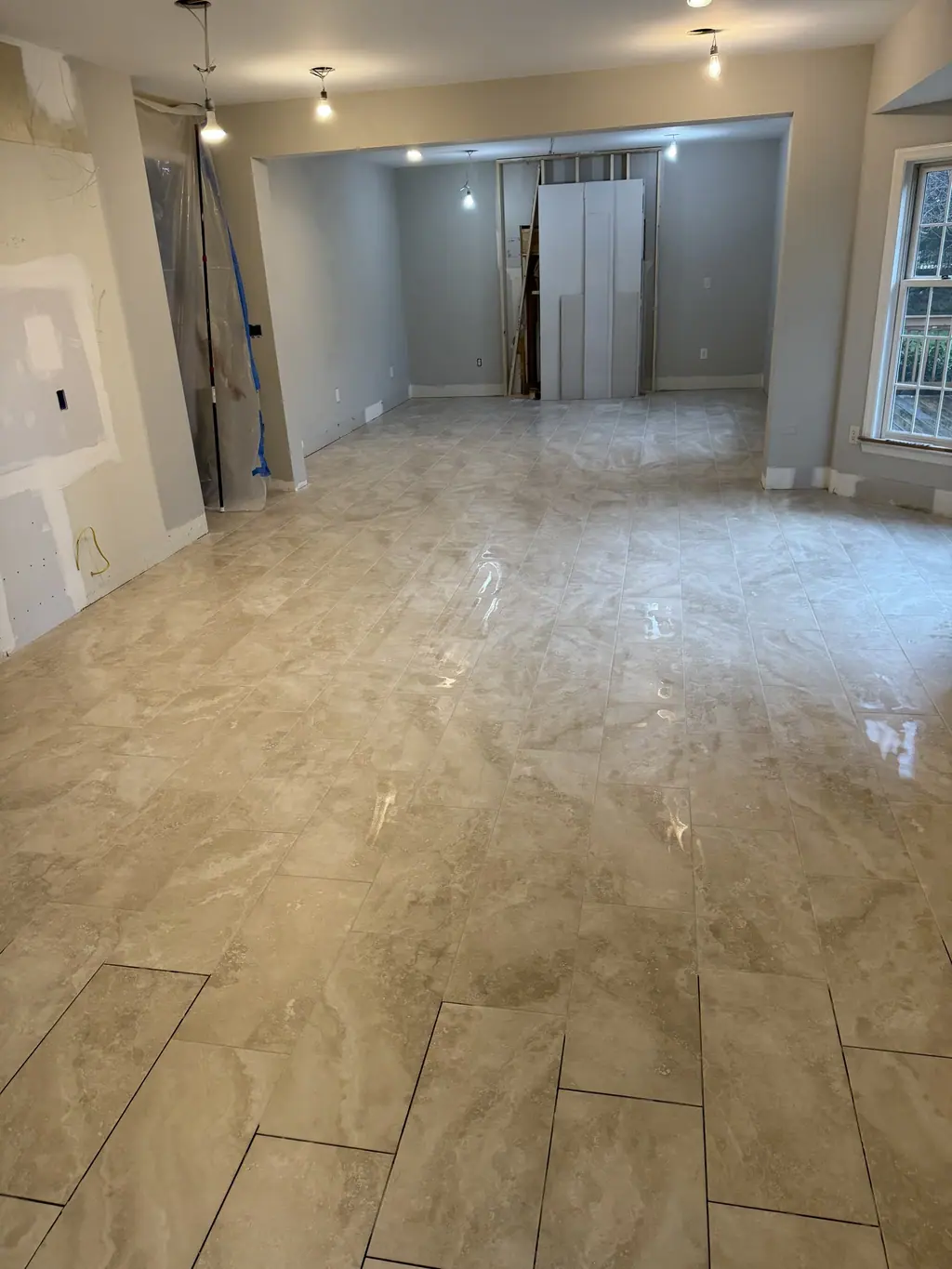
Tile Floors in Philadelphia Rowhomes: Joists, Subfloors and Prep
Old rowhome floors bounce, slope and sit on plank subfloors. Here is what has to happen under a tile floor so it stays flat and uncracked.