
F2 Home Improvement provides interior demolition for homeowners in Greater Philadelphia, Delaware and northeastern Maryland. Most of our demolition happens at the start of our own bathroom, kitchen and flooring projects, and we also take on tear-outs as a standalone job for homeowners who plan to finish the space later or hire other trades.
Good interior demolition means taking out what needs to go without damaging what stays: the plumbing you plan to reuse, the tile in the next room, the ceiling below the bathroom. Done carefully, a tear-out also tells you what you are working with, such as rotted subfloor, old leaks, undersized framing or wiring that needs attention.
Our crew has more than ten years in the trade, starting as F Tile in 2019. We give free in-home estimates and a written scope that spells out what comes out, what stays and how debris leaves the house.
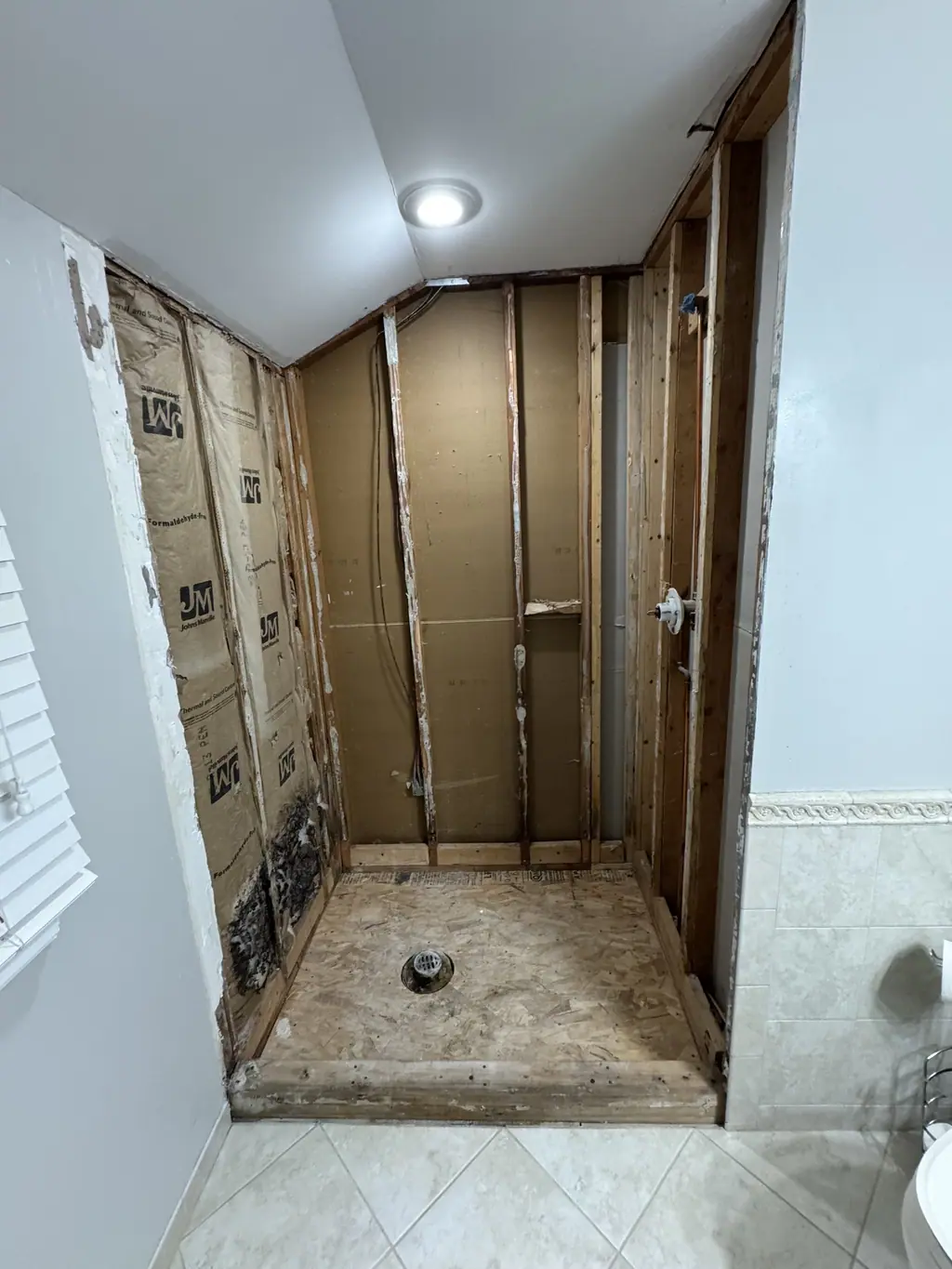
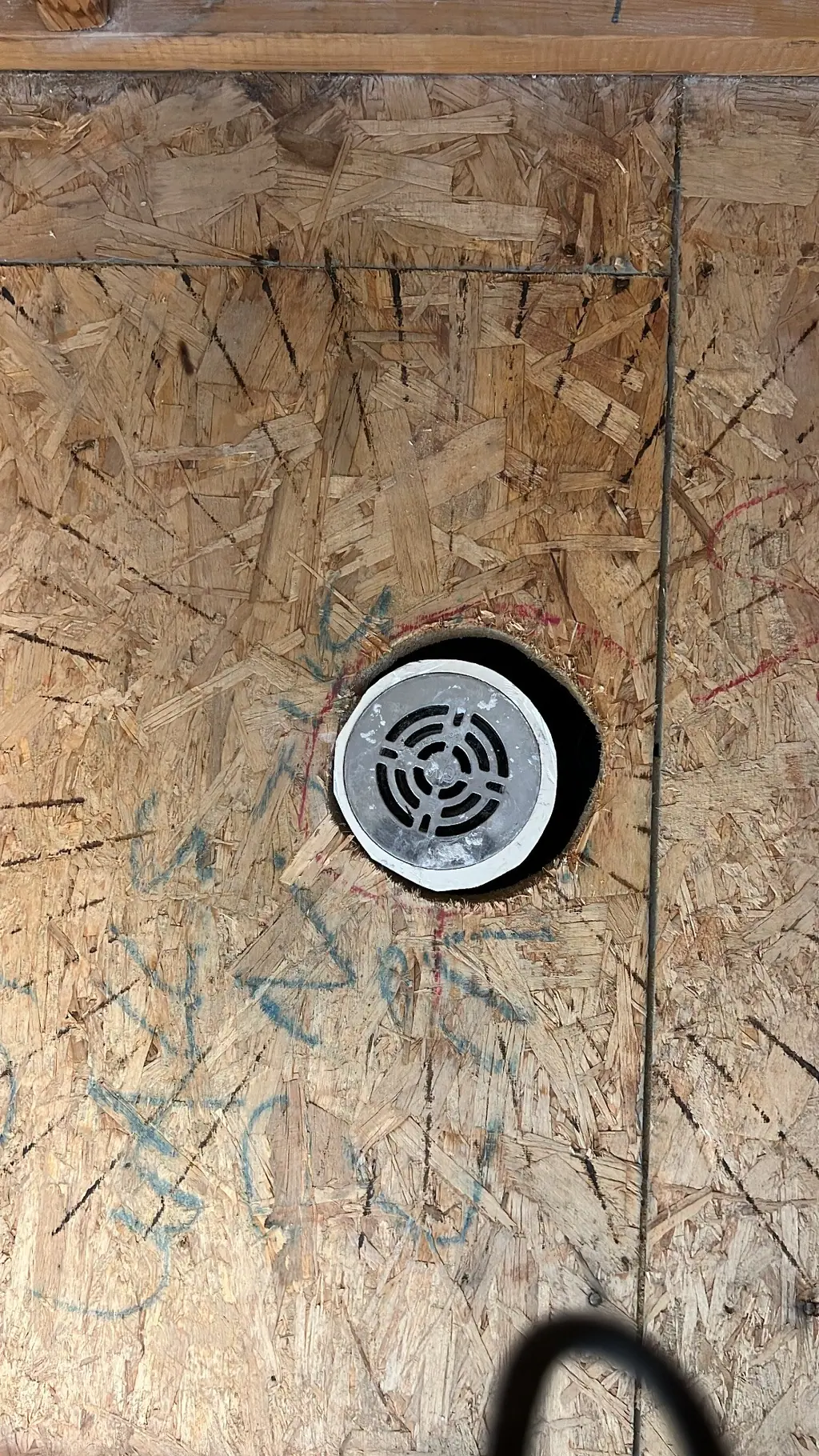
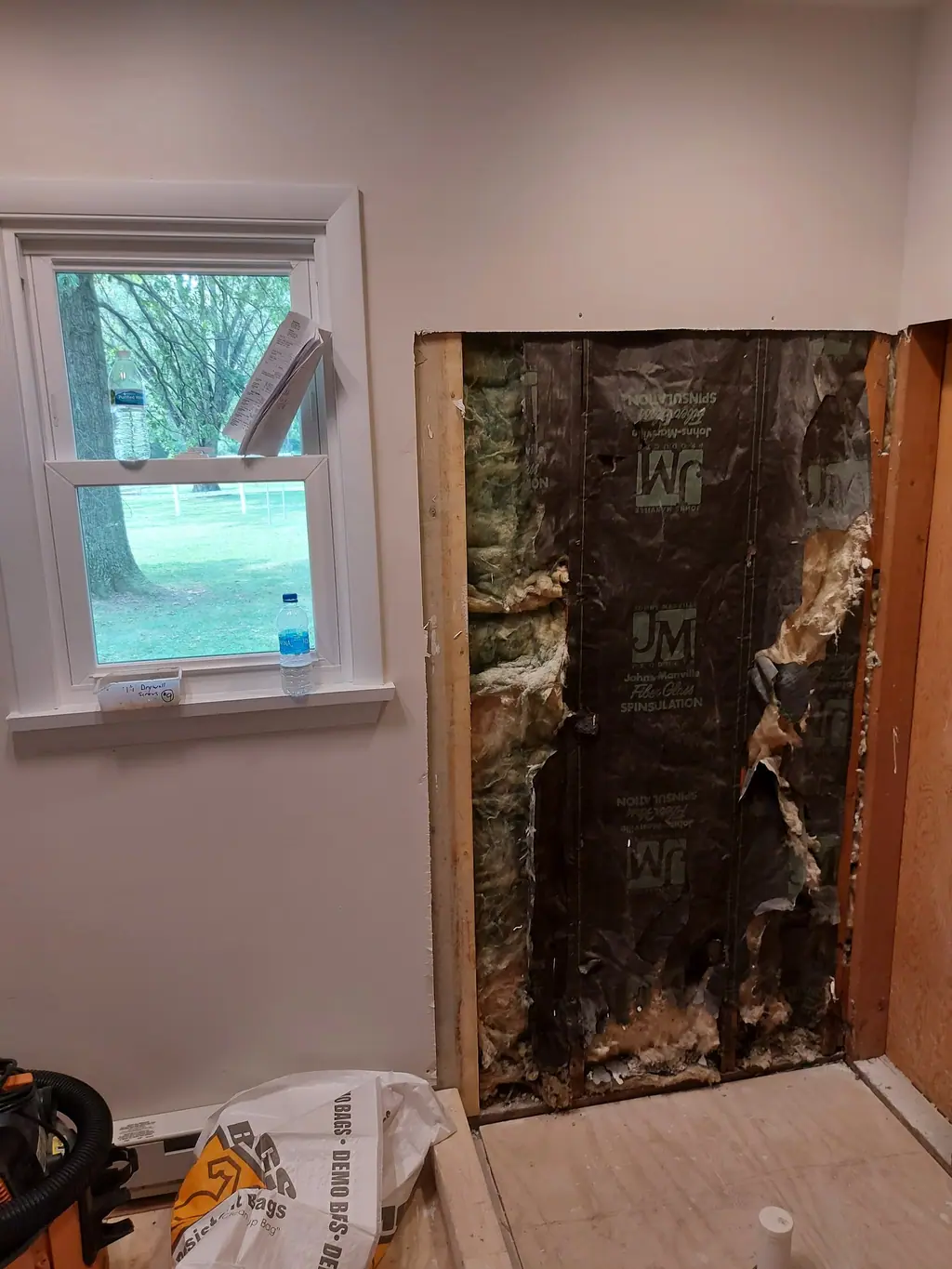
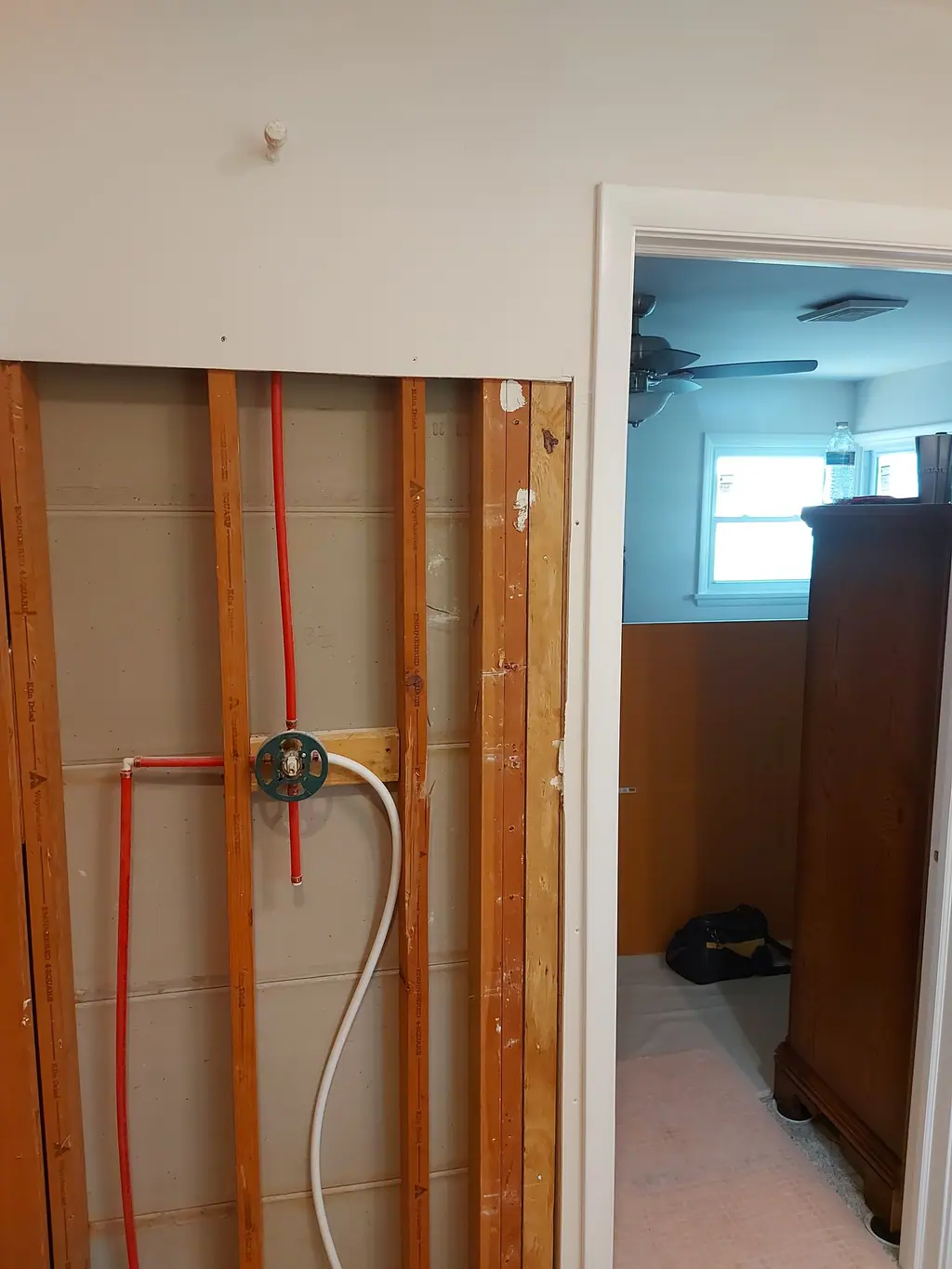
When a remodel starts with demolition
- A bathroom with signs of long-term leaks: soft floor, stained ceiling below, or loose wall tile.
- Tile set over old tile, where the only way to fix problems is to go down to the substrate.
- Plaster walls that are cracked and delaminating from the lath.
- A remodel that changes the layout, such as a tub-to-shower conversion or a moved vanity.
- Water or smoke damage that has reached drywall, insulation or subfloor.
- A basement or room you want opened up and cleared before designing the finished space.
What our interior demolition covers
Bathroom gut-outs
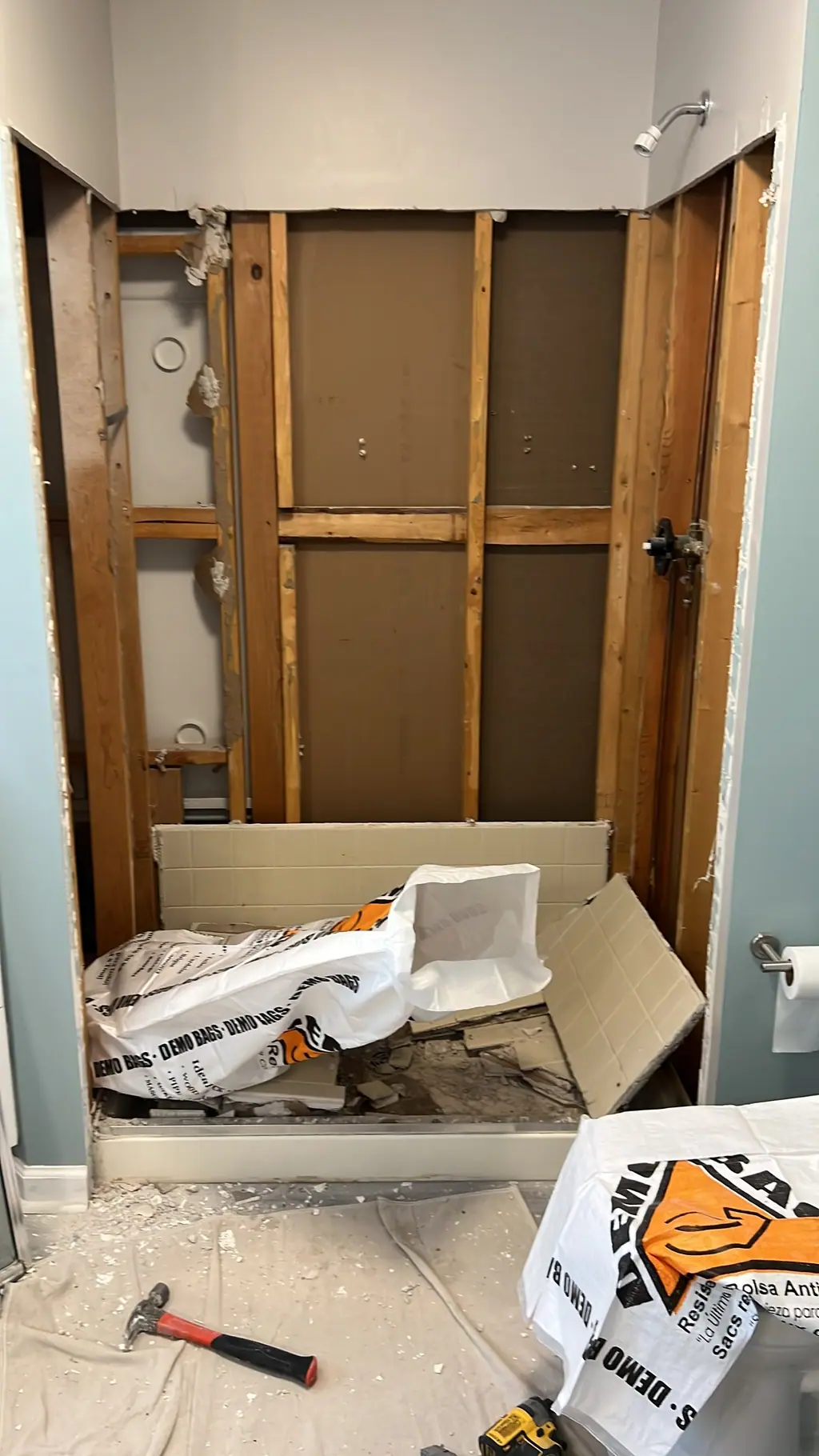
Removing tubs, shower pans, tile walls, vanities and toilets down to studs and subfloor, with supply and drain lines capped.
Tile and flooring removal
Taking up tile, mortar beds, vinyl, carpet and wood flooring, and scraping the subfloor clean for the next layer.
Kitchen tear-outs
Backsplash and floor tile removal and clearing out surfaces before cabinets, countertops or new flooring go in.
Wall and ceiling removal
Drywall and plaster-and-lath removal on non-structural walls and ceilings, with the framing left exposed and clean.
Dust control and protection
Plastic containment, floor protection along the path out of the house, and covering of vents and doorways.
Debris haul-away
Loading and removing debris so the space is broom-clean and ready for framing, plumbing or tile.
What we find behind walls and under floors
Plaster and lath
Common in older homes around Philadelphia. It is heavy, dusty and slow to remove compared with drywall, which affects time and cost.
Mortar-bed tile
Older showers and floors were often set in a thick bed of mortar over wire mesh. Removing it is heavy work and exposes the framing underneath.
Lead paint
Homes built before 1978 may contain lead-based paint. Federal EPA rules require lead-safe work practices when renovation disturbs painted surfaces in these homes.
Possible asbestos
Some older floor tiles, mastics and joint compounds contain asbestos. Suspect materials should be tested before they are disturbed, and removed by a licensed abatement contractor if positive.
Damaged subfloor and framing
Rot around toilets and tubs, notched joists from past plumbing work, and sistered or undersized framing that should be corrected before rebuilding.
How the project runs
Walkthrough and estimate
We look at the space, identify what stays and what goes, note plumbing and electrical that must be shut off, and flag materials that may need testing.
Shutoffs and protection
Water and power to the work area are shut off or made safe by the appropriate trade, and containment and floor protection go up.
Controlled tear-out
We remove finishes in order, from fixtures to tile to substrate, taking care around what stays in place.
Haul-away and cleanup
Debris is removed from the house and the area is swept and vacuumed.
Condition review
We walk you through what we found, such as framing, subfloor or leak damage, so you can plan the next phase with accurate information.
Planning interior demolition in older homes
Much of the housing stock around Philadelphia and Wilmington predates 1978, which means lead paint and plaster walls are common. Lead-safe practices include containment, misting to keep dust down, HEPA vacuuming and careful cleanup. Our article on demolition in older Philadelphia homes explains what that looks like in practice, and our Philadelphia demolition page covers rowhome-specific issues like shared walls and narrow access.
Not every wall can come out. Load-bearing walls need an engineer's review and a permit before removal, and we point out any wall we suspect is structural. In Philadelphia, permits go through the Department of Licenses and Inspections (L&I); elsewhere in Pennsylvania, check with your township or borough. For Delaware and Maryland projects, permit and licensing requirements are confirmed with the local jurisdiction for each job. See interior demolition in Wilmington, DE and demolition in Media, PA for local details.
Sequencing saves money later. Before walls come down, we note which plumbing and electrical lines will be reused and which will be replaced, so nothing that stays gets damaged and nothing that goes gets left behind. On a bathroom gut, for example, we protect the drain and supply stubs, keep subfloor that is still sound, and mark any joist damage so the carpenter or plumber knows exactly where to start.
Cost depends on the size of the area, what the finishes are (mortar-bed tile and plaster take far longer than drywall and vinyl), access for carrying debris out, and disposal. We do not publish prices. If you are planning a larger project, read why interior demolition comes first.
Interior Demolition FAQ
Do you do demolition without the remodel?
Yes. Most of our demolition leads into our own bathroom, kitchen or flooring work, but we also do standalone tear-outs when you plan to finish the space later or with other contractors.
How do you control dust?
We set up plastic containment, cover vents and doorways, protect floors along the path out, and clean with a HEPA vacuum. Dust cannot be eliminated completely during demolition, but it can be kept to the work area.
What if you find damage behind the walls?
We stop and show you. Rotted subfloor, leak damage or problem framing is documented and discussed before the next phase, so the repair can be planned and priced.
What happens with the debris?
Haul-away is part of our demolition scope. The work area is left broom-clean and ready for the next trade.
How do I get an estimate?
Call (856) 895-8791 or contact us to schedule a free in-home estimate.
Related reading
Demolition in Older Philadelphia Homes: Plaster, Lead and Dust
Before opening walls in an older Philadelphia house, know what is in them: plaster and lath, mud-set tile, lead paint and sometimes asbestos. Here is how to handle it safely.
Interior Demolition Before a Remodel in Wilmington
Demolition sets up every step that follows. Here's what to decide, test and protect before the first wall comes down in an older Wilmington home.