Key takeaways
- List what stays before demolition begins.
- Test for lead and asbestos in older homes before disturbing materials.
- Containment and HEPA cleanup protect the rest of a rowhome.
- Plan debris removal around street access and city rules.
- Review framing and systems after demolition before rebuilding.
Demolition looks like the easy part of a remodel. In practice, it's the step that decides how smoothly the rest goes. Take out too little and the new work sits on old problems. Take out too much, or the wrong thing, and you're paying to rebuild what could have stayed. Do it without containment in an older house and you spend weeks cleaning dust out of rooms that weren't part of the project.
Wilmington's housing makes this more important than average. Brick rowhomes, twins and early 20th century houses in neighborhoods like the Highlands, Cool Spring, Little Italy and Browntown were built with plaster, heavy mortar beds and materials that aren't used anymore. Here is what to think through before demolition starts.
Decide what stays before anything comes out
Walk the room with your contractor and name everything that is staying: the window and its trim, a radiator, a door and casing, original floorboards in the next room, a light fixture you like. Mark them if needed. Old trim and hardware can be hard or impossible to match once broken.
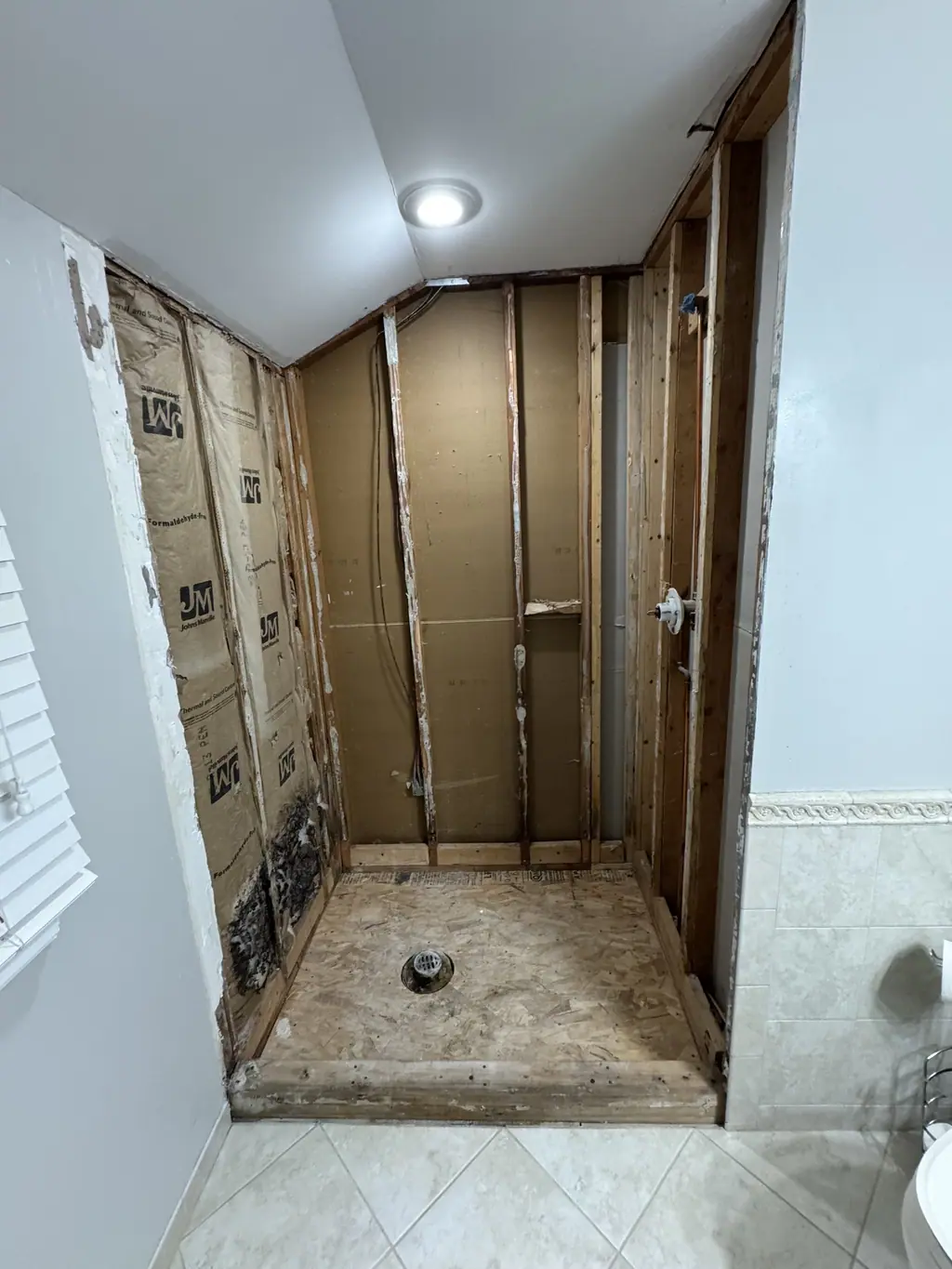
Next, decide how deep the demolition goes. In a bathroom, the choice may be between removing tile and wall surfaces or going all the way to studs and subfloor. In a kitchen, it may be whether the plaster walls come off or only the backsplash section. Going to the studs costs more in demolition but gives you a clean view of framing, plumbing and wiring, and in older houses that often saves money later.
- Fixtures, trim and hardware to save
- Walls to be opened versus patched
- Floor layers to be removed and where they stop
- Plumbing and wiring to be kept, capped or replaced
Test for lead and asbestos in older homes
Most Wilmington rowhomes and twins were built before 1978, and many well before that. Lead paint is common on trim, doors, windows and older wall layers. Federal EPA renovation rules apply when work disturbs painted surfaces in these homes, covering how the area is contained, how debris is handled and how cleanup is verified.
Asbestos is the other material to rule out. It can show up in older resilient floor tiles, especially the 9-inch-square tiles common in mid-century basements and kitchens, and in the black adhesive under them, as well as pipe insulation, some plaster and joint compounds. You can't identify it by looking. If you suspect it, have a sample tested by an accredited lab before demolition. Asbestos abatement is a licensed specialty, separate from general demolition.
Testing first may add a few days, but it keeps a small project from turning into a contamination problem throughout the house.
Shutoffs, protection and dust control
Before demolition, water to the room is shut off and lines are capped. Circuits feeding the area are turned off at the panel and verified. Gas lines are shut off by a qualified person if any are involved.
Rowhomes share air quickly between floors, and plaster dust is fine enough to travel through any gap. Good containment includes plastic barriers with zipper doors at the work area, covered floors and stairs along the path out of the house, and HVAC registers in the work area sealed off so the system doesn't spread dust. Cleanup uses HEPA-filtered vacuums and damp wiping rather than dry sweeping.
If anyone in the house has asthma or other breathing issues, or if there are young children, discuss whether they should be out of the house during the dustiest days.
Getting debris out of a city house
A bathroom gut-out in an older home produces more debris than most people expect. Plaster, lath and a mortar-bed shower floor are heavy. In a suburban house with a driveway, a roll-off dumpster solves this. In many Wilmington city blocks, there's no driveway and on-street space is tight.
Options include bagging debris and hauling it out in a truck as the work proceeds, or using a smaller container. If anything needs to sit in the street, placement should be confirmed with the City of Wilmington beforehand. Carrying debris down a narrow stair and through the living room also means extra floor and wall protection along the route.
Permit needs for the demolition itself depend on the scope. For projects in Delaware, requirements are confirmed with the local jurisdiction for each job: the City of Wilmington inside city limits, New Castle County elsewhere.
What demolition often uncovers
Opening walls and floors in an older house almost always reveals something. Planning for that possibility, with time and budget set aside, makes the discoveries less stressful.
Water damage and rot
Soft subfloor around a toilet, rotted framing under a tub, and dark stains along a wall plate are common signs of old, slow leaks. They need to be repaired before the rebuild.
Old wiring and plumbing
Knob-and-tube wiring, ungrounded circuits, galvanized supply pipes and cast-iron drains with cracks turn up regularly. A licensed electrician or plumber can advise on what should be replaced while the walls are open.
Past remodels
Notched or cut joists from a previous plumber, framing that was never properly supported after a wall was moved, and layers of flooring stacked on each other are all common. Some are simple fixes; others need structural attention.
After demolition: pause and plan
The best time to adjust a remodel plan is right after demolition, when framing, plumbing and wiring are visible. Walk the space with your contractor, review what was found, and confirm the rebuild plan before new materials go in. This is also when rough plumbing and electrical inspections happen, if the project requires them.
If you're doing some of the work yourself, demolition can seem like a place to save. It can be, for simple tasks like removing a vanity. But knowing where to stop, handling hazardous materials, and protecting the rest of the house are where experience matters most.
Working with F2 on demolition
F2 Home Improvement handles interior demolition in Wilmington as part of our bathroom, kitchen and flooring projects, or as a standalone job before other trades start. Our crew builds tile showers and floors, so we take things apart with the rebuild in mind. To talk through your project, contact us for a free walkthrough.
Frequently asked questions
How long does demolition take for a bathroom?
For a typical small bathroom taken to studs, demolition and haul-away usually take one to a few days. Mortar-bed floors, plaster walls and tight access add time.
Can I stay in the house during demolition?
Most people do. With good containment and cleanup, dust stays in the work area. If lead or asbestos is involved, or if someone in the household is sensitive to dust, being elsewhere during the heaviest days is worth considering.
Do I need a separate permit for interior demolition?
It depends on the scope and location. Removing finishes for a remodel is often covered by the remodel permit, if one is needed. Requirements are confirmed with the City of Wilmington or New Castle County for each project.
Planning an interior demolition project in Wilmington?
Get a free in-home estimate from F2.