Key takeaways
- Choose porcelain with a matte or textured finish and a published wet DCOF of at least 0.42.
- Mid-tone, varied tile and gray or taupe grout hide salt and grit.
- High-performance, urethane or epoxy grout resists salt staining better than standard cement grout.
- Fix the subfloor and plan door heights before tiling.
- Mats, frequent sweeping and a stone-safe cleaner keep the floor looking good through winter.
In most Bucks County houses, the front door isn't the one people use. Families come and go through the garage entry, a side door into the laundry, or a back mudroom, and from December through March that floor takes meltwater, road salt, sand and grit several times a day. Carpet gets ruined, laminate swells at the seams, and even some tile floors end up with white salt haze in the grout and chipped edges by the door.
A well-chosen tile floor handles all of that. The choices that matter are the tile body, the surface texture, the grout and what's underneath. Here's how to think through each.
What winter does to an entry floor
Road salt and de-icers, including rock salt and calcium or magnesium chloride products, get tracked in on boots and dissolve in meltwater. When the water evaporates, it leaves a crust that dulls glazes, stains porous grout and can damage soft natural stone over time. Sand and grit act like sandpaper under foot traffic. And puddles make any smooth floor slippery.
Garage entries have an extra challenge: the step down into a cold garage and a door that opens into winter air. Floors near those doors see bigger temperature swings than the rest of the house, which is one more reason to set tile over a stable, well-prepared base.
Choosing the tile
For most mudrooms, porcelain is the practical choice. It's dense, hard and absorbs very little water, and many porcelain tiles are through-body or color-body, so a chip doesn't show a different color underneath.
Porcelain vs ceramic
Porcelain is defined by low water absorption, 0.5 percent or less, which makes it more resistant to staining and freeze-related damage than standard ceramic. Glazed ceramic can work in a mudroom with light traffic, but in a busy entry the glaze wears where people pivot and the softer body chips more easily at the door.
Slip resistance
Look for a matte or textured finish rather than polished. Tile makers publish a wet dynamic coefficient of friction (DCOF). The ANSI A326.3 standard uses 0.42 as the minimum for level interior floors expected to be walked on when wet, and a mudroom certainly qualifies. Higher is better for an entry, as long as the texture isn't so rough that it traps dirt.
Natural stone
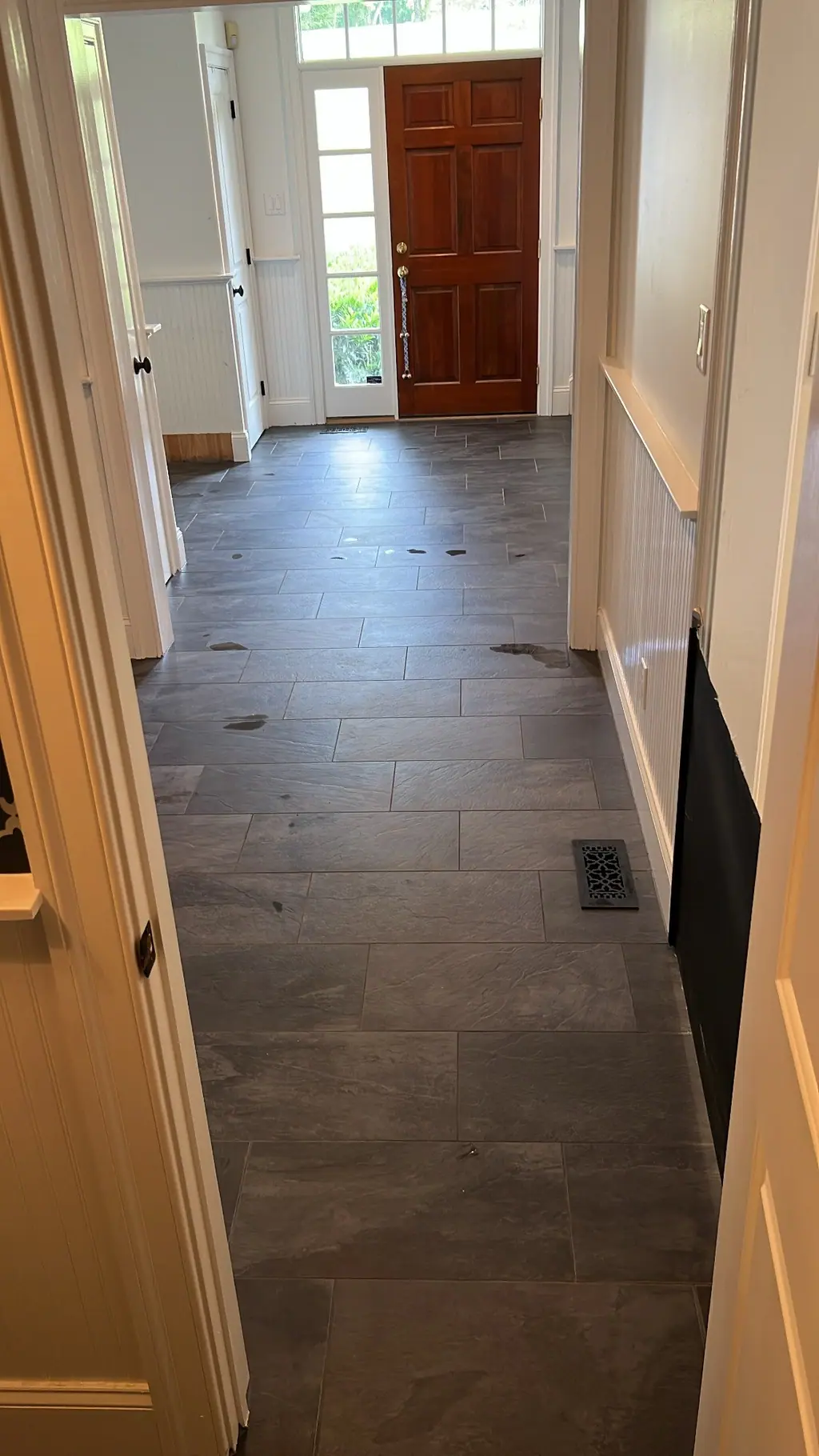
Slate has been a traditional mudroom floor in this region and can look right in an older Bucks County farmhouse. It needs sealing, some types flake at the surface over time, and acidic cleaners will damage it. Polished marble and limestone are poor choices for an entry: they etch, scratch and get slippery when wet.
Color and size
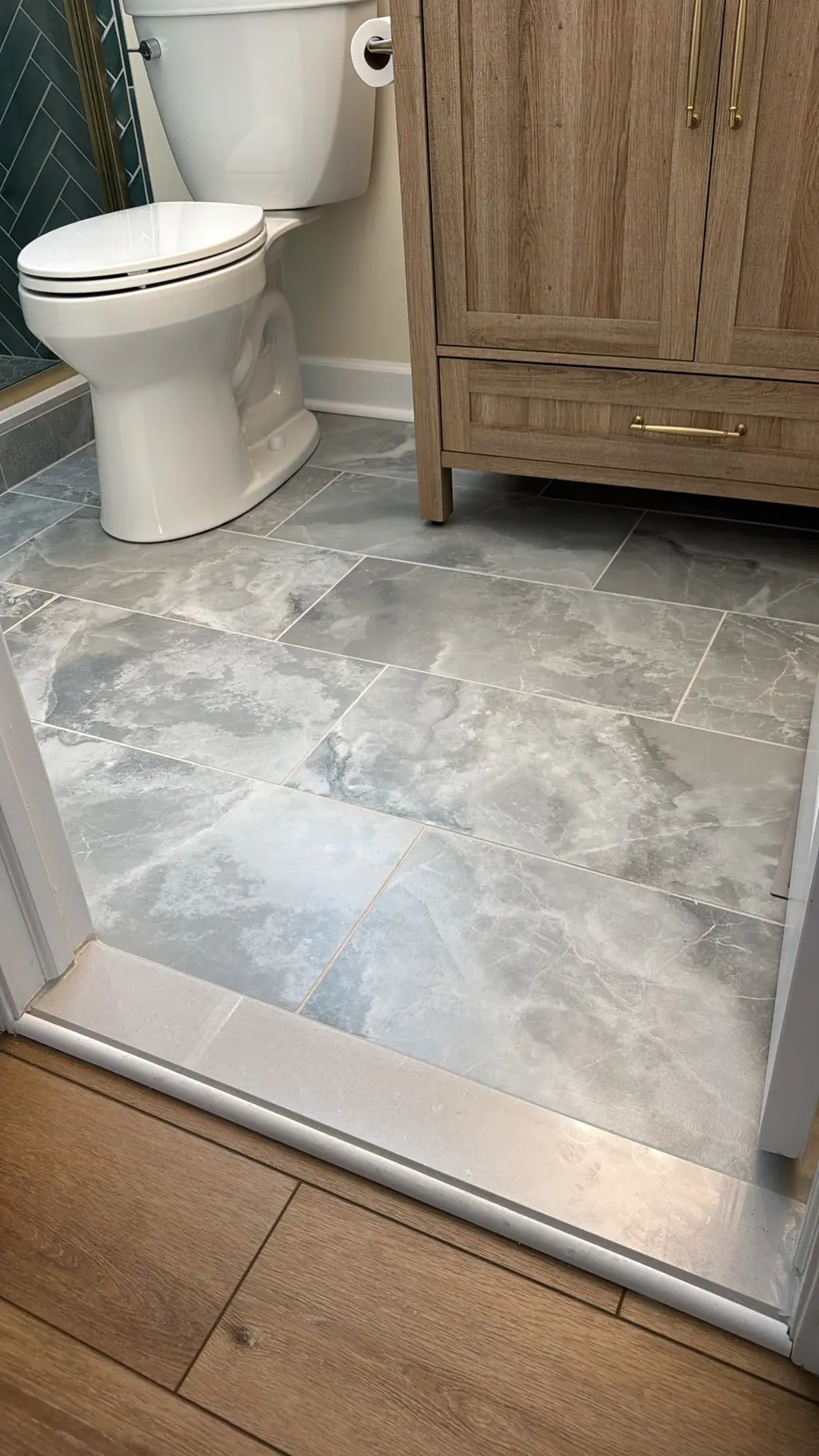
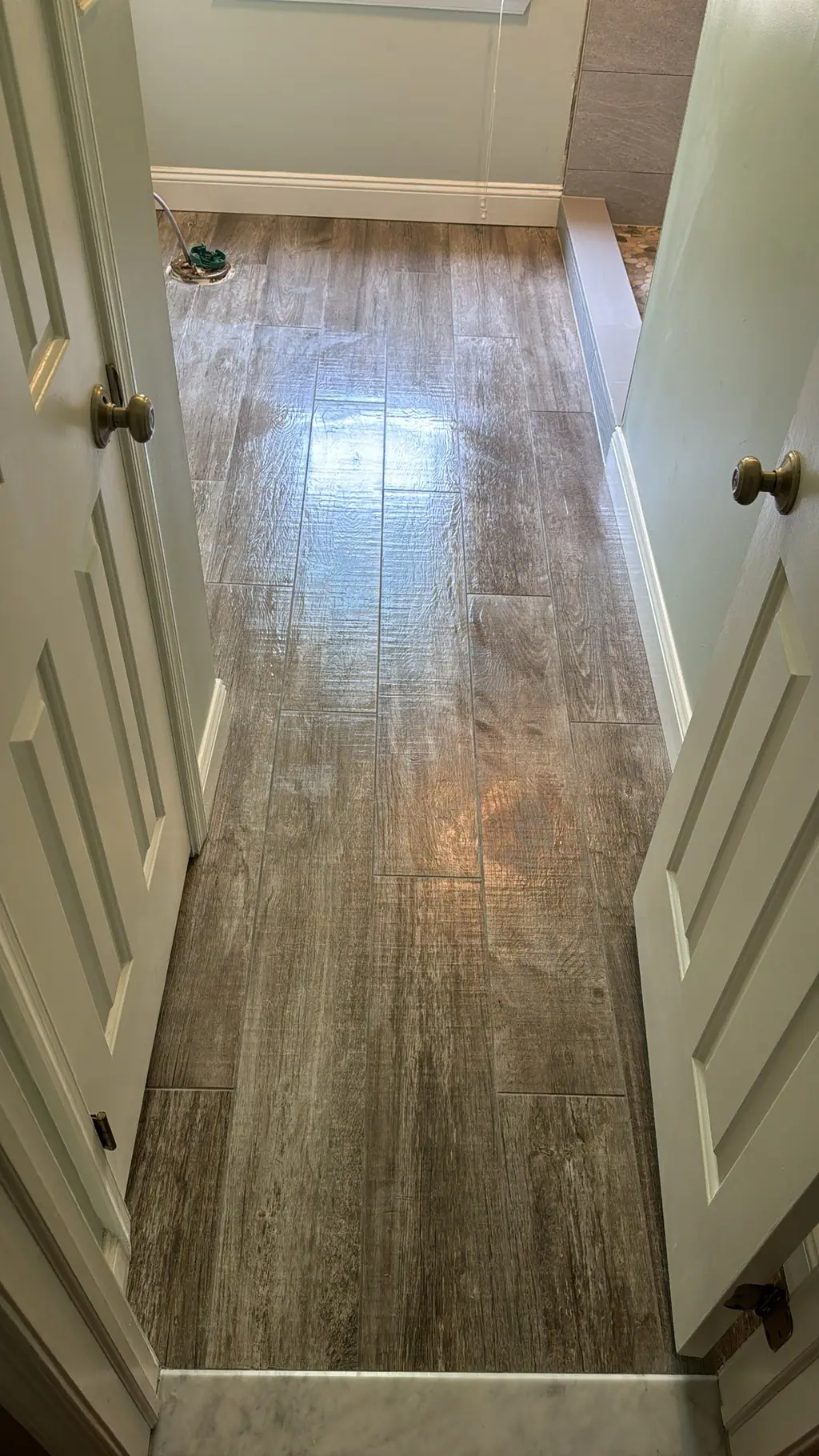
Mid-tone, varied or speckled tile hides salt residue and dried footprints far better than solid white or solid black. Medium sizes, such as a 12-by-24 plank or an 8-by-8 hexagon, give more grout lines for grip than very large slabs. Herringbone brick-look porcelain and patterned cement-look tile are both popular in mudrooms and hide dirt well.
Grout that survives salt and wet boots
Grout is usually the first thing to look bad in an entry. Standard cement grout is porous, so salty water soaks in and leaves white stains and dark lines by the door. It can be sealed, but sealer wears in traffic areas and has to be renewed.
Better options for a mudroom include high-performance cement grouts, which are more stain-resistant out of the bag, and epoxy or urethane grouts, which don't absorb water at all. Epoxy is harder to install neatly, so it costs more in labor. Whatever the type, a mid-gray or taupe grout color hides grit and salt far better than white.
The floor under the tile
Most failures in mudroom tile start below the surface. The floor has to be stiff, flat and ready for the extra height of tile and setting materials.
- Check subfloor stiffness, especially where a mudroom sits over a crawlspace or an unheated garage.
- Repair water-damaged plywood near the exterior door before tiling over it.
- Use an uncoupling membrane where the subfloor or slab is prone to movement.
- Plan the finished height at the exterior door so the door still swings and the sill still sheds water.
- Plan the transition to the adjoining hardwood or vinyl so there's no lip to trip on.
Floor heat as an option
Electric floor heat under tile makes a mudroom more comfortable and helps puddles evaporate faster. It adds cost and a dedicated circuit, and it has to be planned before the floor is built. Our post on heated tile floors covers how those systems go in.
Layout details for a working mudroom
A few layout choices make daily life easier. Start the tile layout from the door people use most so full tiles land where they're most visible. If you use a boot tray or a large walk-off mat, decide where it goes so it doesn't straddle a transition. Some homeowners recess a mat into the floor so it sits flush.
Wood baseboard at floor level soaks up meltwater and splash from mopping. A tile base, or a bullnose tile cut as baseboard, holds up much better along the walls where boots and wet dogs end up. Built-in benches and cubbies should go in after the floor, or the tile should run under their footprint, so the floor can be replaced later without tearing out the cabinetry.
Winter care
Keep a coarse mat outside the door and an absorbent mat inside to catch most of the salt and grit before it reaches the tile. Sweep or vacuum grit often. For salt residue, use a cleaner that's labeled for de-icer residue and is safe for your grout and any natural stone. Avoid vinegar and other acids on stone and on cement grout. If the grout is sealed cement grout, reseal it on the schedule the product recommends, typically after the heaviest part of winter.
F2 Home Improvement installs tile floors in mudrooms, laundry rooms and entries in Doylestown and the surrounding Central Bucks townships. Read more about our flooring installation in Doylestown, or contact us for a free estimate.
Frequently asked questions
Is porcelain tile too slippery for a mudroom?
Not if you choose the right finish. Polished porcelain is slippery when wet, but matte and textured porcelain made for wet areas has good grip. Check the published DCOF value and pick a tile rated for wet interior floors.
Can we tile over the vinyl in our back entry?
Usually not. Tile needs a well-bonded, stiff base, and most sheet vinyl and the underlayment beneath it don't qualify. The vinyl typically comes up, the subfloor gets checked and repaired, and the tile goes over a proper substrate.
Why is our grout turning white near the door?
That's usually salt residue left behind as meltwater dries. Clean it with a product made for de-icer residue that's safe for your grout, then seal cement grout if it isn't sealed. If it keeps coming back, a more stain-resistant grout may be worth considering at the next remodel.
Planning a flooring installation project in Doylestown?
Get a free in-home estimate from F2.