Key takeaways
- Grout and tile shed water but let it through. The waterproof layer is underneath.
- Traditional liner pans and bonded surface membranes can both work when every detail is done right.
- Leaks usually start at curbs, corners, penetrations, niches and the drain connection.
- A flood test before tiling catches problems while they're still cheap to fix.
When a tiled shower fails, the tile usually looks fine for a while. The damage happens behind it: wet backer board, swollen subfloor, mold in the wall cavity, and eventually loose tiles or a stain on the ceiling below. By the time it shows, repair means tearing the shower out.
The reason is simple. Tile and grout are finishes, not waterproofing. The waterproof layer is something you never see once the shower is done. This article explains what that layer is, the main ways it's built, and what to ask a contractor so you know it's being done right.
Why grout isn't waterproof
Standard cement grout is porous. It absorbs water every time the shower runs and releases it slowly as it dries. Sealers slow that absorption down, but they wear off and never make grout watertight. Even epoxy grout, which is far less absorbent, doesn't protect against water that gets in at cracks, changes of plane, or around the valve and shower head.
Porcelain tile itself absorbs very little water, but a shower wall is mostly joints, corners and penetrations. Water moves through all of them. So a tiled shower has to assume water will get past the tile and plan where it goes next.
Two approaches: the traditional pan and the surface membrane
There are two broad ways to waterproof a tiled shower. Both can work when built correctly. If you live in an older house around Media, Swarthmore or Havertown, the shower you're replacing was probably built the first way, and the one going in is likely to be built the second.
Traditional mortar bed with a liner
In the older method, a sloped layer of mortar (the pre-slope) goes on the subfloor, a flexible PVC or CPE liner goes over that and up the walls, and a second mortar bed goes on top of the liner. Tile is set on the top bed. Water that soaks through tile and grout reaches the liner, runs along the pre-slope to weep holes in a clamping drain, and exits. The walls usually use backer board over a moisture barrier. This method is still used and code-recognized, but it holds water in the top mortar bed, and weep holes that clog cause problems.
Bonded surface membranes
In the newer approach, the waterproofing sits directly under the tile. A sheet membrane (the Schluter Kerdi type is the best known) or a liquid-applied membrane covers the walls, the sloped pan and every seam, bonded to the substrate and sealed to a drain designed to connect to it. Water stops just under the thinset instead of soaking into a thick mortar bed. Showers dry out faster, and the system works well with linear drains and curbless designs.
Where showers actually leak
Most leaks aren't in the middle of a wall. They happen at transitions and holes. When we open up failed showers, these are the usual places:
- The curb, where the pan liner was nailed through on top or folded poorly at the corners.
- Inside corners and the joint between wall and pan, where the membrane wasn't lapped or reinforced.
- The valve and shower head penetrations, left without a sealing collar or gasket.
- Niches and benches, where the membrane was cut to fit and not sealed at every inside corner.
- The drain connection, where the membrane or liner wasn't clamped or bonded to the drain flange.
- The bottom of a glass panel or door, where water sits against the curb because it wasn't sloped inward.
The flood test
Before tile goes on the floor, the shower pan should be flood tested. The drain is plugged, the pan is filled with water up to just below the top of the curb, and the level is marked. After it sits (commonly around 24 hours), the level is checked again and the ceiling below or the area around the shower is inspected for moisture.
A flood test catches problems at the cheapest possible moment, when fixing them means patching membrane instead of removing tile. Some municipalities inspect shower pans; others don't. Either way, it's worth asking your contractor whether they flood test and whether you can see it.
Slope, benches and niches
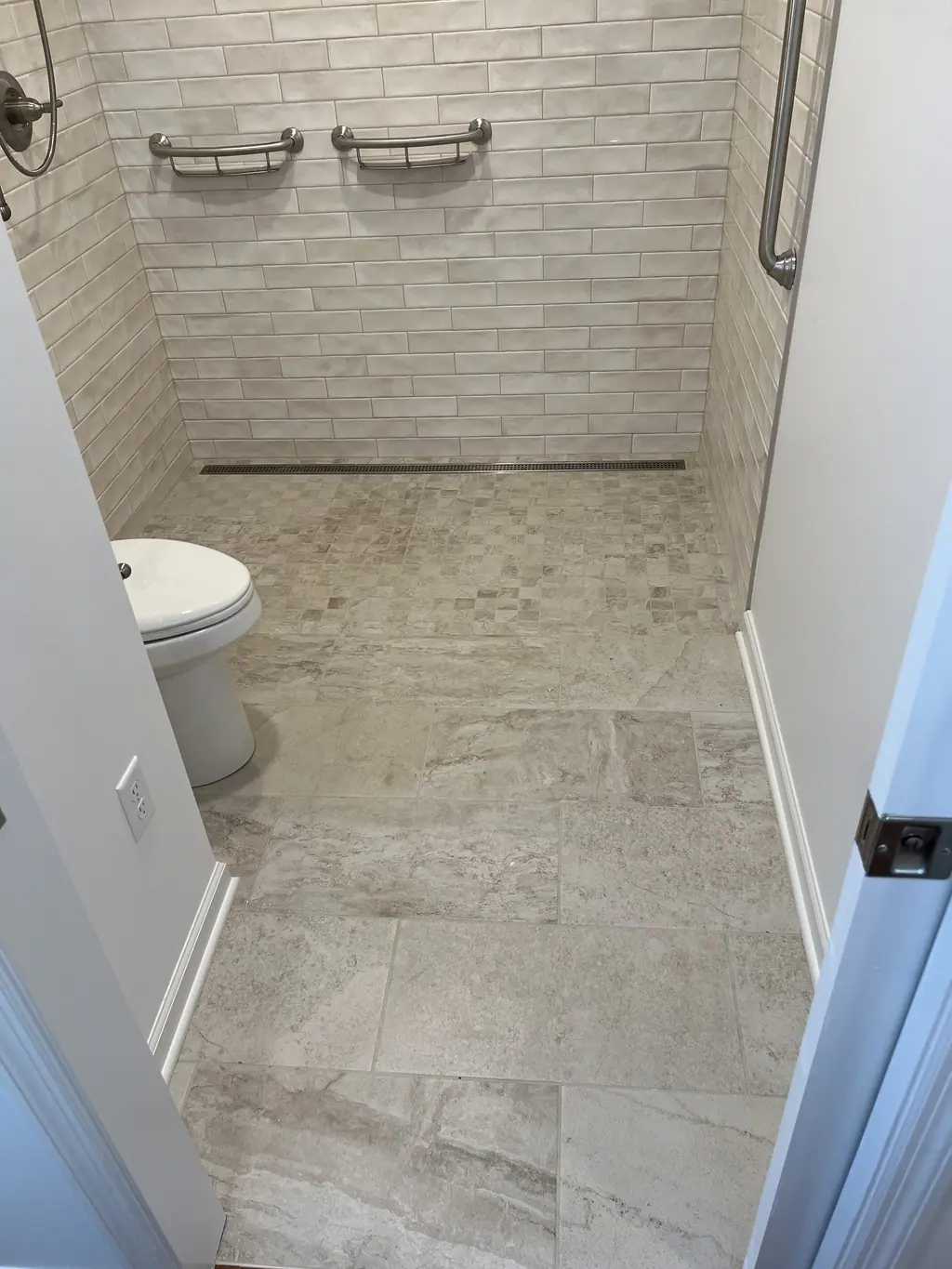
Water has to go somewhere. A shower floor needs consistent slope to the drain, commonly about a quarter inch per foot, with no low spots where water can sit. With a linear drain, the floor slopes in one direction, which allows large-format tile on the floor.
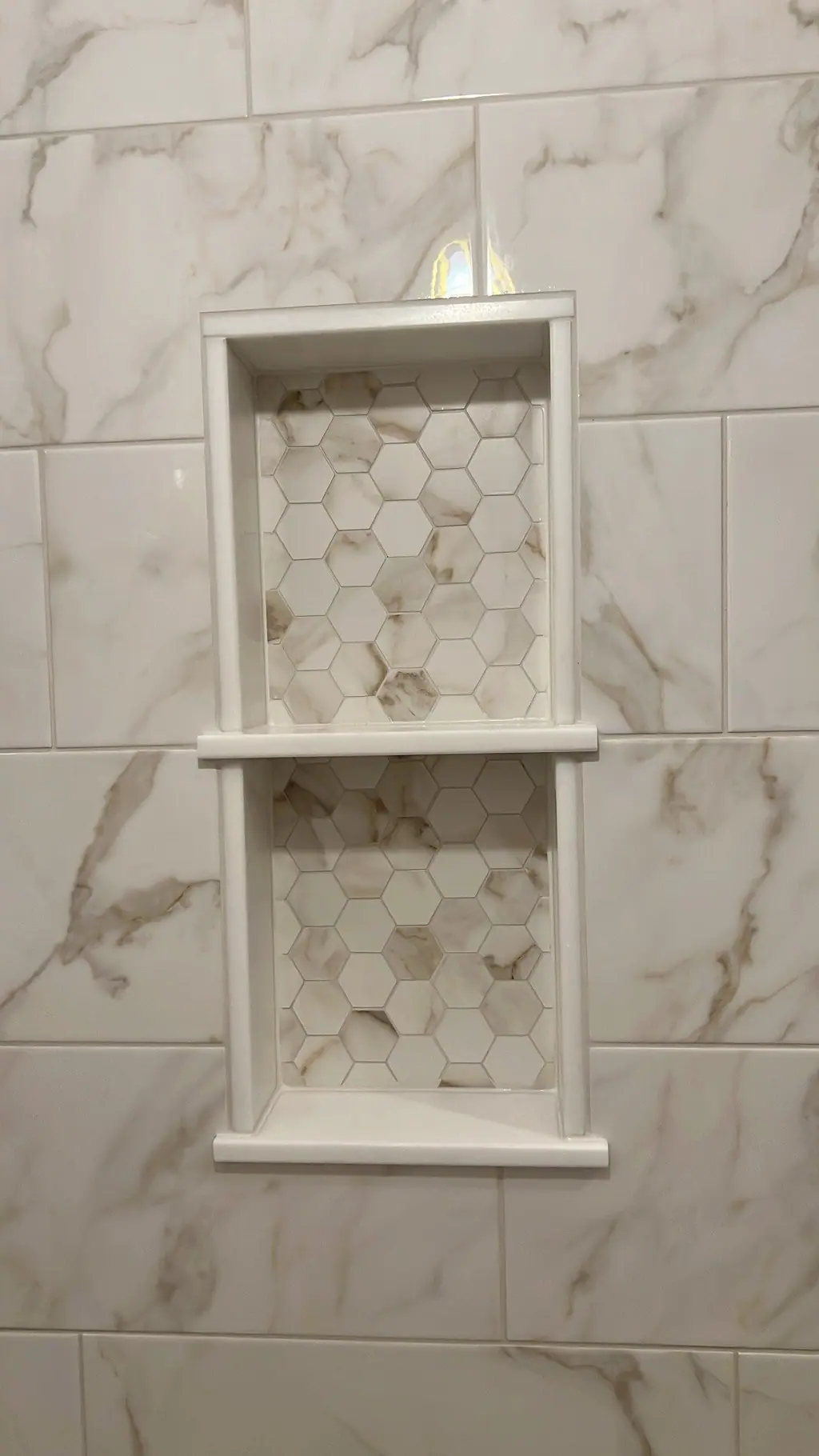
Benches and niches need slope too. A niche shelf should tilt slightly toward the shower so water doesn't pool in the back. A bench seat should pitch toward the drain. Both need the waterproofing carried continuously over every surface, including the inside corners, which are the fiddliest part of the whole shower to membrane properly.
What to ask before your shower is built
You don't need to become an installer to protect yourself. A few questions tell you a lot about how a contractor approaches the work:
- Which waterproofing system will you use on the walls and the pan, and does the drain match that system?
- How do you seal the valve, shower head and niche corners?
- Do you flood test the pan, and for how long?
- What slope will the floor have, and how is the curb built?
- What's behind the tile on the walls: cement board, foam board, or something else?
Frequently asked questions
Is greenboard waterproof enough for a shower?
No. Greenboard is moisture-resistant drywall. It's no longer considered suitable as a tile backer in wet shower areas. Showers should use cement board, foam board or another approved backer along with a waterproofing layer.
Can I just reseal the grout to stop a leak?
Resealing helps grout resist stains and slows how fast it absorbs water, but it won't fix a failed pan or membrane. If you see loose tiles, soft spots or stains below the shower, the problem is likely behind the tile.
How does F2 waterproof showers?
We build on a bonded waterproofing membrane over the walls and pan, sealed at every seam and penetration, and flood test before tiling. You can read more about our bathroom remodeling in Media, PA or contact us for a free estimate.
Planning a bathroom remodeling project in Media?
Get a free in-home estimate from F2.