
Key takeaways
- Manufactured stone is lighter and usually less expensive; natural thin stone has true variation.
- Painted brick and drywall need lath, scratch coat or backer board before stone.
- Follow the fireplace manufacturer's clearances for mantels and surrounds.
- Anchor the mantel before the stone goes on.
- Judge samples in your own room's light, and against any real stone on the property.
Stone has deep roots in Chester County. Fieldstone farmhouses and bank barns dot the townships, and older buildings in and around West Chester Borough use locally quarried stone, including green serpentine. It is no surprise that many homeowners here want stone on their fireplaces, especially in the 1980s and 1990s homes around West Chester where the original fireplace is plain brick or painted drywall with a simple wood mantel.
Stone veneer makes that possible without building a full masonry wall. This guide covers the types of veneer, how the wall should be prepared, the safety details around the firebox and mantel, and how to pick a style that suits your home.
Manufactured stone vs. natural thin stone
There are two main kinds of stone veneer. Manufactured stone is cast from a lightweight concrete mix in molds taken from real stone and colored to match. Natural thin stone is real stone quarried and sawn to a thin profile, typically an inch or so thick, so it is light enough to be adhered to a wall instead of supported by a foundation.
Manufactured stone usually costs less, comes in a wide range of profiles, and is consistent from box to box. Its color is on and near the surface, so a deep chip can show the core. Natural thin stone has true variation in color and texture and cannot fade, but it typically costs more and takes longer to fit. Both are installed with mortar and require the same attention to surface prep.
Profiles to know
Fieldstone and river rock profiles have irregular, rounded shapes with wider mortar joints, close to the look of old Chester County walls. Ledgestone and stacked stone use long, thin horizontal pieces fitted tightly together, which reads as more modern. Cut or ashlar stone uses rectangular pieces in a more formal pattern.
Preparing the fireplace wall
Stone veneer is only as secure as its bond to the wall behind it. The prep depends on what the fireplace is made of now:
- Clean, unpainted brick: can often take veneer directly after cleaning, once a bond test confirms it.
- Painted or sealed brick: usually needs metal lath fastened to the masonry and a mortar scratch coat.
- Drywall over framing: typically replaced or covered with cement board, or lath and scratch coat, per the stone manufacturer's instructions.
- Existing tile or stone: removed, or assessed for whether it can be covered.
Clearances, hearths and mantels
Stone itself does not burn, but what is behind it and around it matters. The fireplace, insert or gas unit will have manufacturer requirements for clearances to combustible materials, including how far a wood mantel must sit above and to the side of the opening. Those requirements come from the unit's installation manual and the building code, and they take priority over the design. Before planning stone around a factory-built or gas fireplace, check that the surround material and the backing are approved for the unit.
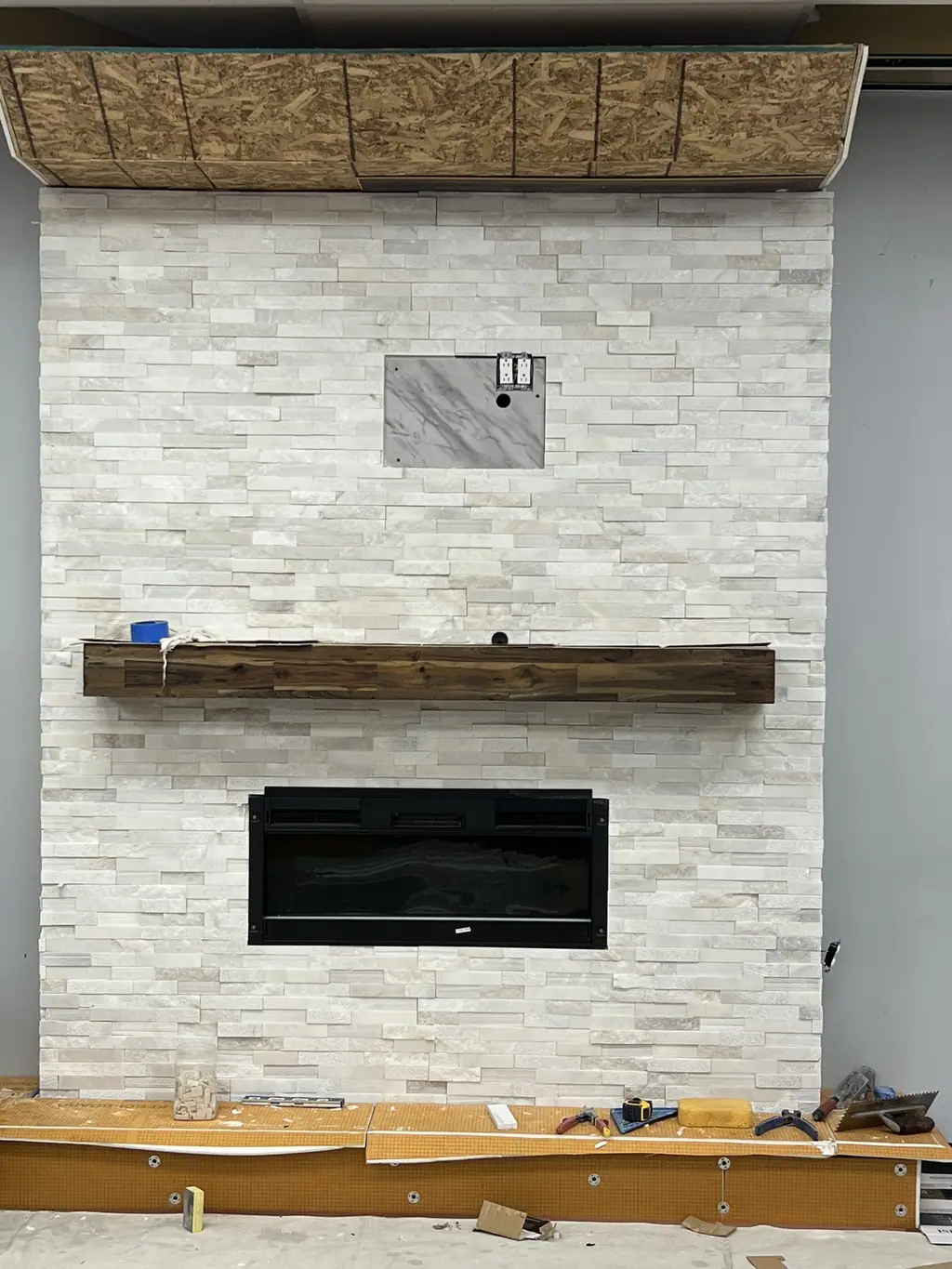
The mantel should be anchored to framing or masonry before stone goes around it, usually with a hidden bracket or a blocked-in ledger. Trying to hang a heavy mantel after the stone is in place is harder and less secure. Hearth changes are also easier to make at this stage, such as extending a raised hearth or replacing the hearth slab with a single stone piece.
Choosing a stone style that fits the house
A fireplace is large and hard to change, so it is worth taking time over the color and profile. A few practical steps help:
Look at samples in the room, in daylight and at night under your usual lighting. Stone that looks warm in a showroom can look gray in a north-facing family room. If your home or property has real stone, like a fieldstone foundation or a garden wall, compare samples against it. Mismatched colors next to each other are more noticeable than a clearly different style.
Think about the rest of the room. A rough fieldstone with wide joints suits a family room with wood beams or a farmhouse feel. A tight ledgestone suits cleaner, more contemporary spaces. Height matters too: stone run all the way to the ceiling makes a stronger statement than stone that stops at the mantel.
How installation goes
A typical fireplace installation starts with protecting the floor and room, then preparing the surface. Before stone goes on the wall, the installer lays pieces out on the floor to mix colors from several boxes and plan the pattern. Corner pieces are set first, then the field, working from the bottom up. Joints are grouted with a mortar bag and tooled, or kept tight for dry-stack styles. Mortar on the face of the stone is cleaned off before it cures.
Timing depends on the size of the surround, the profile and the prep needed. A scratch coat needs time to cure before stone goes on it, which adds days to the schedule.
Planning your project
Stone veneer is a smaller part of F2's work than tile, and we are straightforward about that; our past stone work includes a stacked-stone fireplace, and the substrate prep and layout skills come from our tile work. If you are considering a fireplace refresh, see our stone veneer in West Chester page, or contact us for a free estimate.
Frequently asked questions
Is stone veneer safe around a gas fireplace?
Stone is noncombustible, but the unit's installation manual sets clearances and approved surround materials. Follow those requirements, and have the gas unit checked by a qualified technician if it is being modified.
Can stone go over painted brick?
Usually not directly. Paint prevents a good mortar bond, so the standard approach is metal lath fastened to the brick and a mortar scratch coat, then the stone.
How heavy is stone veneer?
Adhered veneer is designed to be light enough to attach to a prepared wall without extra foundation support. Weight varies by product; natural thin stone tends to be heavier than manufactured stone. The manufacturer's specifications list the weight per square foot.
Can I keep my existing wood mantel?
Often yes, as long as it meets the required clearance from the firebox opening and can be securely anchored. It usually comes off during installation and goes back on once the stone is in.
Planning a stone veneer project in West Chester?
Get a free in-home estimate from F2.