Key takeaways
- Veneer performance depends on the drained wall assembly behind it, not just the stone.
- Natural thin stone usually matches old fieldstone better; manufactured stone is lighter and generally costs less.
- Keep stone above soil and mulch, and end it at a weep screed.
- Flash every roof, window, door and deck intersection.
- Check historic district and HOA rules before choosing materials.
Drive any back road between Doylestown, Buckingham and Plumstead and you'll pass fieldstone farmhouses, stone bank barns and stone walls along the fields. Newer homes in the area often borrow that look with stone on the front elevation, a stone foundation skirt or stone-wrapped porch columns. Stone veneer is how most of that is done today.
Veneer is a thin layer of stone attached to a wall, not a structural wall of stone. That makes it lighter and much less expensive than full masonry, but it also means its performance depends almost entirely on what's behind it. This guide covers the choice of material, the wall assembly and the local details worth getting right.
Why stone veneer is so common in Bucks County
Stone is part of the local building tradition. Older houses in the county were often built of fieldstone gathered on site, laid with wide lime mortar joints and sometimes covered with stucco. Newer subdivisions around Doylestown Township, Warrington and New Britain often use veneer to tie a vinyl- or fiber-cement-sided house to that tradition, usually on the front elevation or around the base.
Homeowners usually come to veneer for one of three reasons: to cover an exposed concrete or block foundation, to add stone to a front elevation or porch, or to replace veneer that was installed poorly the first time.
Natural thin stone vs manufactured stone
Both products are installed with a similar method, but they look and age differently.
Manufactured stone
Manufactured stone is lightweight concrete cast in molds taken from real stone and colored with pigment. It's consistent, relatively light and generally less expensive. Because the color is concentrated near the surface, a chipped corner or cut edge can show gray concrete, so cut pieces are placed carefully or turned to the back. Some profiles repeat noticeably across a large wall if pieces aren't mixed from several boxes.
Natural thin stone
Natural thin veneer is real quarried stone, sawn to roughly an inch thick with corner pieces cut in an L-shape. The color goes all the way through, it weathers like stone, and it tends to match an old fieldstone wall more convincingly. It generally costs more for material and takes more time to fit, because the pieces vary more in size and shape.
Mortar and joint style
The mortar matters almost as much as the stone. A wide, slightly recessed joint in a warm gray or tan reads like old Bucks County masonry. A tight, dry-stacked look reads as more modern. Ask to see a sample panel with the actual mortar color before the whole wall goes up.
The part you don't see: drainage behind the stone
Stone and mortar absorb water. On an exterior wall, some rain will always get through the veneer, so the wall behind it has to let that water drain down and out rather than soaking into the sheathing. Southeastern Pennsylvania has seen a lot of damage from stucco and stone veneer installed without these details, and the repairs are expensive because the damage is hidden until it's advanced.
Manufacturer instructions and building codes describe a layered assembly. On a wood-framed wall it typically includes:
- Sheathing in sound condition.
- A water-resistive barrier, often two layers or a barrier plus a drainage mat, to create a path for water.
- Corrosion-resistant metal lath fastened into the framing.
- A scratch coat of mortar, allowed to cure.
- The stone, set in a full mortar bed with joints filled.
- A weep screed at the bottom so water can exit the wall.
- Flashing at windows, doors, roof intersections and anything that penetrates the wall.
Freeze-thaw and the places veneer fails
Bucks County winters swing above and below freezing many times. Water trapped in mortar or behind stone expands when it freezes, which loosens stones and cracks joints over time. The failures cluster in predictable spots.
At the ground
Veneer manufacturers call for the stone to stop several inches above soil and a smaller distance above paved surfaces. Stone that runs into a mulch bed stays wet and wicks water up into the wall. When landscaping is redone after the stone goes up, keep the beds pulled back.
Where a roof meets the wall
A porch or garage roof that butts into a stone wall needs step flashing and a kickout flashing at the bottom to throw water away from the wall. Missing kickouts are a common cause of rot below that corner.
Around windows, doors and decks
Sills and heads need flashing that laps correctly over the barrier. A deck ledger against a veneered wall needs its own flashing plan, and it's usually better to keep veneer off the area where the ledger attaches.
Matching an older house
When new veneer has to sit next to an original fieldstone wall, the goal is to blend, not duplicate. Look at the existing stone for its dominant colors, the typical size of pieces, how much mortar shows and how the joints are tooled. Natural thin stone from a similar rock type usually gets closer than manufactured stone.
Lay out a sample panel of a few square feet on the ground or on a board, and look at it outside next to the house on both a sunny and an overcast day. Mortar dries lighter than it looks when wet, so judge a cured sample if you can.
Permits, historic districts and HOAs
Whether exterior veneer needs a permit depends on the scope and your municipality. Re-cladding a wall is more likely to involve the code office than adding a stone skirt to a foundation. Inside Doylestown Borough's historic district, exterior changes visible from the street may need review by the borough's Historical and Architectural Review Board, and many newer neighborhoods have HOA rules on exterior materials. Check both before ordering stone.
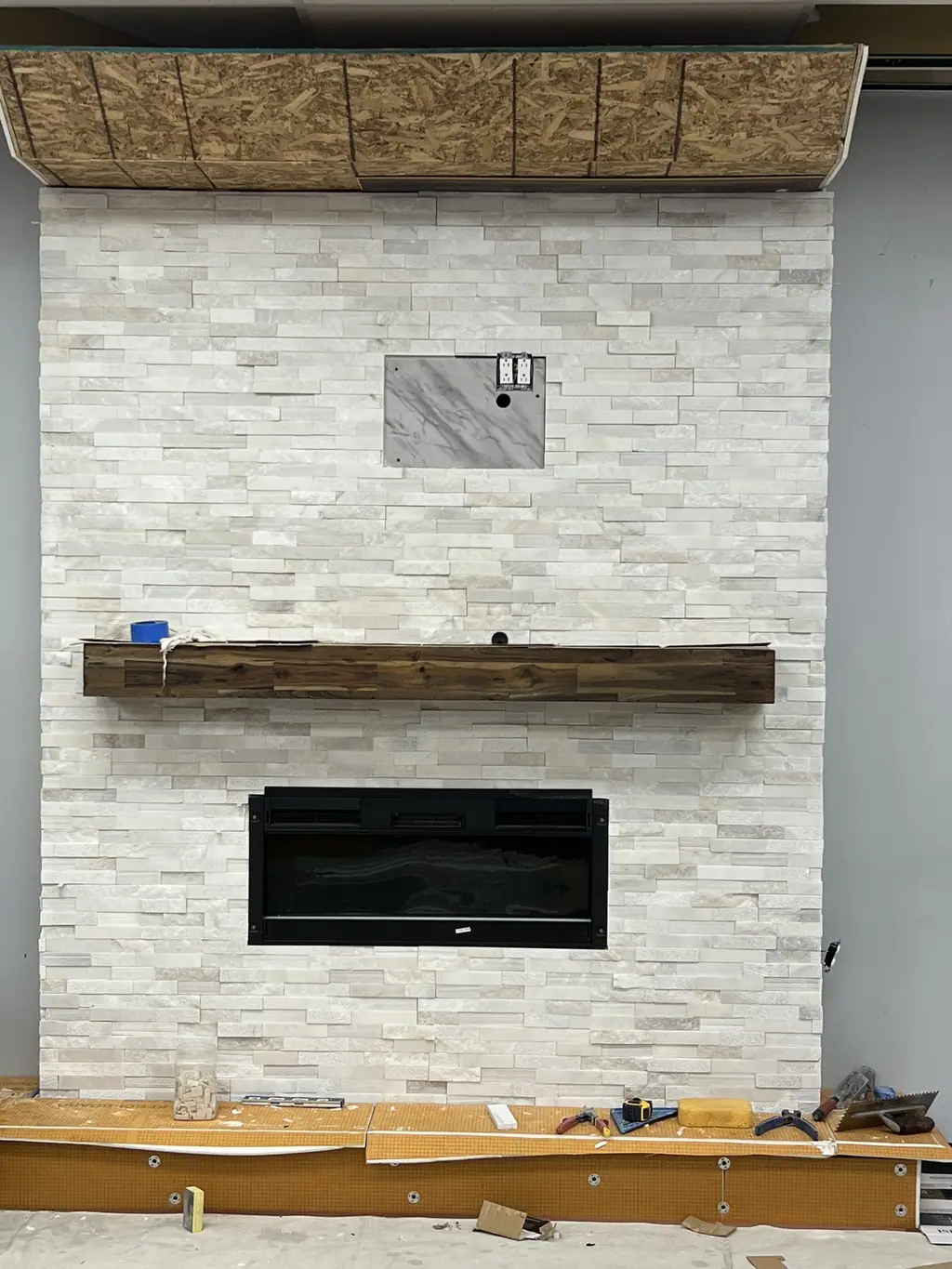
F2 Home Improvement installs stone veneer on fireplaces, accent walls and exterior bases in Doylestown and nearby towns. Stone is a smaller part of our work than tile, and we're glad to walk you through the wall assembly we'd use on your house. See our stone veneer work in Doylestown or contact us for a free estimate.
Frequently asked questions
Can stone veneer go directly over a concrete foundation?
Clean, unpainted, unsealed concrete or block can often take veneer directly or with a bonding scratch coat. Painted or sealed surfaces need lath or other preparation so the mortar bonds. The manufacturer's instructions spell out what's allowed.
Should exterior stone veneer be sealed?
Not always. If a sealer is used, it should be breathable so moisture inside the wall can still dry out. A film-forming sealer can trap water and make freeze damage worse. Follow the stone maker's guidance.
How do I know if existing veneer has water problems behind it?
Warning signs include staining below windows, soft or swollen trim, efflorescence, and stone that meets the ground or a roof line with no weep screed or flashing visible. A moisture inspection by a building envelope specialist is the way to confirm.
Is manufactured stone heavy enough to need extra support?
Adhered manufactured stone is light enough for a typical framed wall without extra footings. Full-thickness stone is a different system that needs a ledge or footing to rest on.
Planning a stone veneer project in Doylestown?
Get a free in-home estimate from F2.