Key takeaways
- House age predicts most of what you'll find behind the tile.
- Vent the bathroom fan outdoors; humidity here is high year-round.
- Well water affects glass, grout and tile finish choices.
- A continuous waterproof membrane, tested before tile, protects the framing.
- Budget time and money for repairs found during demolition.
Cecil County has a mix of housing that makes bathroom remodels hard to generalize. A 1950s cottage near the Elk River, a 1970s split-level outside North East and a 2005 colonial in a Route 40 subdivision each hide different problems behind the tile. The finished bathroom may look similar, but the path there is not the same.
This guide walks through how a bathroom remodel usually unfolds in this part of Maryland: what to check first, what tends to turn up during demolition, and which choices make sense given local humidity and water. It's written for homeowners planning a project, whether you hire it out or want to understand what a contractor should be doing.
Start with the house, not the tile
Before choosing finishes, it helps to know what kind of bathroom you have underneath. The age of the house is the best predictor. Once you know what you are working with, the scope and budget conversations get much clearer.
Older homes in and around Elkton
Homes built before the 1960s often have tile set in a thick mortar bed over wire lath, plaster walls, cast-iron tubs and galvanized supply pipes. Mortar-bed tile is heavy and slow to remove. Galvanized pipe corrodes from the inside and restricts flow over time, so a remodel is a sensible moment to replace it. Pre-1978 houses may also have lead paint on trim and walls, which calls for lead-safe work practices during demolition.
1960s to 1980s ranches and split-levels
These bathrooms commonly have tile glued directly to drywall or early backer board, with little or no waterproofing behind it. It is common to find soft drywall or darkened studs behind the tub wall. Floors are often plywood that has taken years of water at the toilet flange and tub edge.
Newer construction
Many bathrooms built in the last 25 years use one-piece fiberglass or acrylic tub and shower units. These are easy to remove, but framing and subfloors in newer homes can be lighter, and engineered joists limit where a drain can move. A bathroom that looks simple can need more floor work than expected if you want tile.
Humidity and ventilation along the upper bay
Cecil County summers are humid, and homes near the Elk, Northeast, Bohemia and Sassafras rivers feel it most. A bathroom adds daily steam on top of that. If the moisture has nowhere to go, it condenses on cold surfaces, soaks into drywall above the shower and feeds mildew in grout and caulk.
An exhaust fan that vents outdoors is the single most useful upgrade in most remodels. During demolition, we often find fans that vent into an attic, into a soffit where the air loops back in, or not at all. Size the fan to the room, run the duct outdoors with as few bends as possible, and consider a humidity-sensing or timer switch so it keeps running after the shower ends.
- Check where the current fan actually vents before the ceiling is closed up.
- Use a mold-resistant drywall or cement board outside the wet area.
- Plan for a door undercut or return path so the fan can pull air in.
Well water, septic and your fixture choices
Much of rural Cecil County runs on private wells and septic systems. Both affect a bathroom remodel in ways people don't always expect.
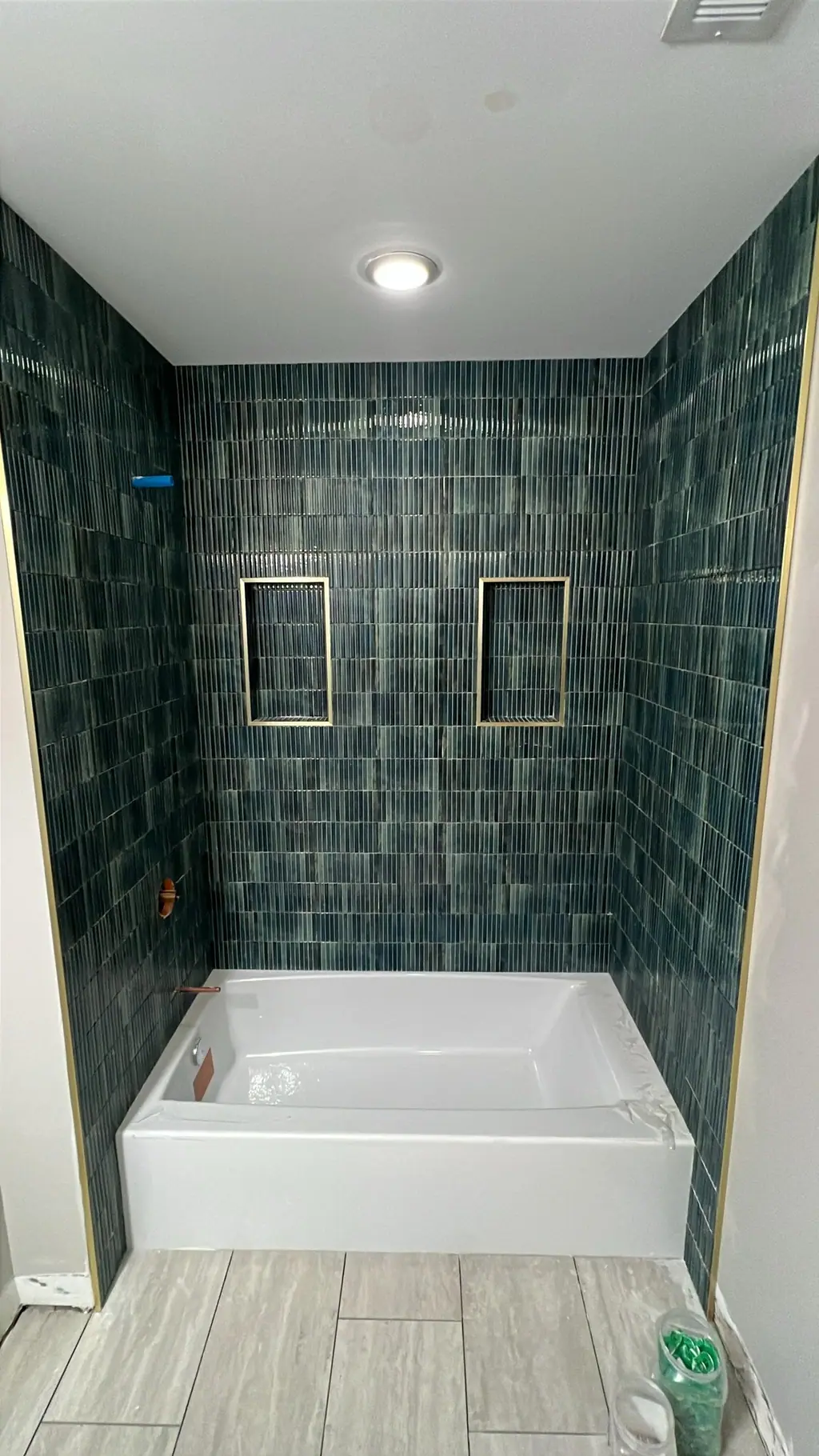
Well water often carries minerals like calcium and iron. Hard water leaves white scale on glass and chrome; iron can leave orange staining in grout and on fixtures. That changes a few decisions. Frameless clear glass shows spotting quickly, so a factory-applied glass coating is worth asking about. Dark, glossy tile shows scale more than matte or mid-tone tile. Stain-resistant grouts clean up more easily than standard cement grout. A water treatment system solves the problem at the source and is handled by a separate trade.
On septic, moving a toilet or adding a bathroom may need review, since septic systems are sized for a certain load. If your remodel adds fixtures, confirm the change with the county before committing to the layout.
The order of work in a typical remodel
Every job varies, but a full bathroom remodel with a tile shower tends to follow the same sequence. Knowing it helps you plan around the downtime.
- Walkthrough and scope: layout, tile, drain type, fan and any plumbing moves.
- Permit check: requirements are confirmed with the Town of Elkton or Cecil County, depending on the address.
- Demolition down to studs and subfloor, with debris hauled away.
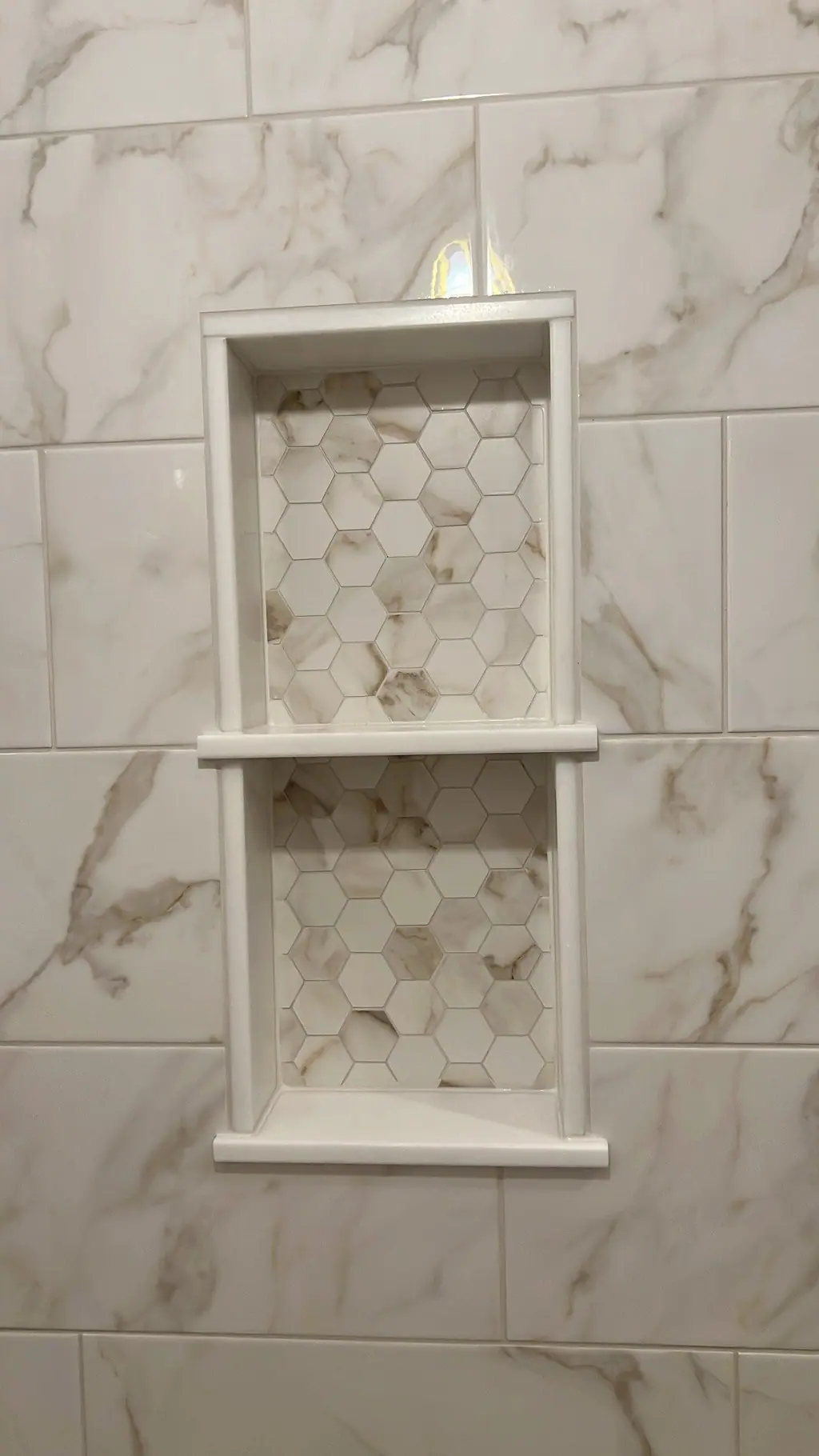
- Framing and subfloor repair, blocking for grab bars and glass, niche framing.
- Rough plumbing and electrical by licensed trades where required.
- Shower pan, backer and waterproof membrane, followed by a flood or water test.
- Tile, grout, and sealing where the material calls for it.
- Vanity, toilet, trim, glass and final caulk.
Why waterproofing is its own step
Grout and tile are not waterproof. Water moves through grout joints into whatever is behind them. A sheet membrane (Schluter Kerdi-style) or a liquid-applied membrane over the walls and pan is what keeps water out of the framing. It should be continuous, lapped at seams and sealed at the drain and valve. Testing the pan before tile goes down is the only way to find a problem while it's still easy to fix. Our post on shower waterproofing explains the options in more depth.
Choosing tile that suits the room
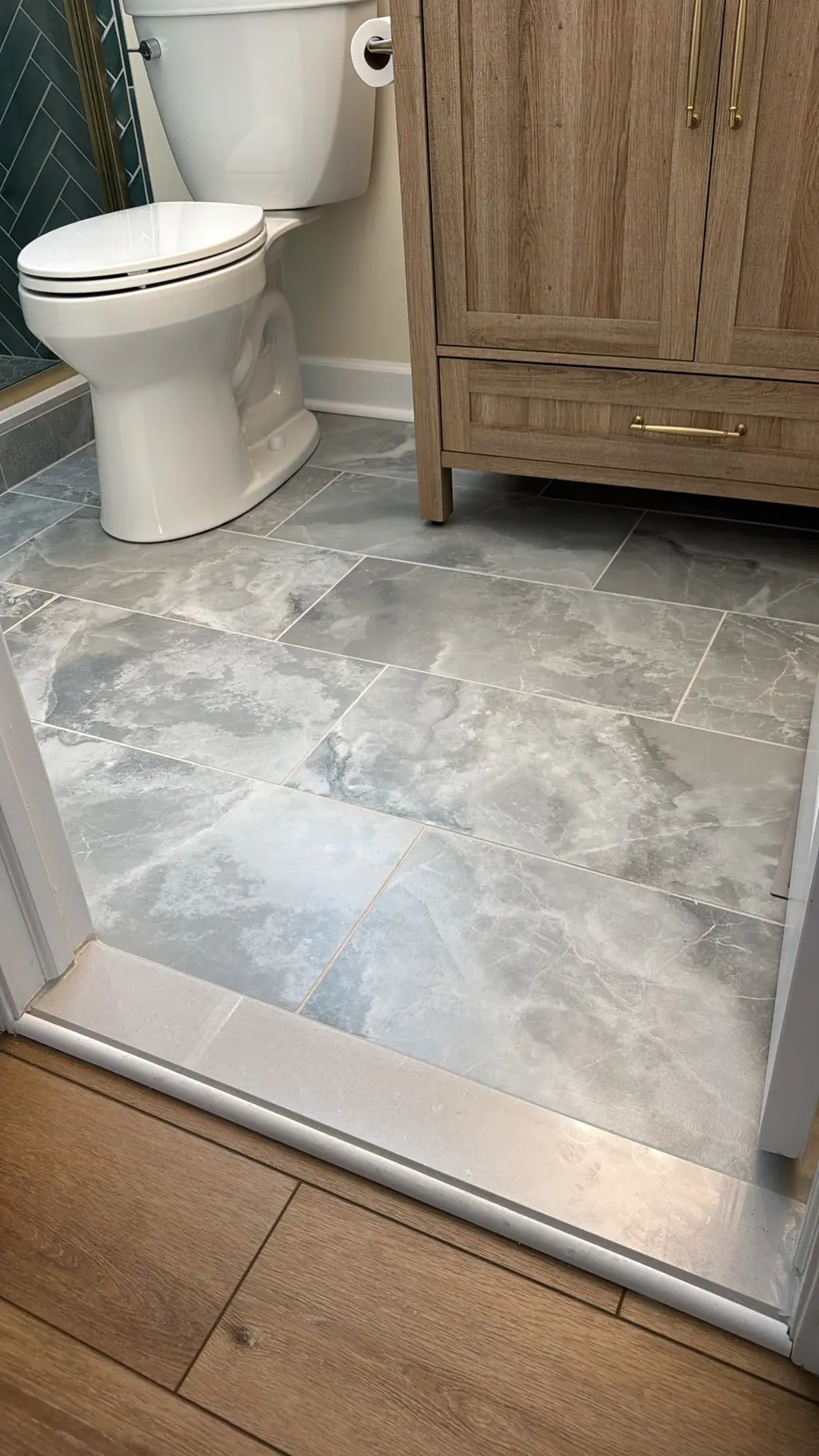
Porcelain is the default for shower walls and floors in this region. It absorbs very little water and handles daily wet-dry cycles well. Ceramic works well on walls. Natural stone can be beautiful but needs sealing and gentler cleaning, and some stones react to iron-rich water.
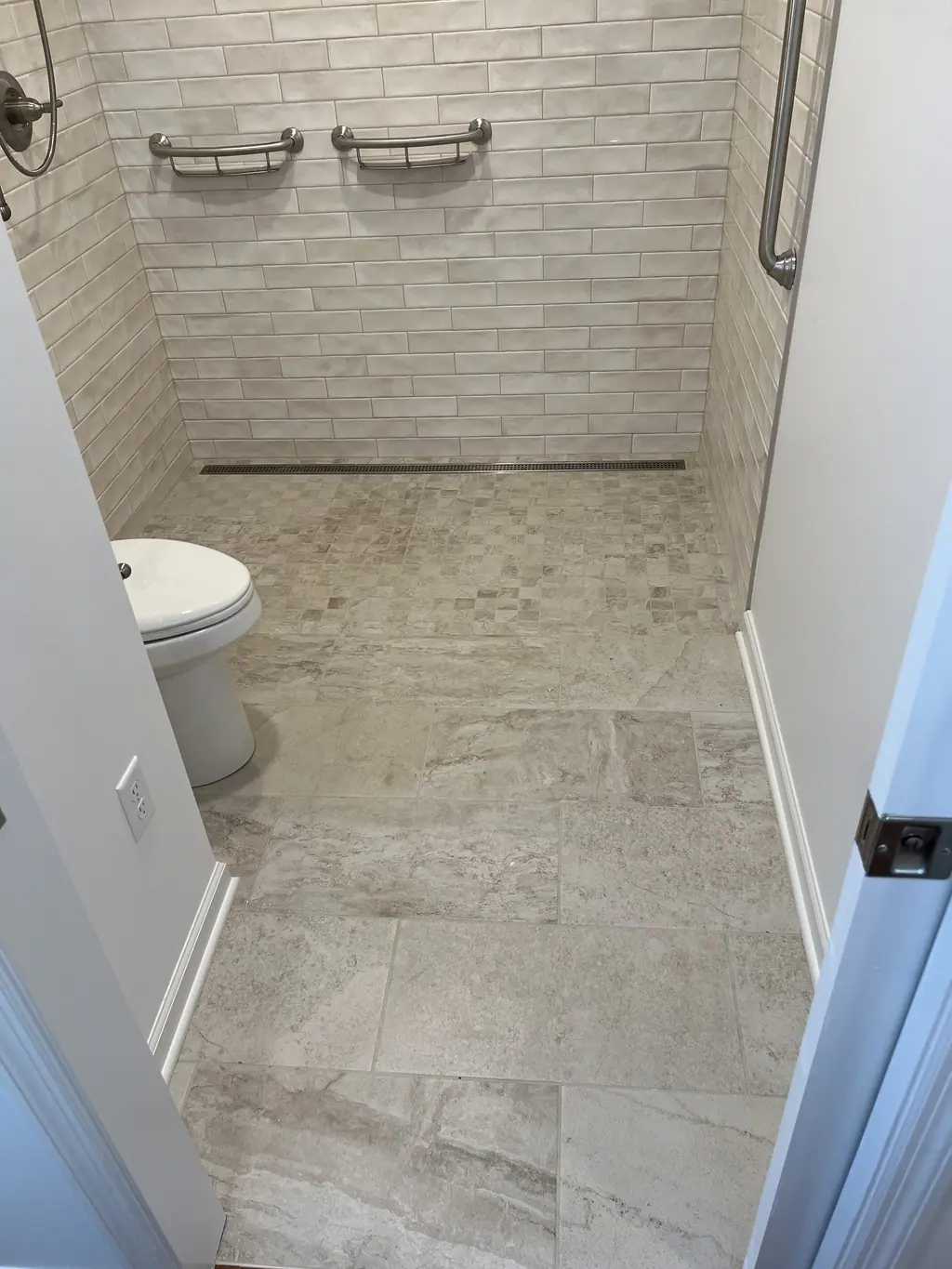
On shower floors, smaller tiles or textured finishes give better grip because there are more grout joints to hold your foot. Large-format tile on a shower floor is possible with a linear drain and a single-direction slope. For a closer look at ratings like water absorption and slip resistance, see our guide to tile for high-moisture rooms.
Planning the budget and schedule
What drives cost in a Cecil County bathroom remodel is mostly scope and surprises: how much comes out, whether plumbing moves, how much subfloor and framing repair is needed, and the tile and pattern you choose. Herringbone and mosaics take more labor than straight-lay subway. Curbless showers need floor work that a curbed shower doesn't.
Set aside part of the budget for what demolition reveals. In older homes, soft subfloor around the toilet and tub is common enough that it should be expected. Schedules depend on cure times for mortar, membranes and grout, and on inspection timing if a permit is involved. Rushing those steps is where problems start.
F2 Home Improvement handles bathroom remodeling in Elkton, MD and nearby towns. If you'd like someone to look at your bathroom and talk through scope, contact us for a free estimate.
Frequently asked questions
Do I need a permit for a bathroom remodel in Cecil County?
It depends on scope and on whether your home is in a town like Elkton or in unincorporated Cecil County. Plumbing and electrical changes usually require review. Requirements are confirmed with the local jurisdiction for each project.
What's the most common problem found during demolition?
Water damage around the toilet flange and along the tub edge: soft subfloor, darkened framing, or rot at the base of the shower wall. It's usually fixable, but it needs to be repaired before new tile goes down.
Is a tile shower worth it over a fiberglass unit?
A tile shower built on a proper membrane can last a long time and lets you choose size, niches and layout freely. Fiberglass costs less and installs faster. The right answer depends on budget and how long you plan to stay.
Can hard well water damage grout?
Minerals don't usually damage grout structurally, but they stain it and build up on the surface. Stain-resistant grout, regular cleaning with a non-acidic cleaner and water treatment all help.
Planning a bathroom remodeling project in Elkton?
Get a free in-home estimate from F2.