Key takeaways
- Porcelain tile is the most durable choice for kitchens, baths, entries and slab rooms.
- For LVP, pick a rigid-core product with a thick wear layer rated for heavy use.
- Hardwood is worth keeping and refinishing, but rarely worth installing new in a student rental.
- Buy extra tile or planks at install and store them at the property for repairs.
- Schedule flooring after messy repairs and order material well before move-out day.
Rental flooring gets a different kind of use than the floor in your own house. In Newark, many rentals are single-family houses and townhouses leased to University of Delaware students, which means several people sharing the space, furniture dragged in and out every year, wet shoes, spilled drinks and not much patience for felt pads. Add pets in some leases and a short gap between tenants, and the floor you choose has a direct effect on your repair bills.
This guide compares the three materials landlords ask about most, porcelain tile, luxury vinyl plank (LVP) and hardwood, and covers the details that make each last longer in a rental. It's written for owners of one or a few properties who handle their own upgrades, not for large apartment complexes.
What a rental floor has to survive
Before comparing materials, it helps to be specific about the damage you actually see at move-out. Most Newark landlords describe the same list, and each item points to a different weakness in a floor.
- Scratches and gouges from furniture moves, desk chairs and bikes brought inside
- Water at entries, around the kitchen sink and dishwasher, and outside the bathroom door
- Pet claws and accidents in leases that allow animals
- Stains from spilled drinks and food left on the floor
- Dents from heavy furniture and dropped objects
- Repairs that need to be finished between one lease ending and the next starting
Repairability matters as much as toughness
No floor is damage-proof. The better question is how easy it is to fix one damaged spot. A floor that resists scratches but has to be replaced across the whole room when one area fails can end up costing more than a softer floor you can patch plank by plank. Buy spare material at installation and store it in the property; matching a discontinued tile or plank color two years later is often impossible.
Porcelain tile: the hardest-wearing option
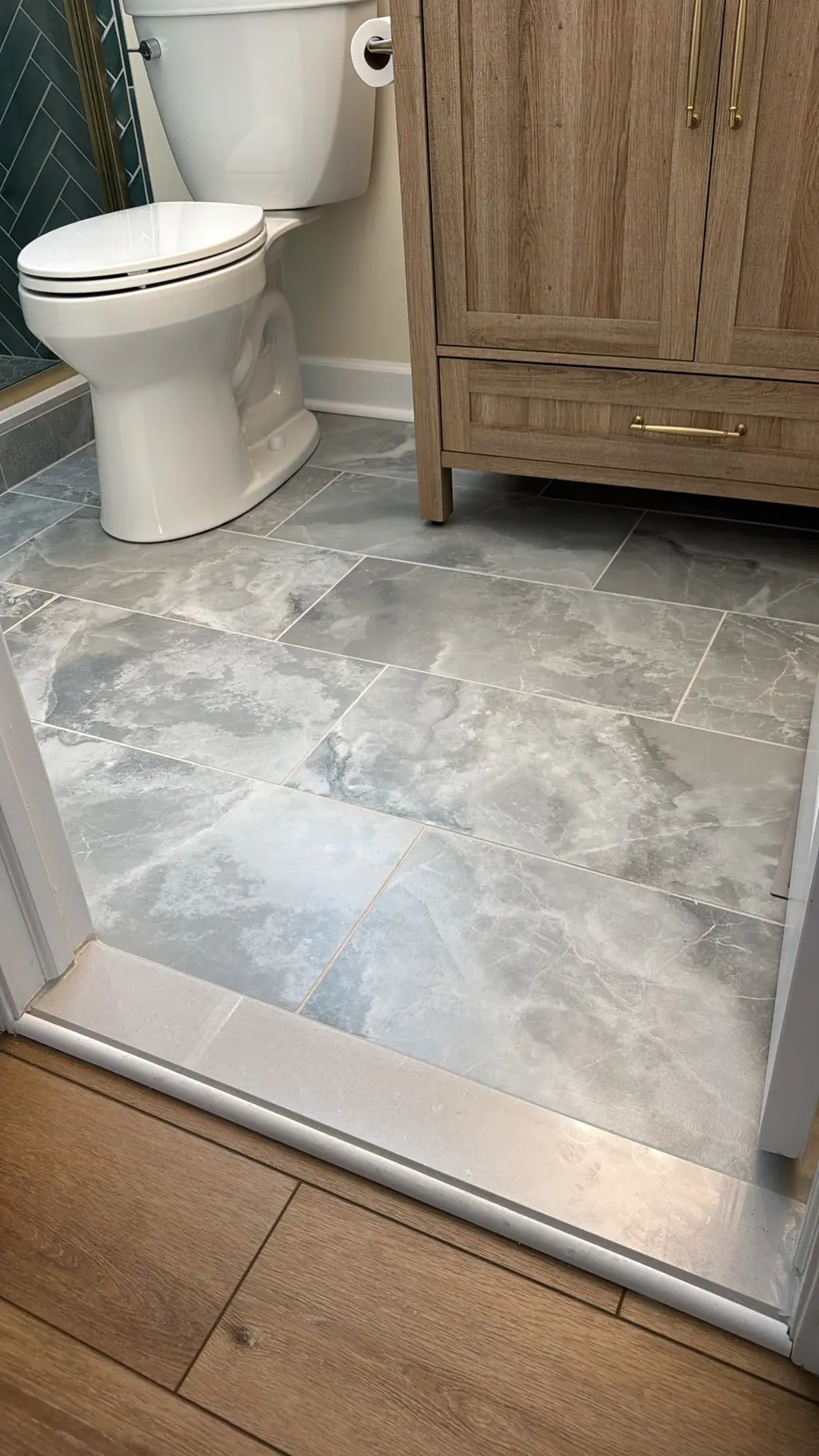
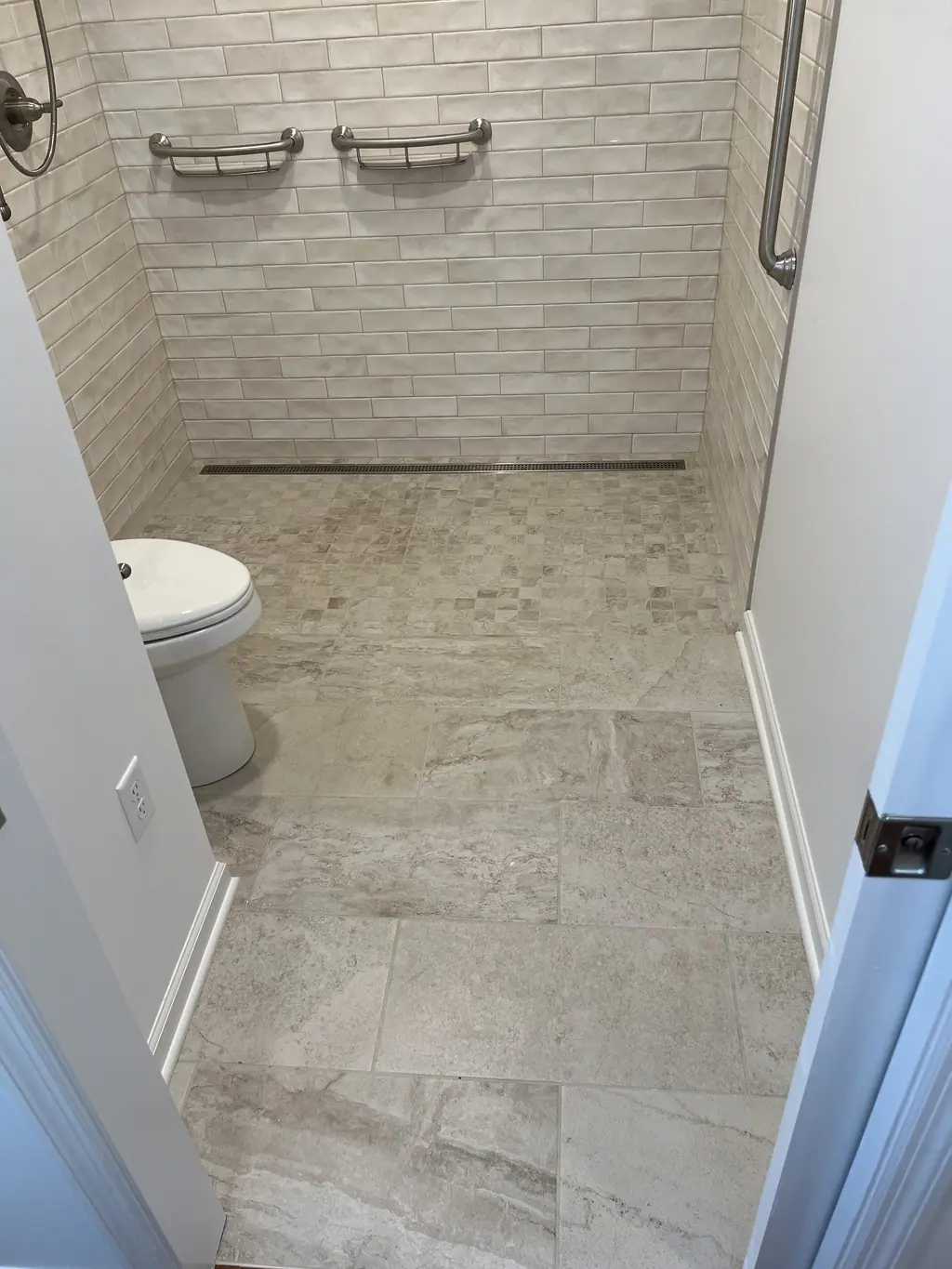
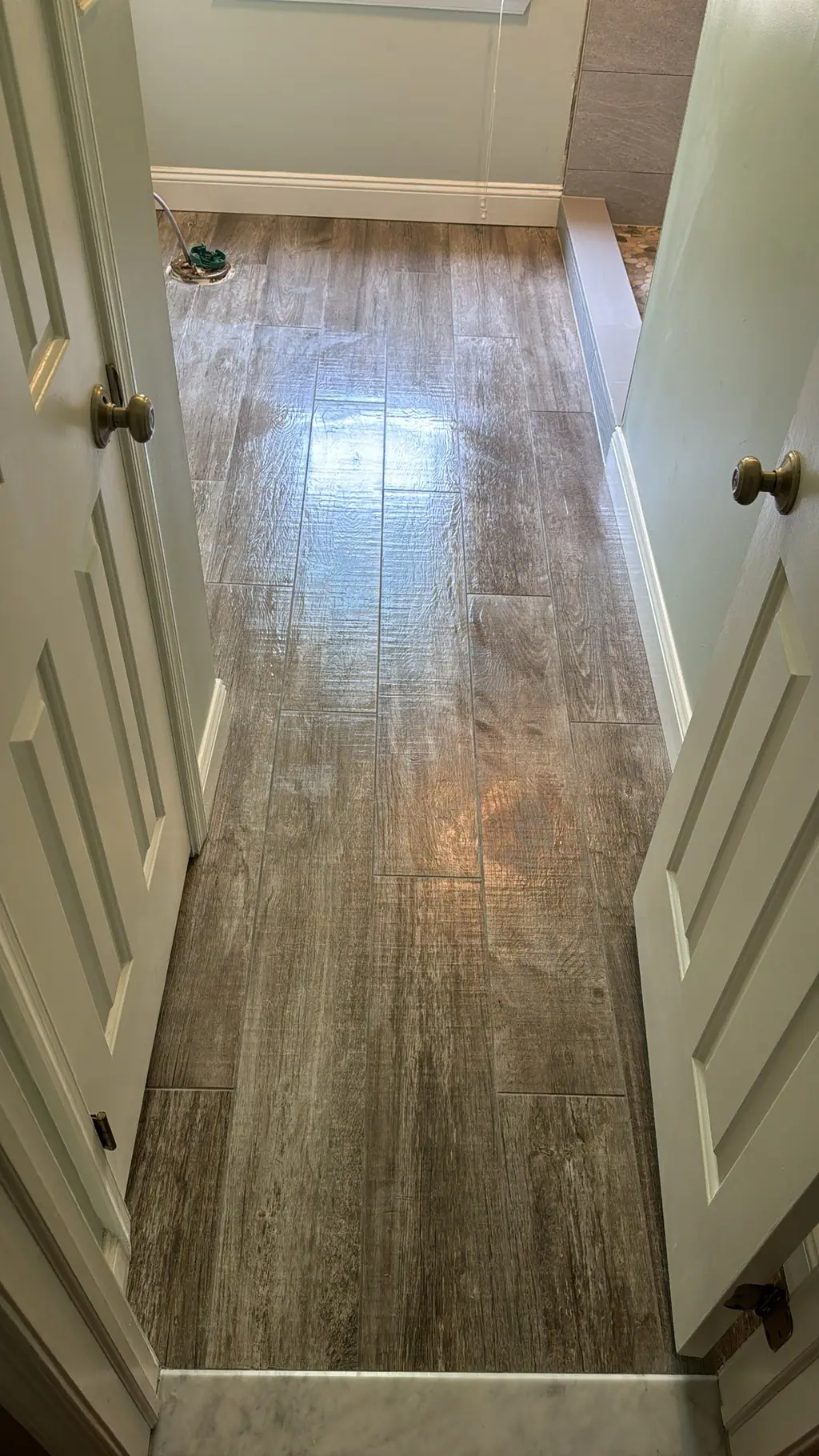
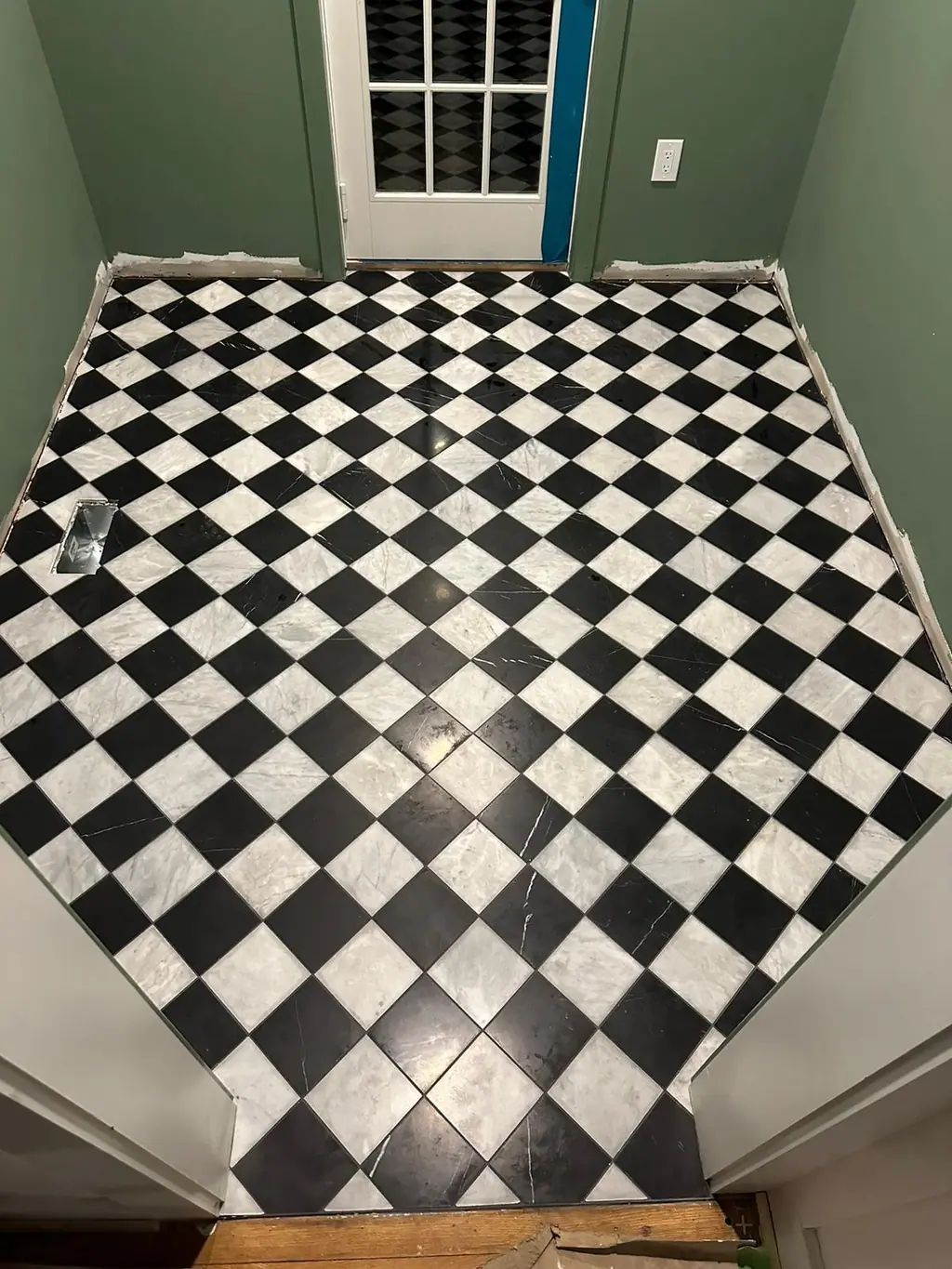
Porcelain is dense, doesn't absorb much water and resists scratches and stains better than any other common floor. For kitchens, bathrooms, entries, laundry areas and split-level lower family rooms on a concrete slab, it's the most durable choice. It doesn't care about wet boots, and a pet accident cleans up without leaving a mark.
Its weaknesses are cost, installation time and cracking. Tile takes longer to install than click-together plank, and grout needs time to cure before heavy use. A tile can crack if something heavy drops on it or if the subfloor underneath flexes. Replacing one cracked tile is possible, but only if you kept spares.
How to spec tile for a rental
Choose through-body or color-body porcelain so chips don't show a white core. Pick a matte or textured finish for wet areas so tenants don't slip, and use a mid-tone gray, taupe or brown grout rather than white, which darkens unevenly with traffic. A high-performance or stain-resistant grout costs a little more and saves cleaning at every turnover. On wood-framed floors, the subfloor has to be stiff, and an uncoupling mat can help where there is some movement.
Luxury vinyl plank: fast to install, easy to repair
LVP has become the default floor for many rentals for good reasons. It installs quickly, it's comfortable and quiet underfoot, it handles occasional water better than laminate or wood, and damaged planks can usually be swapped out. Rigid-core products (often labeled SPC) are stiffer and more dent-resistant than flexible vinyl, and they bridge small subfloor imperfections better.
The key number on the box is the wear layer, the clear top coat measured in mils. Thin wear layers are made for light residential use. For rentals, look at products with a thicker wear layer that the manufacturer rates for heavy residential or light commercial use. It costs more per square foot but holds up far better to furniture and pets.
Where LVP falls short
The planks resist water, but the seams and edges don't stop it completely. A leaking toilet or a dishwasher overflow can get under a floating floor and sit on the subfloor. Heavy appliances and kitchen islands can pin a floating floor and cause gaps or buckling elsewhere. Cheap LVP can also scratch, and it can dent under sharp point loads. In full bathrooms, laundry rooms and at exterior doors, tile is still the safer pick.
Hardwood: good in the right rooms, costly in the wrong ones
Some older Newark houses already have oak floors under the carpet, and refinishing them can be a good use of money for living rooms and bedrooms. Hardwood can be sanded and refinished several times, it appeals to tenants and it adds value when you eventually sell.
New hardwood is harder to justify in a student rental. It scratches and dents, water at entries and kitchens stains it, and pet accidents can blacken the wood. Refinishing takes the room out of use for days while the finish cures. If you keep existing hardwood, put entry mats and furniture pads in the lease checklist and plan on a screen-and-recoat every few turnovers rather than a full sand.
Matching the floor to each room
Most rentals end up with a mix. A common and sensible plan in Newark houses looks like this:
- Bathrooms and laundry: porcelain tile, matte finish, mid-tone grout
- Kitchen: porcelain tile, or rigid-core LVP where the kitchen opens to living space and you want one continuous floor
- Entry and mudroom: porcelain tile that can handle wet shoes and grit
- Lower-level family room on slab: porcelain or rigid-core LVP rated for below-grade use, installed after a moisture check
- Bedrooms and living room: rigid-core LVP, or existing hardwood refinished if it's in good condition
Timing work between leases
Many Newark leases turn over at the end of the spring semester or during the summer, and every flooring contractor in the area knows it. Line up the work before the tenants move out. Order material early so you're not waiting on backorders, and allow for acclimation time if the manufacturer calls for it. If you need other repairs, such as a bathroom rebuild, schedule the flooring after the messy work so the new floor isn't damaged. Also check whether any City of Newark rental inspection or permit requirements apply to your property and the work planned.
Details that decide how long any rental floor lasts
The material gets most of the attention, but a few installation details cause most rental floor failures. The subfloor needs to be flat and solid; squeaks and bounce turn into cracked grout under tile and clicking, separated joints in LVP. Transitions need proper metal or wood profiles, because a raw edge at a doorway is where chipping and peeling start. Baseboards and shoe molding should be reinstalled tight to the floor, and silicone caulk at tubs and toilets keeps mop water from getting underneath.
If you're planning upgrades on a Newark-area rental, F2 Home Improvement installs tile, LVP and hardwood and can look at the subfloor before recommending a material. See our flooring installation in Newark, DE page for how we work, or contact us for a free estimate timed around your lease dates.
Frequently asked questions
What is the cheapest durable flooring for a rental?
Rigid-core luxury vinyl plank usually has the lowest installed cost for good durability in living areas and bedrooms. In bathrooms and at entries, porcelain tile costs more up front but tends to need fewer repairs over several leases.
Can I put LVP in a rental bathroom?
You can, but water from a leaking toilet or tub edge can get under a floating floor. If you use LVP there, caulk carefully at the tub and toilet and check it at every turnover. Tile is the more reliable option for full bathrooms.
Should I replace carpet in rental bedrooms?
Many landlords switch bedrooms to LVP because it cleans easily between tenants, doesn't hold odors and can be repaired plank by plank. Area rugs, supplied by tenants, cover the comfort gap.
How long does it take to replace floors between leases?
It depends on square footage, material and subfloor condition. LVP in a few rooms can go quickly; tile takes longer because of prep and curing. Get an estimate well before move-out so the schedule fits your turnover window.
Planning a flooring installation project in Newark?
Get a free in-home estimate from F2.