
Flooring installation is where F2 Home Improvement began. The company started in 2019 as F Tile, setting floor tile, and the crew has more than ten years in the trade. In Newark, DE we install porcelain and ceramic tile, natural stone, luxury vinyl plank and hardwood, from a single bathroom floor to a whole main level.
The part of a flooring job you never see decides how long it lasts. Before anything goes down, we check the subfloor or slab for flatness, moisture and movement, because a floor that flexes will crack tile grout and a slab that sweats will cup wood and loosen glue-down vinyl. Our general flooring installation page explains the materials; below is what matters for houses around Newark.
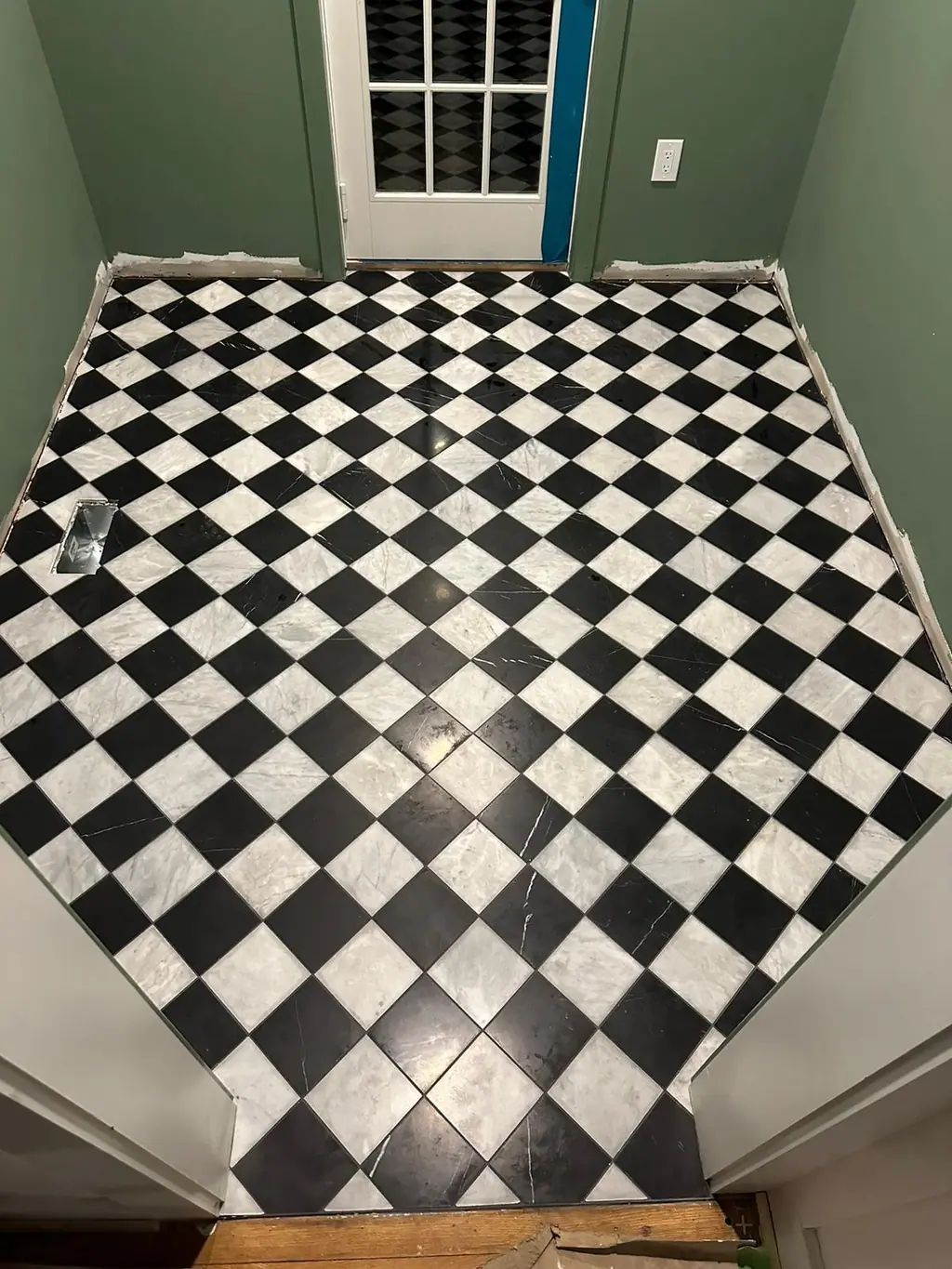
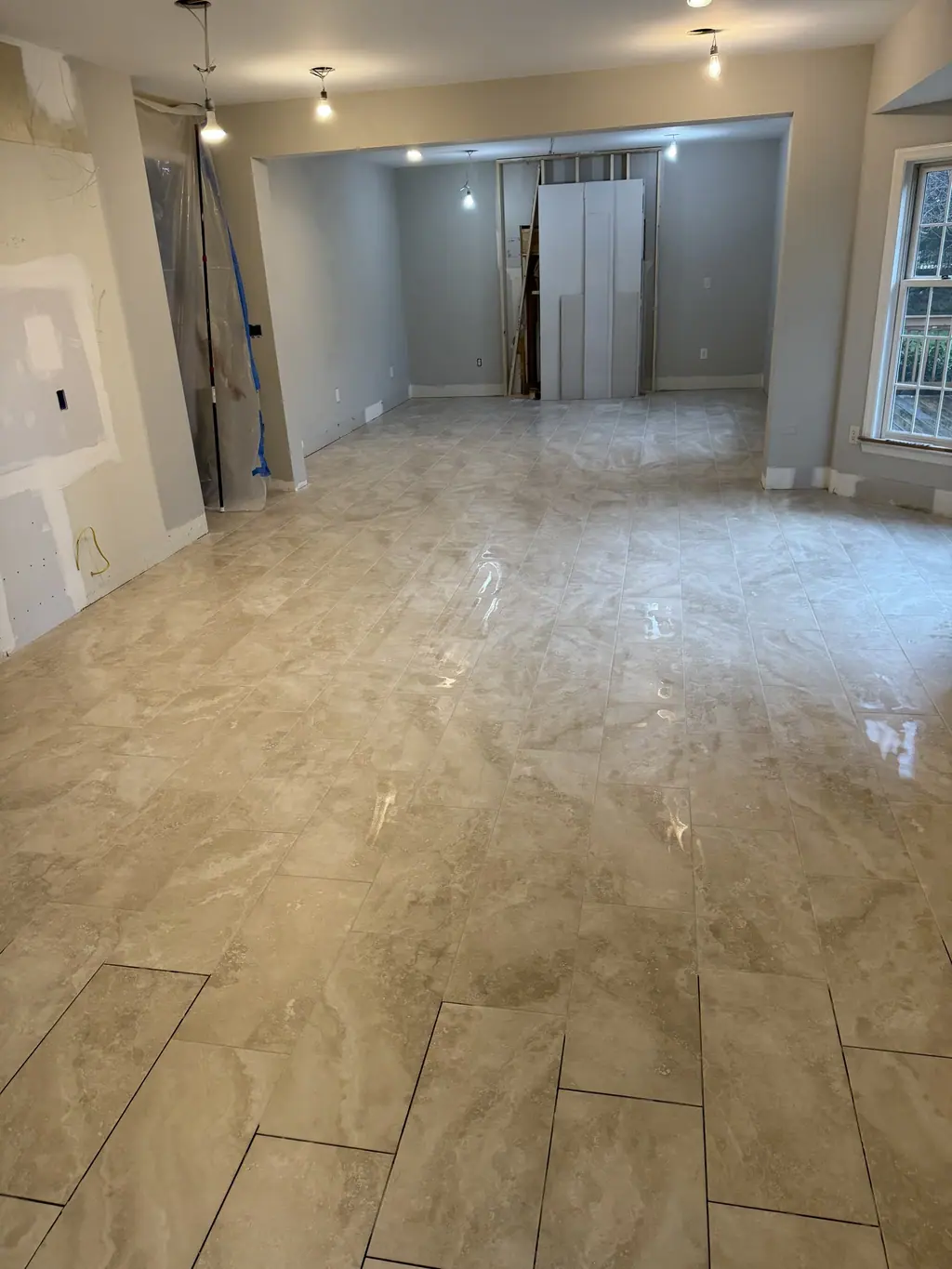
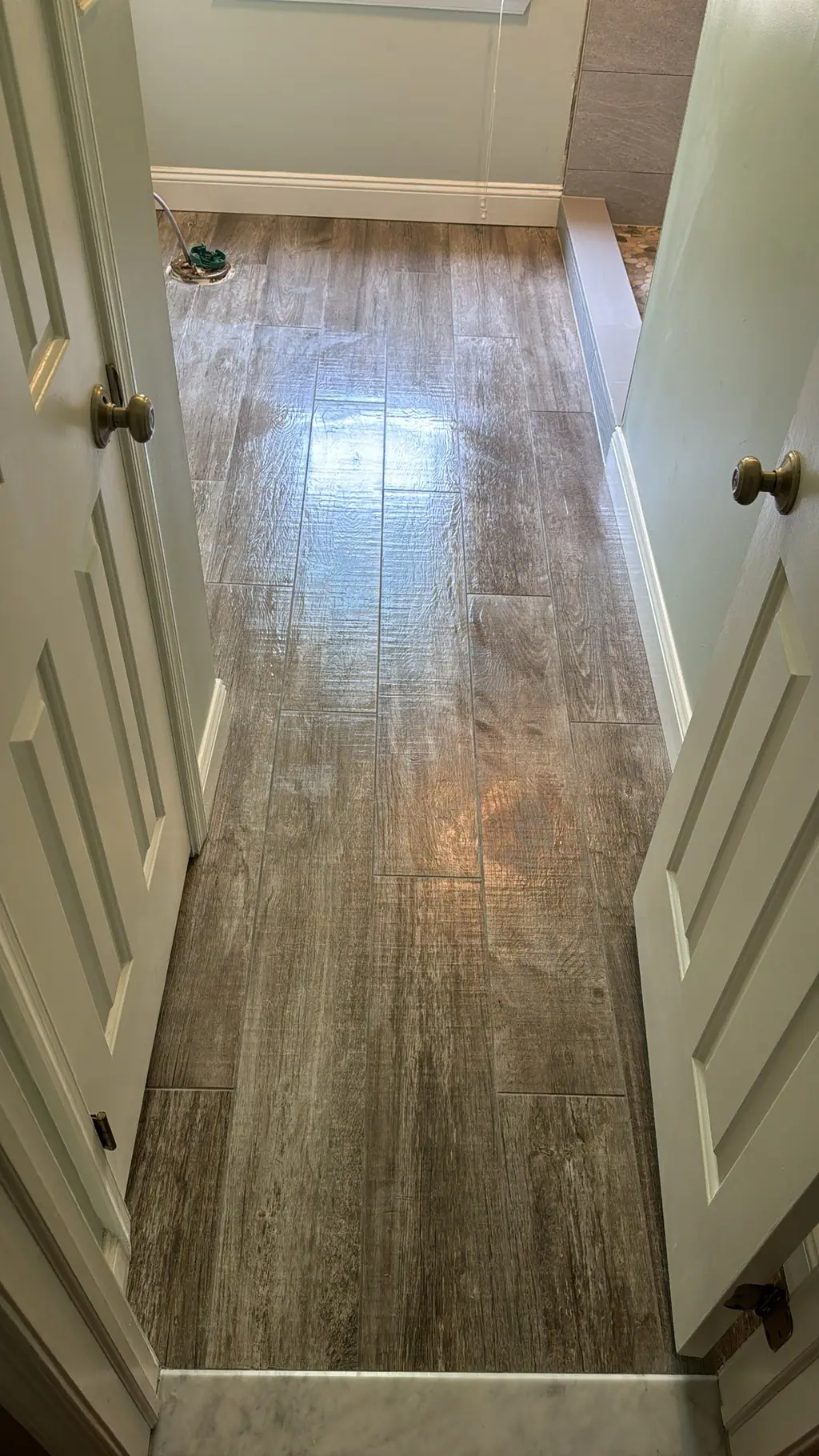
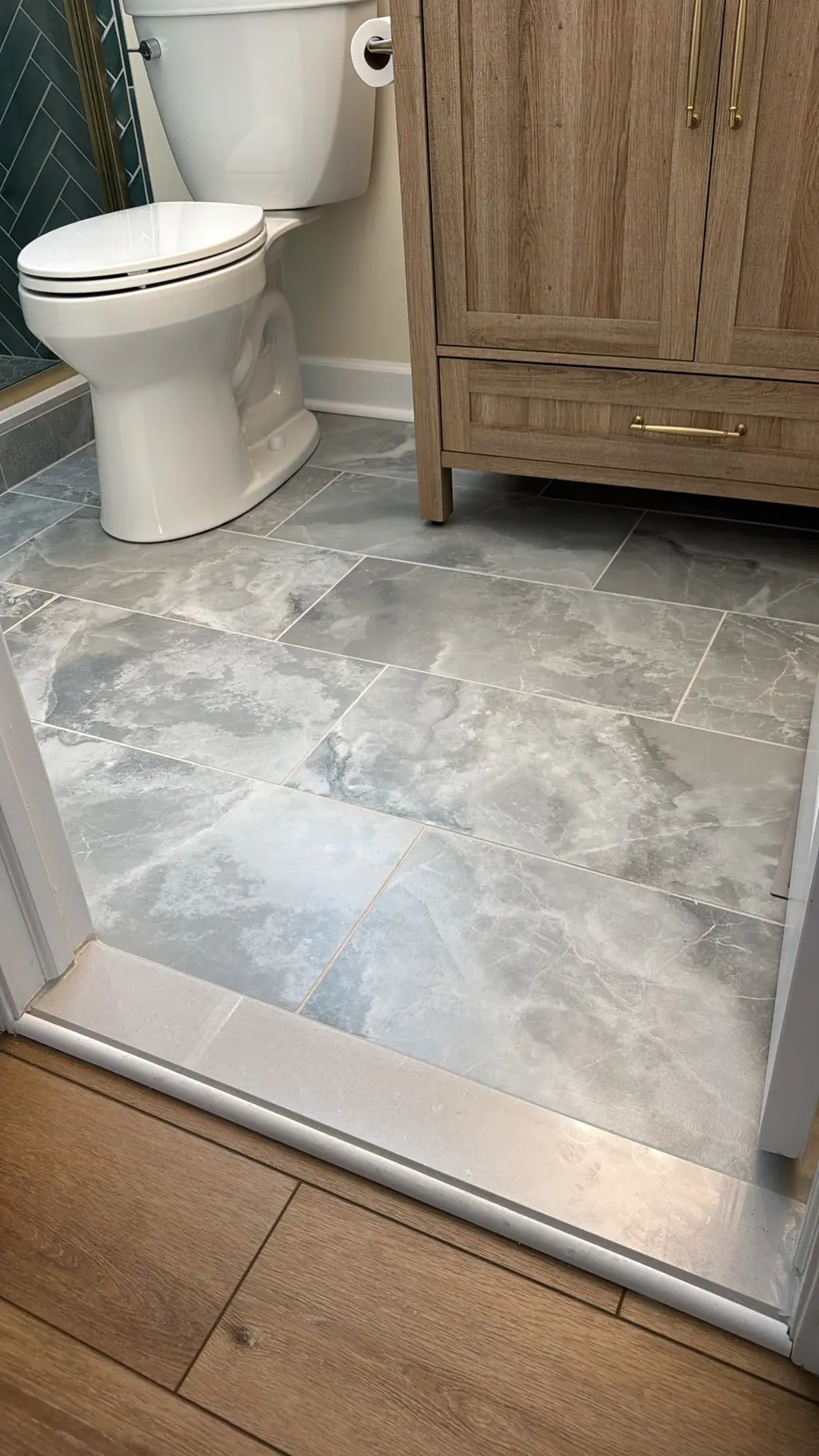
Newark floors: slab family rooms, crawlspaces and upper levels
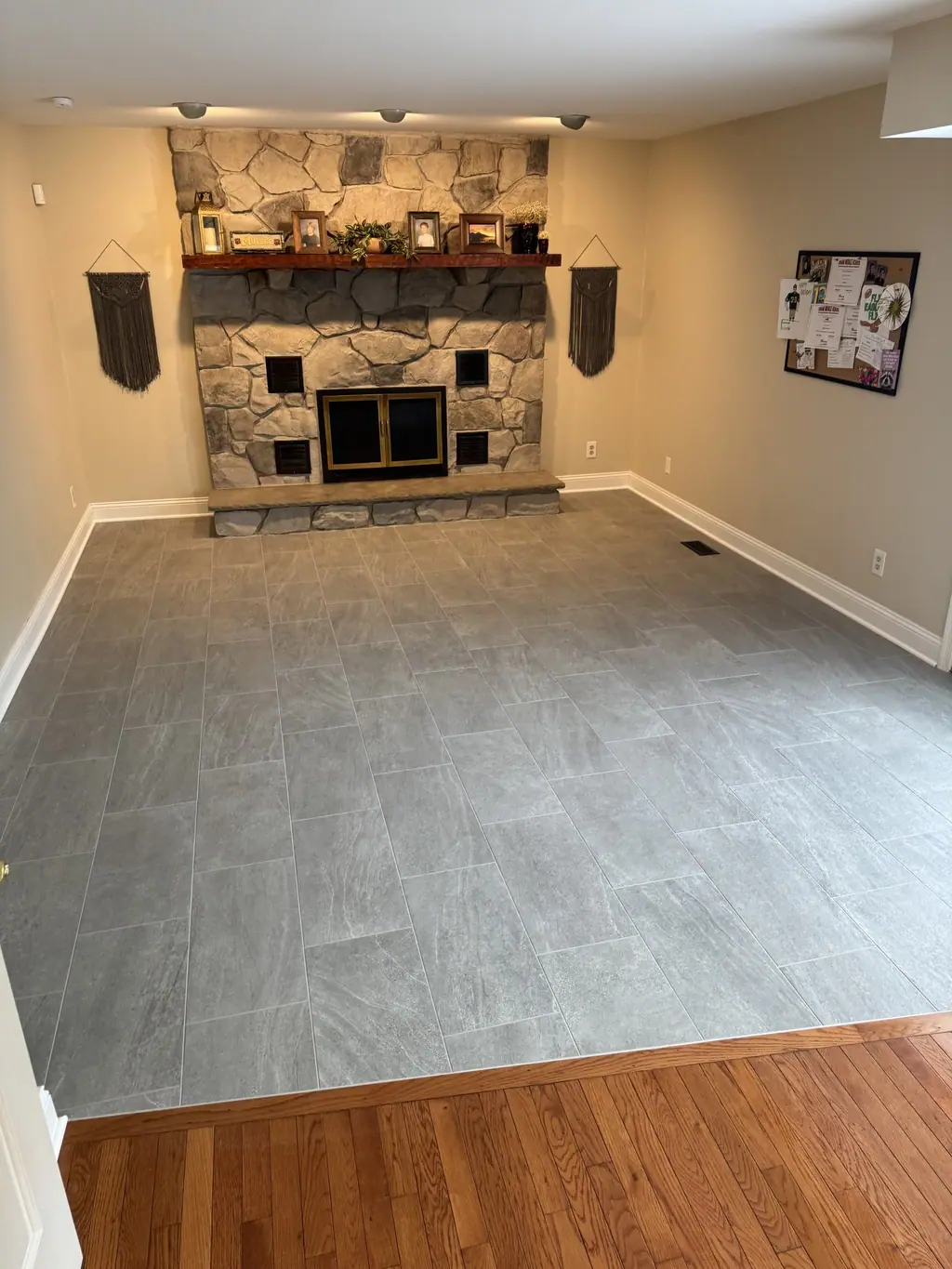
The split-levels found all over Newark and the surrounding subdivisions often have a family room on the lower level that sits on a concrete slab close to or partly below grade. Those rooms are the ones where carpet gets musty and solid hardwood is a bad idea. Porcelain tile or a rigid-core vinyl plank rated for below-grade use, installed over a slab that has been tested for moisture, is what we usually recommend there.
Ranches built over crawlspaces bring the opposite question: the floor is wood framing, and a damp or unvented crawlspace can push moisture up into it. The upper floors of Pike Creek and Hockessin colonials are generally stiffer but can have squeaks and humps from decades of settling. Each case gets a different prep plan, whether that's screwing down loose subfloor, adding a layer of plywood, leveling low spots or putting down an uncoupling mat under tile.
What we handle
Porcelain and ceramic tile
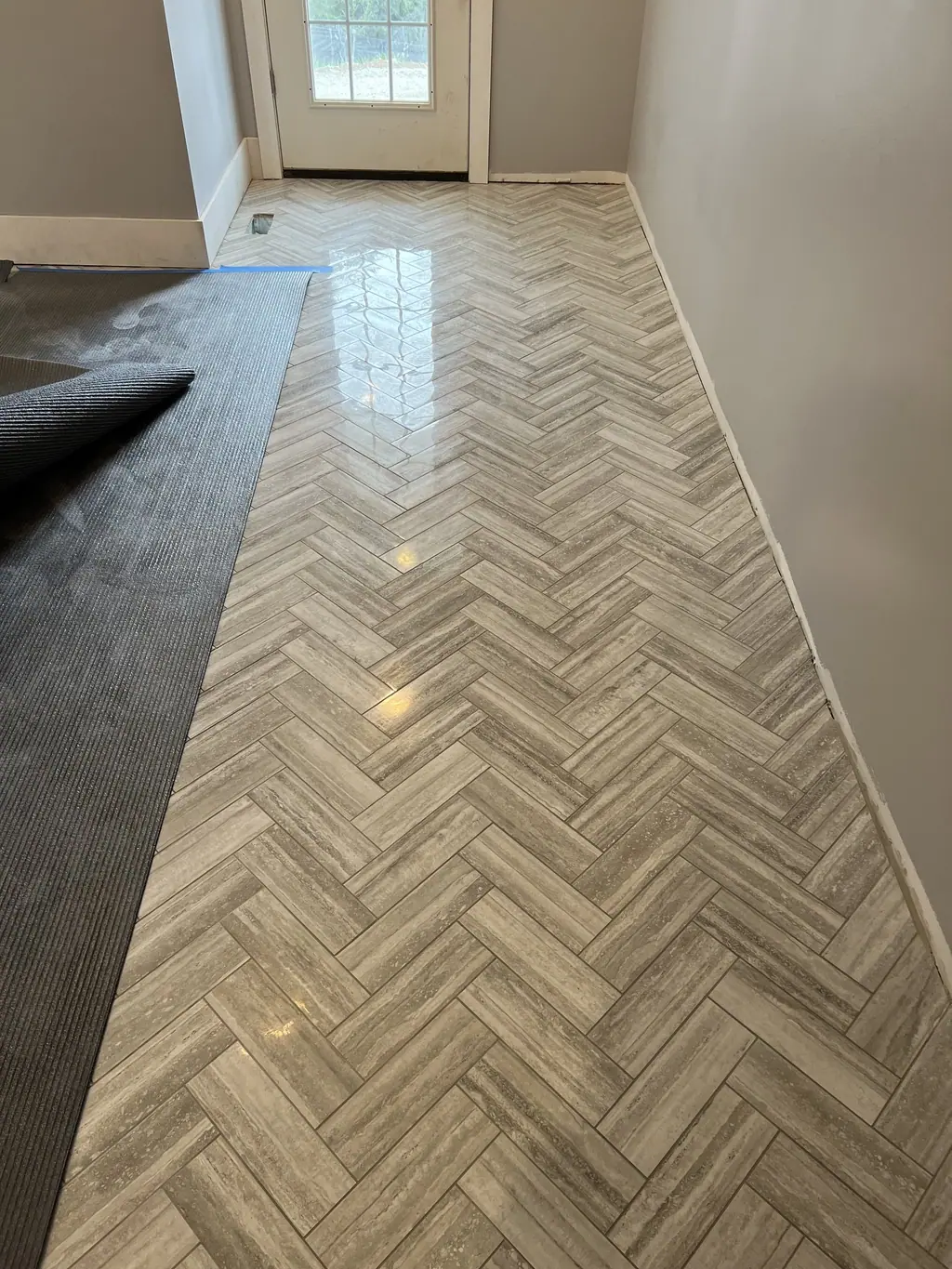
Standard and large-format tile, plus herringbone, checkerboard and other patterned layouts, set with the right trowel and thinset coverage for the tile size.
Luxury vinyl plank
Rigid-core click LVP and glue-down plank, with proper expansion gaps and transitions, suited to slabs, basements and rentals.
Hardwood
Solid and engineered hardwood on wood subfloors above grade; engineered only where the conditions call for it.
Natural stone
Marble and other stone tile for baths and entries, on a subfloor stiff enough to carry it.
Subfloor and slab prep
Removing old flooring, re-securing or adding plywood, grinding high spots, self-leveling low areas and installing uncoupling membranes.
Transitions and stair edges
Thresholds, reducers and stair nosing planned so each change of material or height looks deliberate.
How the project runs
Walkthrough & estimate
We walk the rooms, check for bounce, dips and squeaks, take moisture readings on slabs where needed and send a free written estimate.
Material and layout choice
We talk through tile versus LVP versus wood for each room and plan where the layout starts so the visible rows are straight and cuts end up at the walls.
Removal and prep
Old carpet, vinyl, tile or wood comes up and is hauled away. Then the subfloor or slab is corrected until it is flat and solid enough for the new material.
Installation
Flooring goes down with the correct underlayment, adhesive or thinset, and expansion space. Baseboards and shoe molding are reset or replaced as agreed.
Final check
We walk the floor with you, check transitions and doors for clearance, and go over care for the specific material.
Choosing flooring for a Newark-area house
Match the material to the level of the house. Tile and rigid-core vinyl handle slabs and basements; solid hardwood belongs above grade on a wood subfloor. Engineered wood sits in between, but it still needs a slab that passes a moisture test. We'll tell you if a room isn't a good fit for the floor you have in mind.
Rental floors have their own math. Owners of houses rented to University of Delaware students usually want the lowest maintenance over several leases, and they need the work done in the gap between one tenant moving out and the next moving in. Our guide to durable flooring for Newark rental homes compares tile and LVP for that situation.
Doors, appliances and stairs set the height limit. Stacking tile, membrane and thinset on an existing floor can add noticeable height. Before we order, we check that the dishwasher can still come out, exterior doors still clear, and the first stair riser won't end up shorter than the rest.
Areas we cover around Newark
- Pike Creek
- Hockessin
- Bear
- Glasgow
- Christiana
- Stanton
- Brookside
- Ogletown
- Elkton, MD
Flooring Installation in Newark: FAQ
What floor should I put in a split-level lower family room in Newark?
For a slab at or partly below grade, porcelain tile or a rigid-core vinyl plank rated for below-grade use are the safest choices. We test the slab for moisture first; if readings are high, the source needs attention before any floor goes in.
Can tile go over my old vinyl floor?
Sometimes, if the vinyl is a single layer, well bonded and the height works. Often it's better to remove it or cover it with new plywood. If the vinyl is from before the 1980s, have it tested for asbestos before anyone sands or pulls it up.
My ranch has a crawlspace. Is tile a problem?
Not if the framing is stiff enough and the crawlspace is reasonably dry. We check joist span and subfloor thickness and look for signs of moisture. Tile over a flexing floor will crack, so we'll recommend added plywood or a different material if the structure calls for it.
Is luxury vinyl plank really waterproof?
The planks themselves are water-resistant, but water can still get through the seams and around the edges to the subfloor. For a laundry room or a bathroom that sees splashing, tile is the more reliable choice.
Related reading
Durable Flooring for Rental Homes in Newark, DE
What holds up in a Newark rental between leases: porcelain, luxury vinyl plank and hardwood compared on wear, repairs and turnaround time.
LVP vs. Tile vs. Hardwood: Choosing Floors for a Family Home
How luxury vinyl plank, porcelain tile and hardwood compare on water, wear, comfort and repair, and how to match each one to the rooms in a family home.
Basement Tile Flooring and Moisture in Delaware Homes
Basement slabs in the Wilmington area often carry moisture even when they look dry. Here's how to test, what to fix first, and why porcelain tile holds up.