Key takeaways
- Choose tile based on your counter, cabinet style and how much wall is exposed.
- Herringbone works best on one focal wall, especially in galley kitchens.
- Darker grout hides cooking stains; contrasting grout shows off a pattern.
- Plan edges, outlets and window returns before tiling starts.
- Wall prep and pattern complexity drive the cost more than the tile price.
A new backsplash is one of the most practical kitchen updates in Montgomery County. It covers a small area, it can go in over existing counters, and it changes how the whole room reads. It also has to do a job: protect the wall behind the sink and range from water, grease and heat, and be easy to wipe down.
This guide walks through backsplash tile options that work well in the kinds of kitchens common around King of Prussia and Upper Merion, from compact galleys in 1950s colonials to open kitchens in newer townhomes. It also covers the layout and prep decisions that matter as much as the tile you pick.
Start with the kitchen you have
Much of Montgomery County's suburban housing went up between the late 1940s and the 1970s. In King of Prussia, Norristown's outer neighborhoods, Plymouth Meeting and the older parts of Wayne, that means a lot of colonials, ranches and split-levels with closed or semi-open kitchens. Those kitchens tend to have shorter counter runs, a window over the sink, and upper cabinets that stop well short of the ceiling.
Newer townhomes and the homes built in the 1990s and 2000s usually have longer runs of cabinets, an island and an open view from the family room. The backsplash there is seen from farther away and has to hold up visually across a larger wall.
Before choosing a tile, note three things: how much wall is actually exposed between the counter and upper cabinets, where the window and range sit, and what the cabinets and counters look like. A backsplash that fights a busy granite counter rarely looks right, while a quiet counter leaves room for pattern on the wall.
Backsplash tile options that work
Most kitchen backsplashes use glazed ceramic or porcelain, which are easy to clean and hold up to heat near the range. Natural stone and glass are also options but come with more maintenance or more demanding installation.
Subway tile
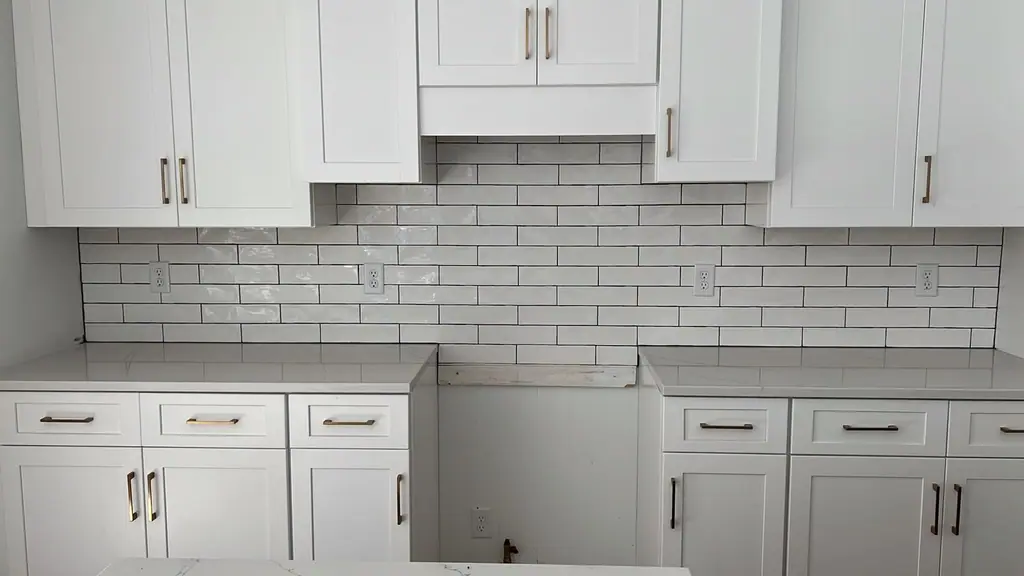
The classic 3x6 subway tile suits almost any kitchen, including the traditional cabinets common in older colonials. Longer formats like 2x8, 3x12 or 4x12 look more current and have fewer grout lines. Handmade-look subway tile with a slightly wavy surface and uneven edges adds texture without adding color. A stacked layout, where the joints line up vertically, reads more modern than the traditional offset running bond.
Herringbone
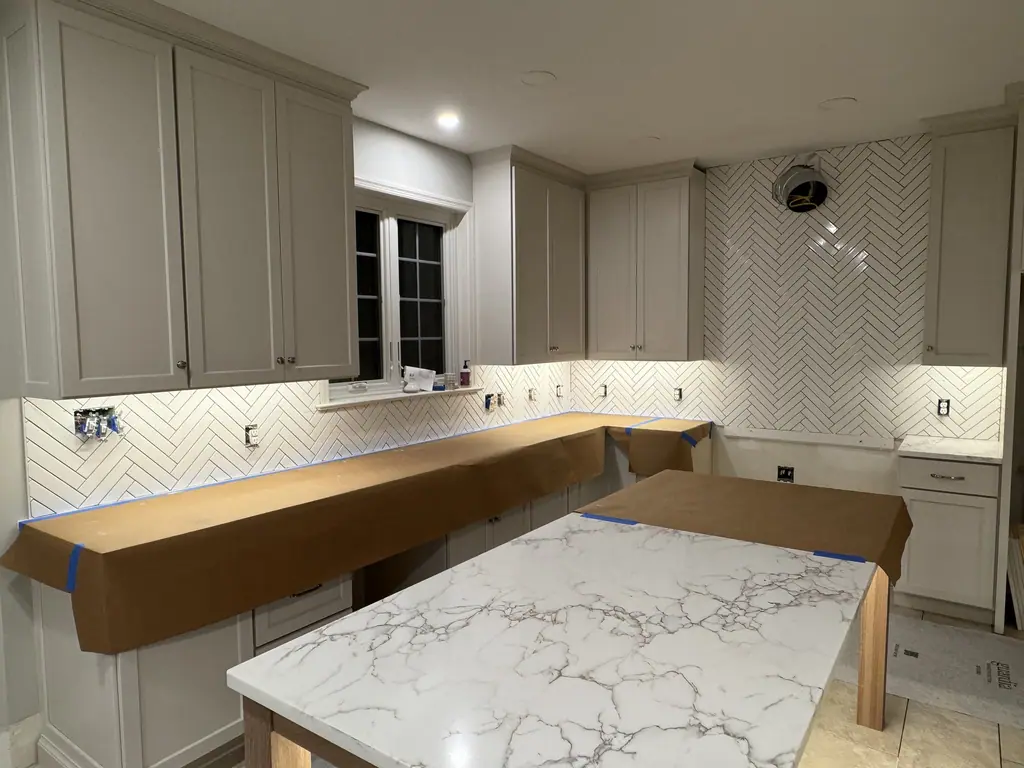
Herringbone uses rectangular tile set in a zigzag. It works well behind a range or across a single focal wall. It takes more labor than a straight lay because nearly every edge piece is cut, and the pattern has to be centered on something, usually the range or the sink window. In a galley kitchen, herringbone on one wall with plain subway on the other keeps the room from feeling crowded.
Hexagon and mosaic
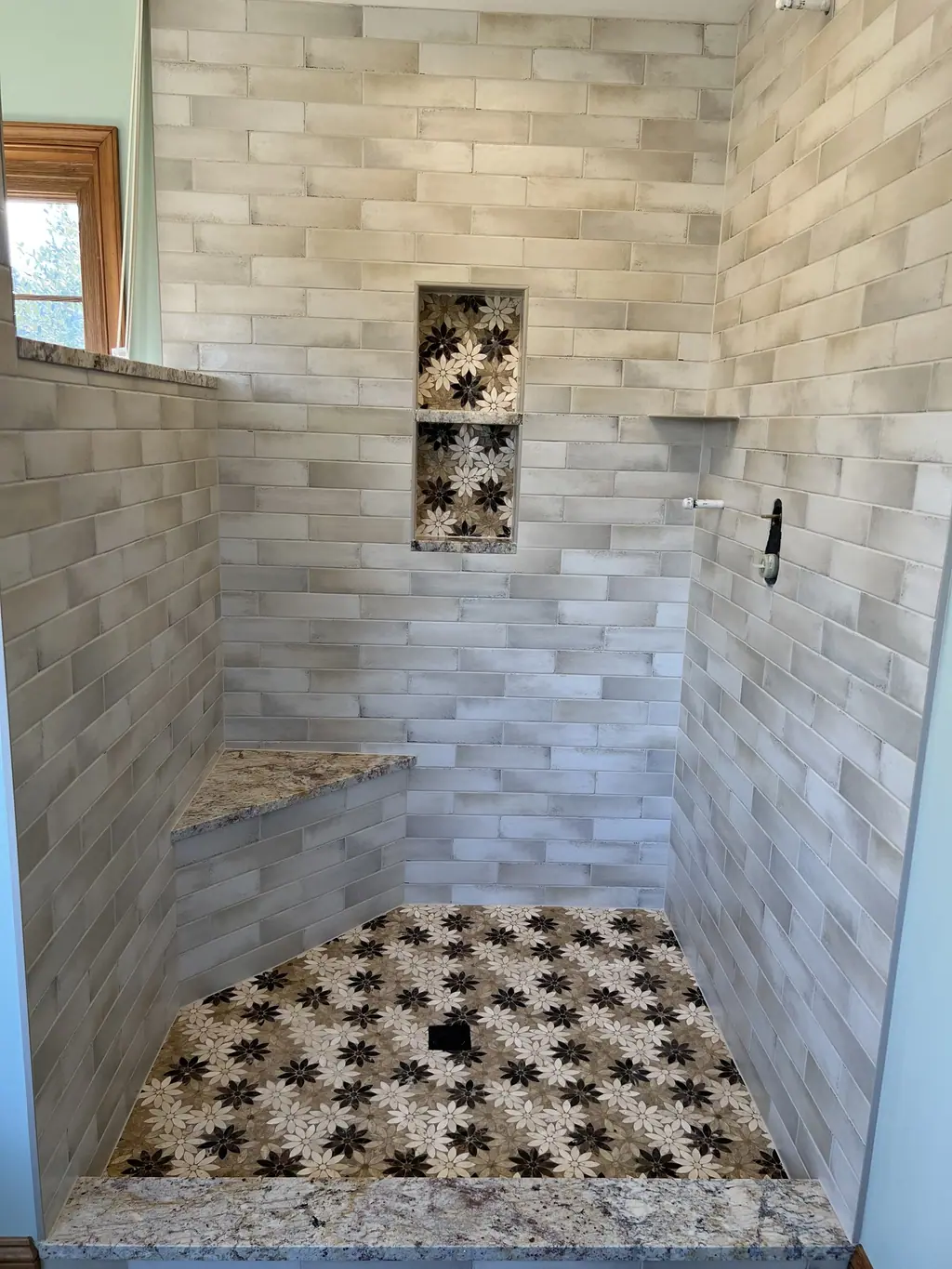
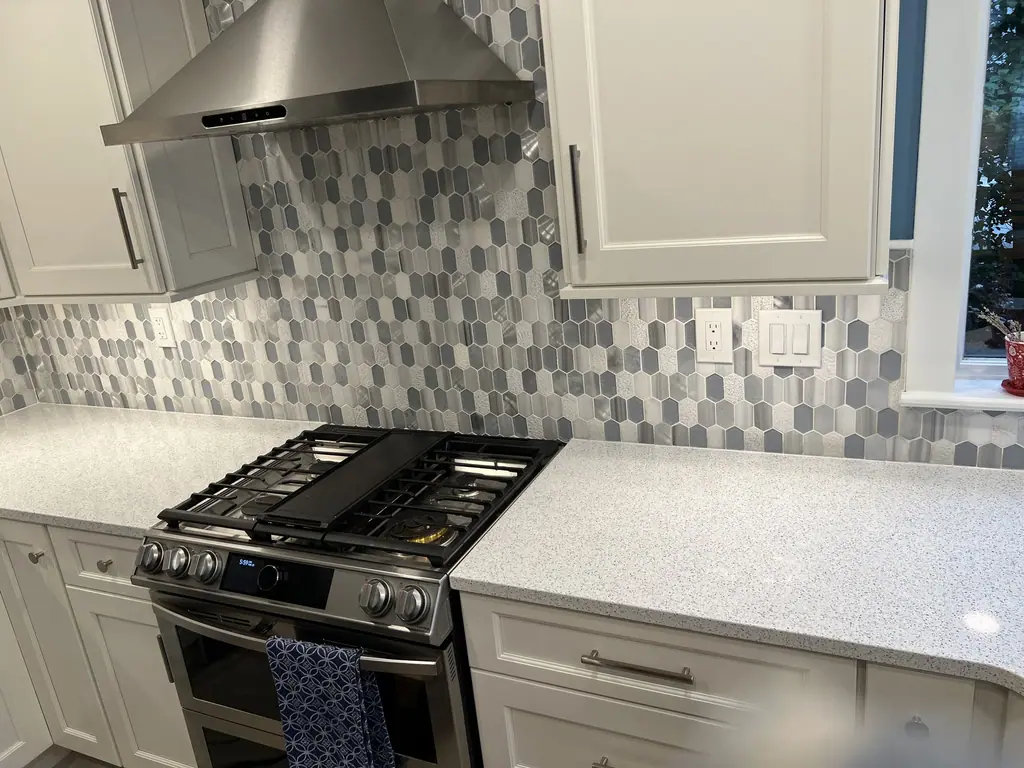
Small hexagon tile, usually on mesh sheets, suits kitchens with a vintage or cottage feel and pairs well with the simpler cabinets found in many postwar homes. Larger hex tile, 4 to 8 inches across, reads more contemporary. Mosaics mean more grout, which means more cleaning near the range, so a stain-resistant grout is worth considering.
Large-format and slab-look tile
Large porcelain panels printed to look like marble or quartzite cover the wall with very few joints, which makes cleanup easier. They need a very flat wall, careful cutting around outlets and windows, and more hands to handle. This style suits open kitchens where the backsplash is seen from the family room.
Grout, edges and layout decisions
Grout color changes the look as much as the tile. White grout with white subway tile gives a soft, uniform wall. Gray or charcoal grout outlines each tile and emphasizes the pattern, and it hides cooking stains behind the range. For patterned layouts like herringbone, a contrasting grout makes the pattern visible from across the room.
Plan where the tile stops. In kitchens where the upper cabinets end partway along the wall, the backsplash needs a clean vertical edge, finished with a bullnose piece, a metal trim profile or a return into the window casing. Decide whether the tile runs to the ceiling behind the range hood or stops at the underside of the hood.
Outlets and switches are the most visible detail on a finished backsplash. They should sit flush with the tile face, which usually means box extenders, and they should land in a sensible spot in the pattern rather than splitting a tile in half.
- Center patterns on the range or sink, not on the corner of the room.
- Keep a caulked joint where tile meets the counter, not a grouted one.
- Order extra tile for cuts and future repairs; patterns like herringbone need more overage.
- Check how the tile meets window trim before the first piece goes up.
Prep matters more than people expect
Backsplash tile is only as flat as the wall behind it. In older homes, kitchen walls may be plaster, or drywall that has been patched several times. When an old backsplash comes off, it usually takes some drywall paper with it, and those areas need to be repaired and primed before tiling.
Behind the sink and range, drywall in good shape is a common backer for a backsplash in dry areas. If there has been any water damage behind the sink, it should be cut out and replaced. Large-format tile needs a flatter wall than small tile, so it may require skim coating or more extensive patching.
If you are replacing counters at the same time, the backsplash goes in after the new counters are installed and fixed in place. Tiling first and fitting counters to the tile leads to uneven gaps.
What drives the cost of a backsplash
Backsplash cost depends on the square footage of wall, the tile itself, the pattern and the amount of prep. Herringbone and mosaic layouts take longer than a straight lay. Large-format panels need more handling. Removing an existing tile backsplash and repairing the wall adds time. Windows, open shelves and lots of outlets add cuts.
Because the area is small, a premium tile often makes a smaller difference to the total than people expect, while labor and prep make up a larger share. The best way to get a real number is a walkthrough of your kitchen. F2 Home Improvement quotes backsplash work after seeing the space; you can read more about our kitchen remodeling work in King of Prussia.
Frequently asked questions
Can a backsplash be installed over the old one?
It is sometimes possible over a flat, well-bonded tile, but it adds thickness at outlets and edges and hides the wall condition. In most cases removing the old tile and repairing the wall gives a better result.
How long does a backsplash installation take?
A typical kitchen backsplash takes a few days, including setting time before grouting. Removal of old tile and wall repair add time. Patterned layouts take longer than a straight subway lay.
What is the easiest backsplash to keep clean?
Glazed porcelain or ceramic with fewer grout lines, such as larger subway or slab-look tile, is the easiest. A stain-resistant grout helps behind the range.
How do I get an estimate for a backsplash in King of Prussia?
Contact us to set up a free walkthrough. We look at the wall, talk through tile options and give you a written estimate.
Planning a kitchen remodeling project in King of Prussia?
Get a free in-home estimate from F2.