Key takeaways
- Porcelain tile is the most water- and scratch-resistant kitchen floor.
- LVP is warm, quick to install and suits open plans, but needs a flat subfloor.
- Hardwood works in kitchens where humidity is controlled and spills are handled fast.
- Check the crawl space, old layers and floor bounce before choosing.
- Plan transitions in open layouts before the material is ordered.
The kitchen floor takes more punishment than any other floor in the house. It sees dropped pans, dishwasher leaks, dog bowls, and whatever comes in through the back door. In Elkton, add summer humidity that rolls off the Elk River and the upper bay, and crawl spaces or basements that stay damp for months at a time.
There is no single right answer for every kitchen. The best floor depends on what's under it, how the kitchen connects to the rest of the house, and how you use the room. This guide compares the three floors we're asked about most, porcelain tile, luxury vinyl plank and hardwood, and walks through the questions that usually decide it.
Porcelain tile
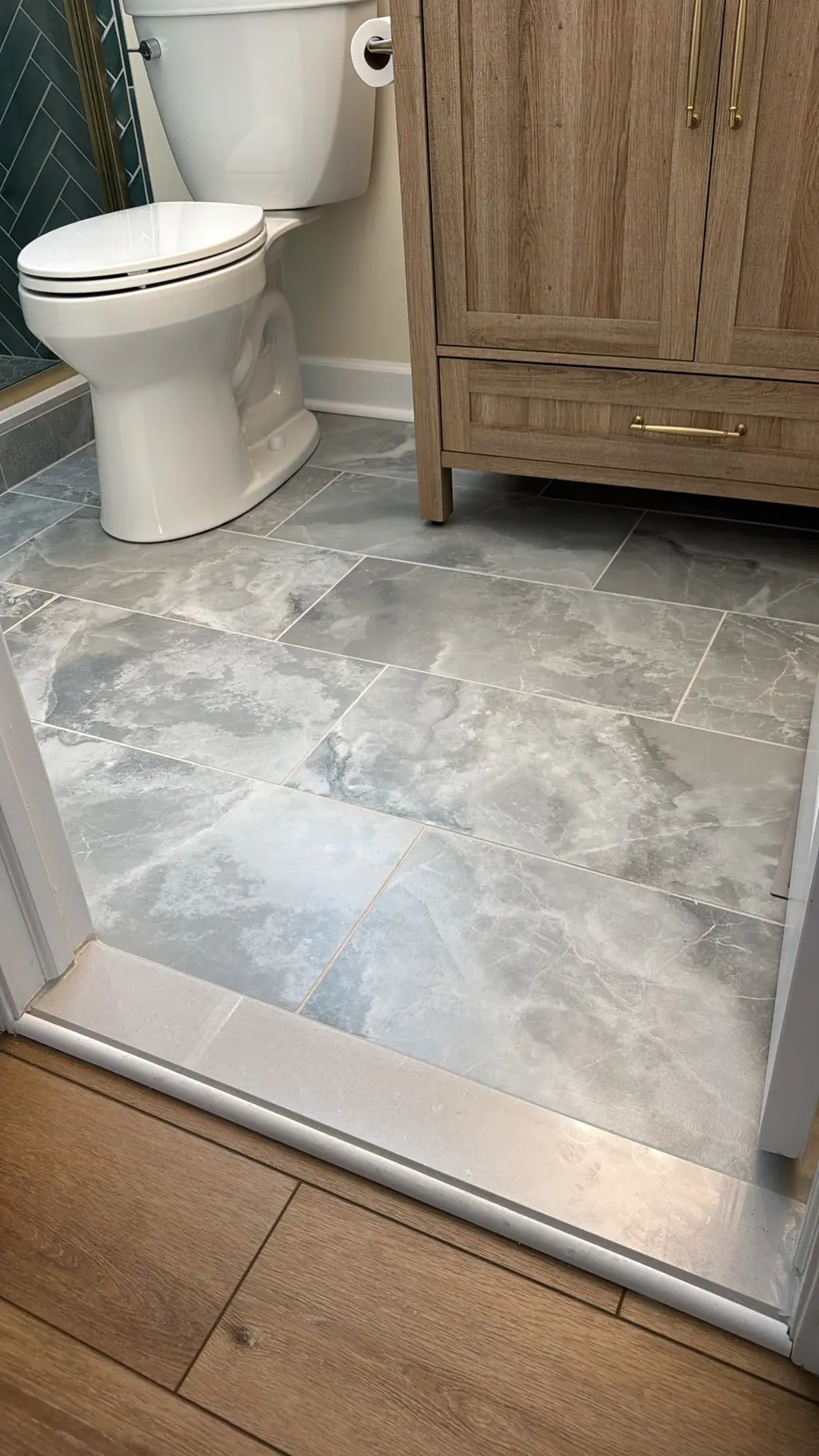
Porcelain is dense, absorbs almost no water, and doesn't care about humidity. A spill or a slow dishwasher leak won't swell it. It resists scratches from grit and pet nails better than any other common kitchen floor, and it comes in a huge range of looks, from wood-look planks to large-format concrete and classic patterns like checkerboard and herringbone.
The trade-offs are hardness and weight. Tile is hard underfoot for long cooking sessions, and a dropped glass will break. It also needs a stiff, flat subfloor. On wood-framed floors, an uncoupling membrane between subfloor and tile helps absorb small movements and prevent cracked grout.
- Best for: kitchens with pets, kids, back-door traffic, or a history of leaks.
- Watch for: floor bounce, added height at the dishwasher and doorways, grout color in busy kitchens.
Luxury vinyl plank
Luxury vinyl plank, or LVP, is a layered product with a printed wear surface. Rigid-core versions click together and float over the subfloor. It's water-resistant on its face, softer and warmer underfoot than tile, and generally quicker to install. It is a popular choice in newer homes along Route 40 and in rentals across Cecil County.
LVP is not indestructible. Water that gets underneath at the edges or through gaps can sit on the subfloor and cause problems out of sight. Heavy appliances can dent softer products, and floating floors need an expansion gap at the walls and shouldn't be pinned under cabinets. It also needs a flat subfloor; dips and humps show through as clicking or separated seams.
- Best for: open plans where one floor runs through several rooms; budget-conscious projects; basements.
- Watch for: wear layer thickness, installation under or around cabinets, flatness of the subfloor.
Hardwood
Hardwood gives a warm, traditional look and can be refinished. It's common in older Elkton homes and in the main living areas of newer ones, and continuing it into the kitchen keeps an open space consistent.
The weakness is water and humidity. Wood expands in humid months and shrinks in dry ones. Over a damp crawl space, or in a house without steady humidity control, hardwood can cup or gap. Standing water at the sink or dishwasher will stain and damage it. Engineered hardwood, with a plywood core, is more stable than solid wood, but it still doesn't like wet feet. If you go with wood, keep the house's humidity steady, use mats at the sink, and deal with spills quickly.
- Best for: kitchens open to wood-floored living areas in homes with good humidity control.
- Watch for: crawl space moisture, dishwasher leaks, acclimation time before installation.
What's underneath matters as much as the choice
Most Elkton kitchens we see have something to deal with before new flooring goes down. The subfloor determines what's possible and what prep is needed.
Old layers
Many kitchens have one or two layers of sheet vinyl or old tile, sometimes with plywood underlayment between. Going over them adds height, which can trap the dishwasher or leave a lip at the doorway. Older sheet vinyl and its adhesive may contain asbestos in homes from certain eras, so it should be tested before it's torn up or sanded.
Crawl spaces and basements
Kitchens over damp crawl spaces are common in Cecil County. A vapor barrier on the crawl space floor and good ventilation or dehumidification help any flooring last longer, and they matter most for wood.
Bounce and flatness
Tile needs stiffness; LVP needs flatness; hardwood needs both to a degree. A floor that flexes between joists may need blocking or an extra layer of plywood. Low spots can be filled with a patching compound or self-leveler.
Open layouts and transitions
Many newer homes around Elkton and North East have kitchens that open straight into a family room or dining area. Changing flooring in the middle of that space is often the hardest part of the decision. A transition line that runs across open floor rarely looks intentional.
Options include running one floor continuously through the whole level, placing the change at a natural break such as a cabinet run, island edge or doorway, or choosing a wood-look porcelain in the kitchen that sits close to the wood elsewhere. Continuous LVP or tile through an entire level is also common, but it raises the size of the project and the prep required.
What drives the cost
Material price is only one piece. Removal of old layers, subfloor repair, leveling, the size of the area, pattern complexity and working around cabinets and appliances all change the total. Herringbone and diagonal layouts use more labor and material than a straight lay. Large-format tile requires a flatter subfloor, which may mean more prep.
The most accurate way to compare is to have someone look at the floor in person. F2 Home Improvement installs tile, LVP and hardwood as part of kitchen remodeling in Elkton, MD and stand-alone flooring installation in Elkton. If you're weighing options, contact us for a free in-home estimate.
Frequently asked questions
Can new flooring go under kitchen cabinets?
Tile and nail-down hardwood can run under cabinets if installed before them. When cabinets stay, the floor usually butts up to them. Floating LVP should not be pinned under cabinets.
What floor handles a dishwasher leak best?
Porcelain tile over a sound subfloor handles it best. LVP resists water on top but can trap it underneath. Hardwood is the most vulnerable.
Is tile too cold for a kitchen?
It can feel cool, especially over a crawl space in winter. Rugs at the sink, or an electric heating mat under the tile, are common fixes.
Should old vinyl be tested before removal?
In older homes, yes. Some older sheet vinyl and adhesives contain asbestos. A test before removal tells you whether it needs special handling.
Planning a kitchen remodeling project in Elkton?
Get a free in-home estimate from F2.