Key takeaways
- Expect heavy plaster and, in older bathrooms, thick mud-set tile beds.
- Treat paint in pre-1978 homes as possibly containing lead and use lead-safe practices.
- Test suspect flooring, mastic and insulation for asbestos before disturbing it.
- Contain dust, protect the path out and clean with HEPA vacuums, not brooms.
- A dumpster on the street requires a Streets Department permit.
Demolition is the fastest part of a remodel and the one that can do the most damage if it is rushed. In an older Philadelphia house, the walls and floors hold heavy plaster, thick mortar beds and, very often, lead paint. The house is attached to its neighbors, the stairs are narrow, and there is usually no alley to back a truck into.
This post covers what to expect when a room in a pre-war or mid-century Philadelphia home is opened up, and what a careful demolition looks like. It is useful whether you are planning a bathroom, a kitchen or a whole-floor renovation.
What is inside the walls
Most Philadelphia rowhomes and twins built before the 1950s have plaster walls. On the exterior walls and the brick party walls, plaster was usually applied straight onto the masonry. Interior partitions are typically plaster over wood lath, the thin strips of wood nailed across the studs. Older plaster may contain animal hair as a binder, which is harmless but makes it tougher to break apart.
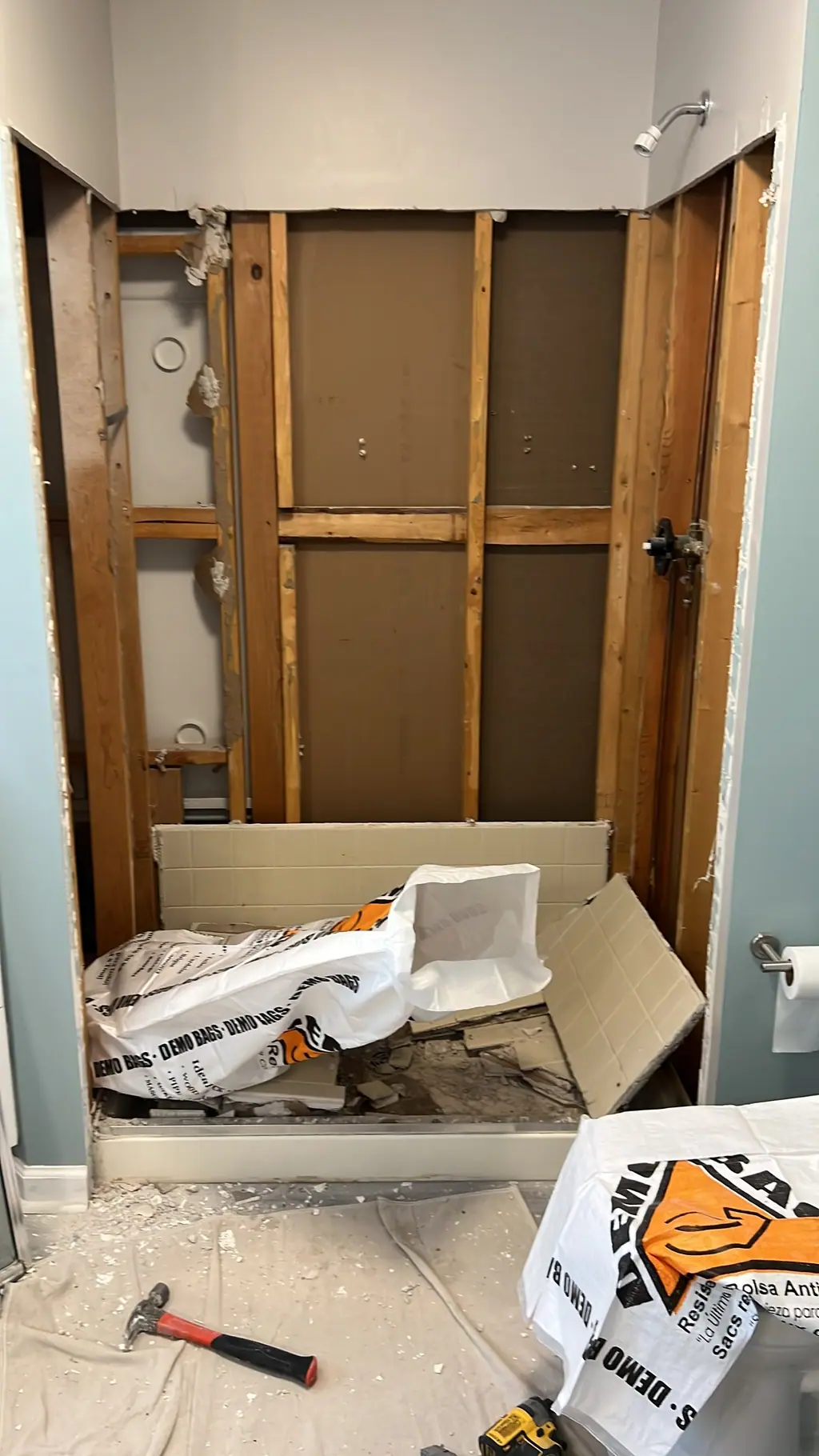
Plaster is heavy. A single bathroom can produce a surprising amount of debris by weight, and a whole-floor gut produces a lot more. Bathrooms from before about 1960 add another layer: wall and floor tile set in a thick mortar bed reinforced with metal lath, sometimes more than an inch deep on walls and deeper on floors. That material comes out in chunks and has to be carried out by hand.
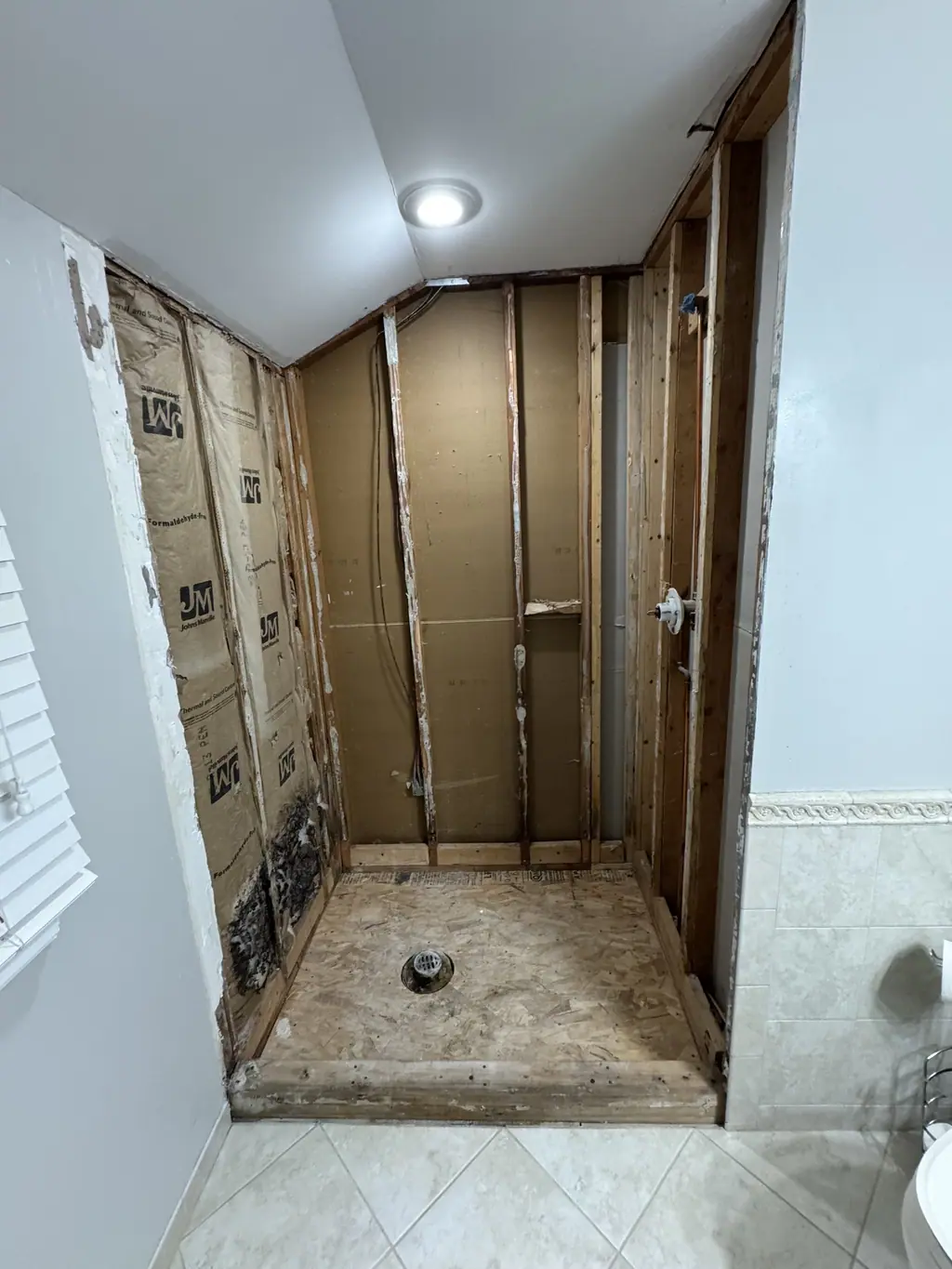
Behind the plaster you may find knob-and-tube wiring, old gas pipes from gaslight fixtures, patched framing and evidence of past leaks. None of it is unusual in a house this age, and all of it is better found during demolition than after new walls are up.
Lead paint in pre-1978 homes
Lead-based paint was banned for residential use in the United States in 1978, and a large share of Philadelphia's housing was built long before that. Lead is usually found in older layers of paint on trim, windows, doors and plaster, often buried under newer coats. It becomes a hazard when it is disturbed and turns into dust or chips, which is exactly what demolition does.
The federal EPA Renovation, Repair and Painting (RRP) rule applies to paid work in pre-1978 homes that disturbs more than 6 square feet of painted surface per room inside, or 20 square feet outside. Under that rule, the firm doing the work must be EPA-certified, a certified renovator must direct the work, and the homeowner must receive the EPA's Renovate Right pamphlet before work begins. Before hiring anyone for demolition in an older house, ask to see their RRP firm certification.
Lead-safe demolition is mostly about keeping dust contained and cleaning it up properly. The RRP rule also prohibits certain methods outright, such as open-flame burning of paint and using power sanders or grinders without HEPA dust collection. In practice, a lead-safe job includes:
- Plastic sheeting sealing the work area and covering the floor
- Doorways closed off and HVAC vents and returns in the work area covered
- Misting surfaces to keep dust down during removal
- Debris bagged in heavy plastic inside the containment
- HEPA vacuuming and wet cleaning at the end of each day and at the end of the job
- A cleaning verification before the containment comes down
Asbestos: test before you tear
Asbestos was used in many building products through much of the 20th century. In older Philadelphia homes, the common suspects are 9-by-9-inch floor tiles and their black mastic, some sheet vinyl, pipe and boiler insulation in basements, and certain plasters and joint compounds. You cannot tell by looking.
If a material might contain asbestos and the work will disturb it, have a sample tested by an accredited lab before demolition. If it tests positive, removal is a job for a licensed asbestos abatement contractor, and the city regulates that work. Once abatement is complete, the rest of the demolition can proceed. Covering suspect floor tile with a new floor, instead of removing it, is sometimes an option worth discussing.
Dust control in an attached house
Even with no lead or asbestos, plaster dust is fine enough to travel through a whole house. In a rowhome, the stairway acts like a chimney and carries it up. Good dust control is the same in principle as lead-safe containment: seal the room, cover the path, and clean with a HEPA vacuum rather than a broom.
The party wall deserves attention too. Hammering plaster off brick sends vibration straight into the neighbor's house. Scoring and prying plaster off in sections is slower but gentler on the masonry and on the neighbors. If you already see cracks on a shared wall, photograph them before the work starts.
Getting the debris out
Everything leaves by the front door on most Philadelphia blocks. Debris is bagged or loaded into buckets, carried down the stairs along a protected path and taken to a container or truck. A dumpster or roll-off container placed on the street needs a right-of-way permit from the Philadelphia Streets Department. On narrow streets, a truck or trailer loaded and driven away the same day is often easier than keeping a container on the block.
Plan for the path through the house. Stair treads, banisters and the floor from the stair to the door should be covered with protection that stays down for the whole demolition phase.
Permits and the point where demolition stops
Removing finishes like tile, cabinets and flooring usually does not need a permit by itself. Removing walls, especially bearing walls, and any framing, plumbing or electrical changes do need permits from L&I. Our guide to Philadelphia remodeling permits covers the details.
A good demolition ends with the room open, clean and documented, so the next steps can be planned on what was actually found. For how F2 handles this work, see our page on interior demolition in Philadelphia.
Frequently asked questions
Should I test for lead before demolition?
In a pre-1978 home, the work should either be done under lead-safe practices, assuming lead is present, or the painted surfaces should be tested by a certified inspector or risk assessor. Test kits have limits, so a professional test is the more reliable route if you want to know for certain.
Is it safe to stay in the house during demolition?
With proper containment, many families stay home. Children and pregnant people should stay away from the work area entirely in a pre-1978 house, and it is reasonable to plan to be out on the heaviest demolition days.
Can I do the demolition myself to save money?
Homeowners doing work on their own home are not covered by the RRP certification requirement, but the lead hazard is the same. If you do it yourself, follow lead-safe practices and have suspect asbestos materials tested first.
Who can handle demolition before my remodel?
F2 Home Improvement does interior demolition as part of our remodels or as a standalone job. Contact us for a free walkthrough.
Planning an interior demolition project in Philadelphia?
Get a free in-home estimate from F2.