
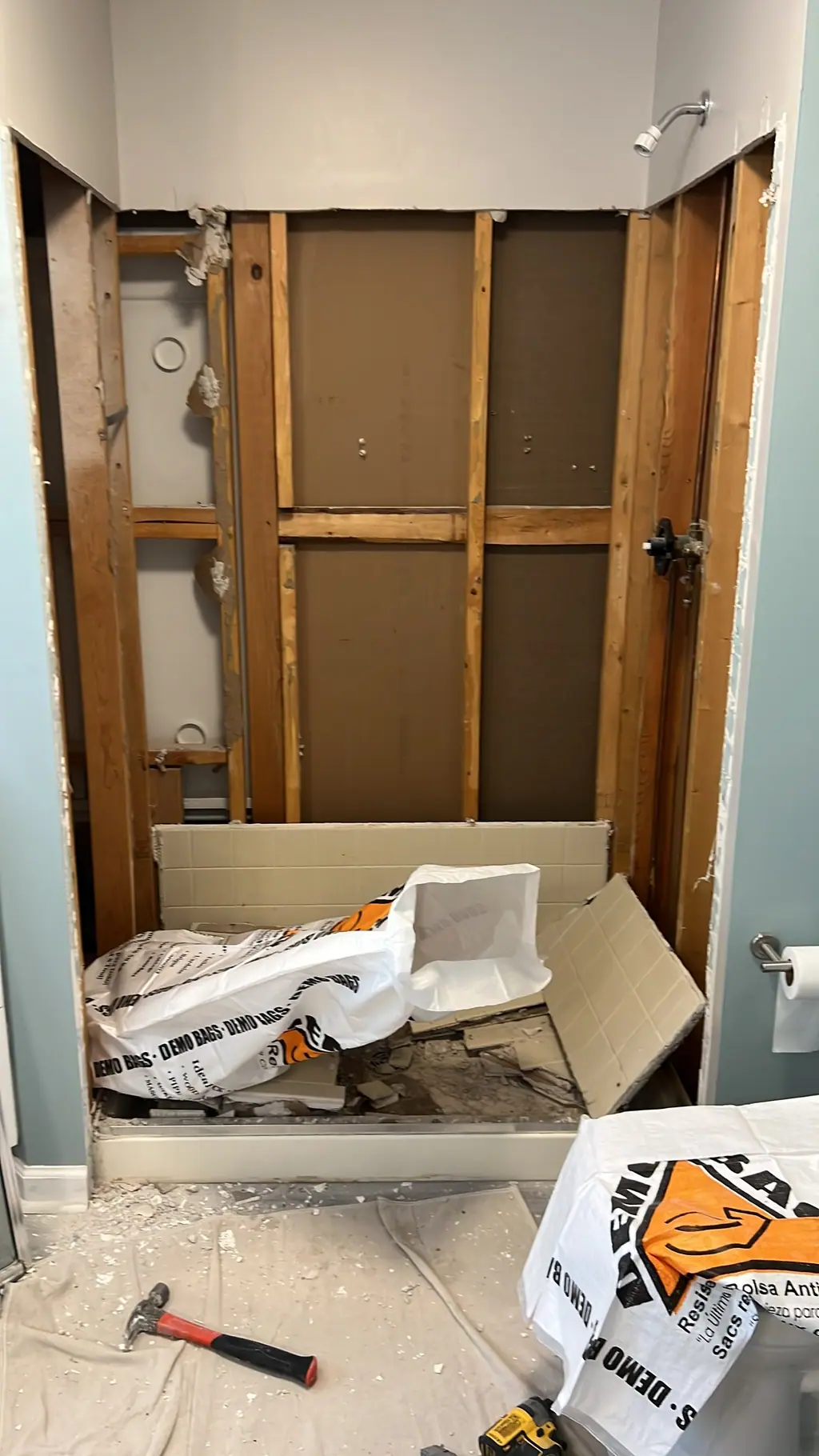
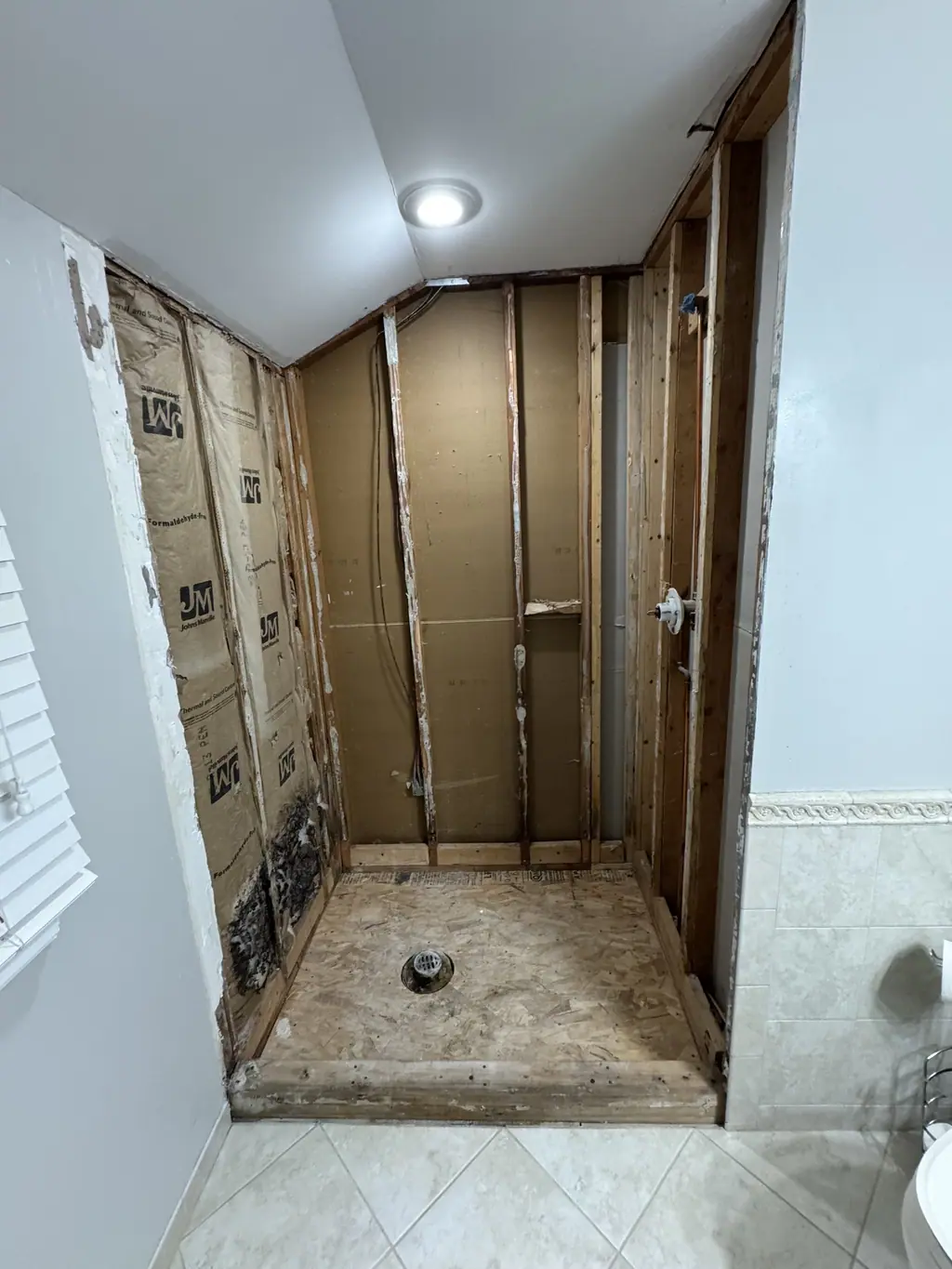
We offer interior demolition in Media, PA both as the first phase of our own remodels and as a standalone job for homeowners and contractors who need a room opened up. That can mean gutting a bathroom to studs, pulling out a kitchen backsplash and floor, or removing layers of old flooring down to the joists.
Demolition in an occupied house is mostly about control. The goal is to take out what needs to go, protect what stays, keep dust out of the rest of the house, and leave framing and plumbing exposed so everyone can see what they're working with.
Tearing out finishes in older Media houses
The borough and older sections of Nether Providence and Swarthmore have a lot of houses with plaster on wood or metal lath, and bathrooms tiled in a thick mortar bed. Those materials come out in heavy chunks, and a single bathroom can fill more debris containers than people expect. We plan disposal and carrying routes up front, especially for second-floor baths reached by a narrow stair.
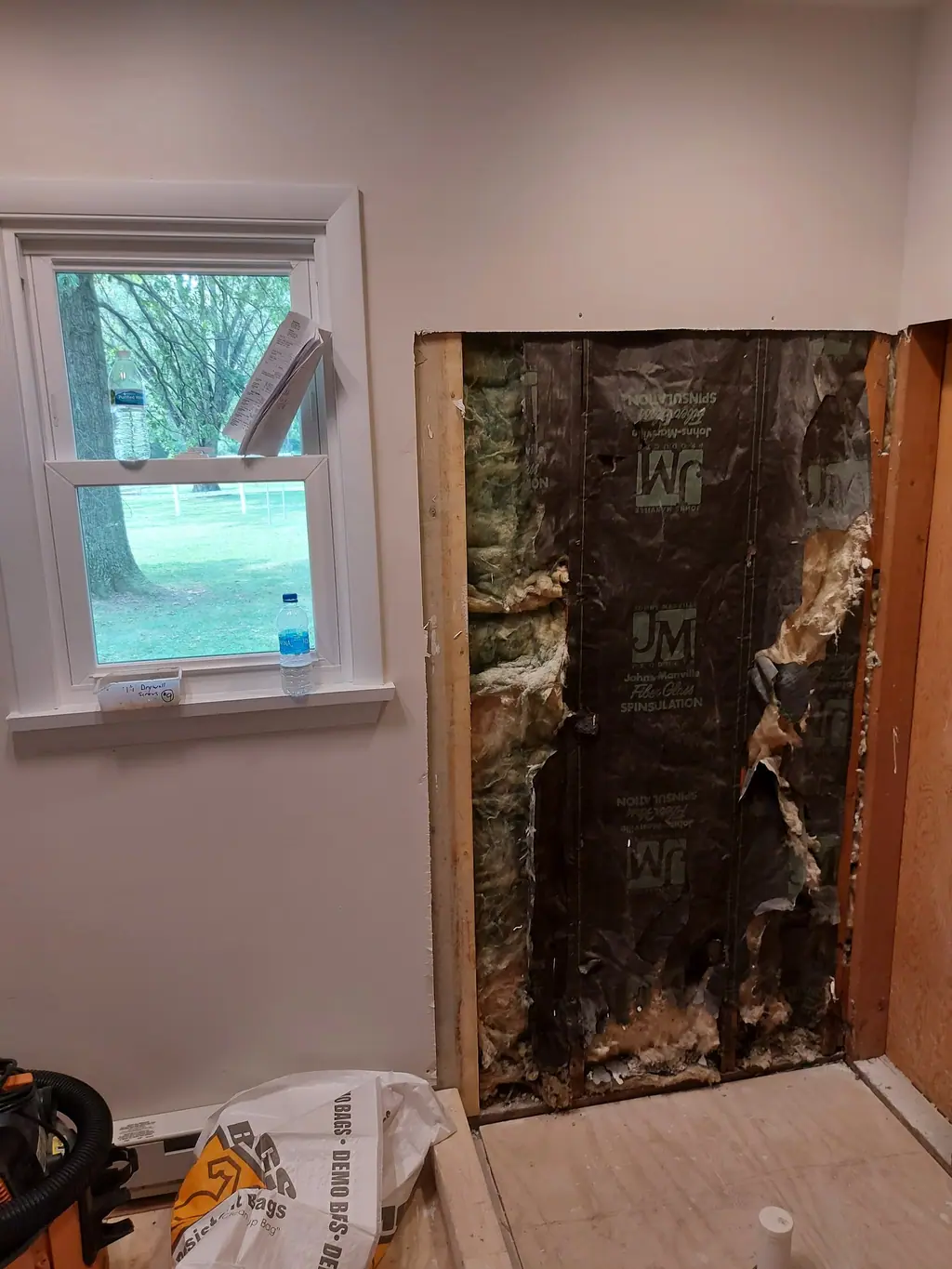
In twins, one wall is shared. Demolition along a party wall is done by hand with more care, keeping to your side of the framing and watching for shared plumbing or wiring. We let you know which days will be loud so you can warn your neighbor.
Houses built before 1978 may have lead-based paint, and some older materials, like certain 9-inch floor tiles, their adhesive, and old pipe insulation, may contain asbestos. We follow lead-safe work practices on pre-1978 homes. If a material could contain asbestos, it should be tested by a qualified lab or firm before it's disturbed, and removed by a licensed abatement contractor if it tests positive.
What we handle
Bathroom gut-outs
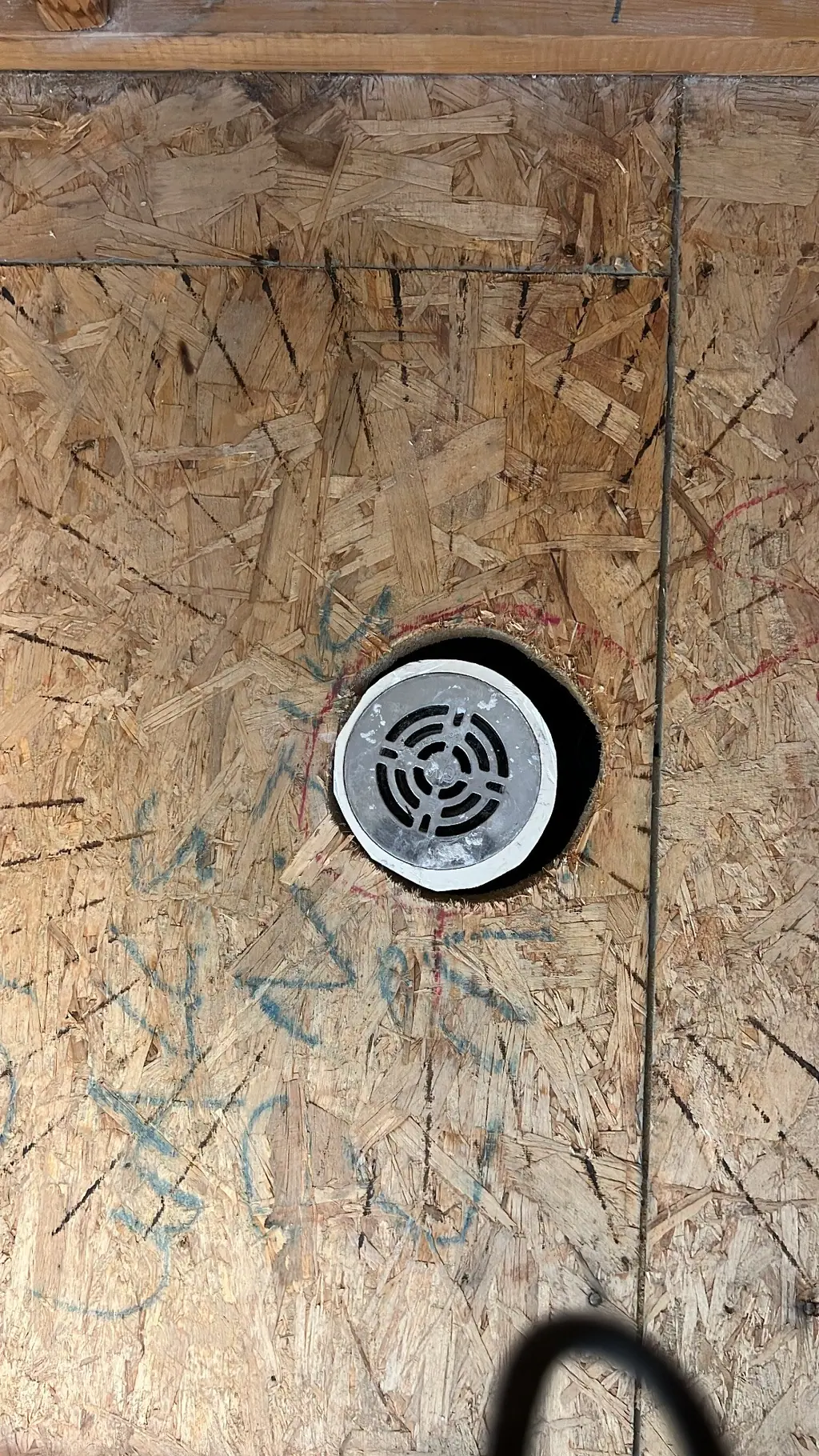
Tile, mortar beds, tubs, vanities, toilets and drywall or plaster removed down to studs and subfloor.
Kitchen tear-outs
Backsplash, floor tile and layered flooring removal, and cabinet removal when the new kitchen needs it.
Floor removal
Carpet, tack strip, sheet vinyl, laminate, old ceramic and mortar beds taken up to a clean subfloor.
Plaster and drywall removal
Opening walls and ceilings for new plumbing, wiring or a layout change, with containment.
Dust control and protection
Plastic barriers, floor protection along the path out, and sealing of HVAC registers in the work area.
Debris haul-away
Material bagged or carried out and removed from the property.
How the project runs
Walkthrough & estimate
We look at what's coming out, what's staying, the path to the street or driveway, and the age of the house, then give a written estimate.
Utility shutoffs and protection
Water and power to the area are shut off or made safe, and the work zone is sealed off from the rest of the house.
Removal
Finishes come out in order, top to bottom, with attention to anything that has to be saved or reused.
Haul-away and cleanup
Debris leaves the site, and the room is swept and vacuumed down to a workable surface.
Condition review
We walk you through what the open walls and floors show: framing, subfloor, plumbing and any damage worth fixing before rebuilding.
Before you schedule a tear-out
Know what comes next. Demolition goes best when the rebuild is planned, so an opened bathroom doesn't sit for weeks waiting on a plumber or on tile that's backordered. If we're doing the remodel as well, demo is simply the first phase of the schedule.
Some demolition triggers permit requirements, particularly if walls come out or plumbing and electrical are altered. Media Borough and each surrounding township set their own rules. Removing finishes like tile and flooring usually isn't an issue; changing structure is. We check for your address.
Price depends on the volume and weight of material, how far it has to be carried, whether it's on an upper floor, and how much protection the rest of the house needs. A mortar-bed bathroom on the second floor of a borough twin is a very different job from vinyl flooring in a ranch.
Areas we cover around Media
- Media Borough
- Nether Providence Township
- Swarthmore
- Rose Valley
- Upper Providence Township
- Springfield
- Middletown Township
- Aston
- Havertown
Interior Demolition in Media: FAQ
Will demolition make a mess of the rest of the house?
Some dust always escapes, but containment makes a big difference. We seal the work area with plastic, cover floors on the way out and close off return vents so the HVAC system doesn't pull dust through the house.
Our house is from the 1920s. Do you test for lead?
For pre-1978 homes we assume lead paint may be present and follow lead-safe work practices. If you want testing before work starts, a certified inspector can do it. Our demolition guide for older homes explains the approach.
Can you do only the demolition and let our own contractor rebuild?
Yes. We can gut the space and leave it ready for another contractor. It helps to agree ahead of time on exactly what stays, so their plans and our tear-out line up.
What happens if you find rot or leaks once the walls are open?
We stop, show you, and explain what we'd recommend. It's common in older bathrooms to find damaged subfloor near the toilet or tub. Repairs are priced before they're done.
Related reading
Demolition in Older Philadelphia Homes: Plaster, Lead and Dust
Before opening walls in an older Philadelphia house, know what is in them: plaster and lath, mud-set tile, lead paint and sometimes asbestos. Here is how to handle it safely.
Interior Demolition Before a Remodel in Wilmington
Demolition sets up every step that follows. Here's what to decide, test and protect before the first wall comes down in an older Wilmington home.
Small Bathroom Layout Ideas for Delaware County Twins
The second-floor bathroom in a Delco twin is often five feet wide and fixed in place by its plumbing. Here's how to get more out of it without moving walls.