
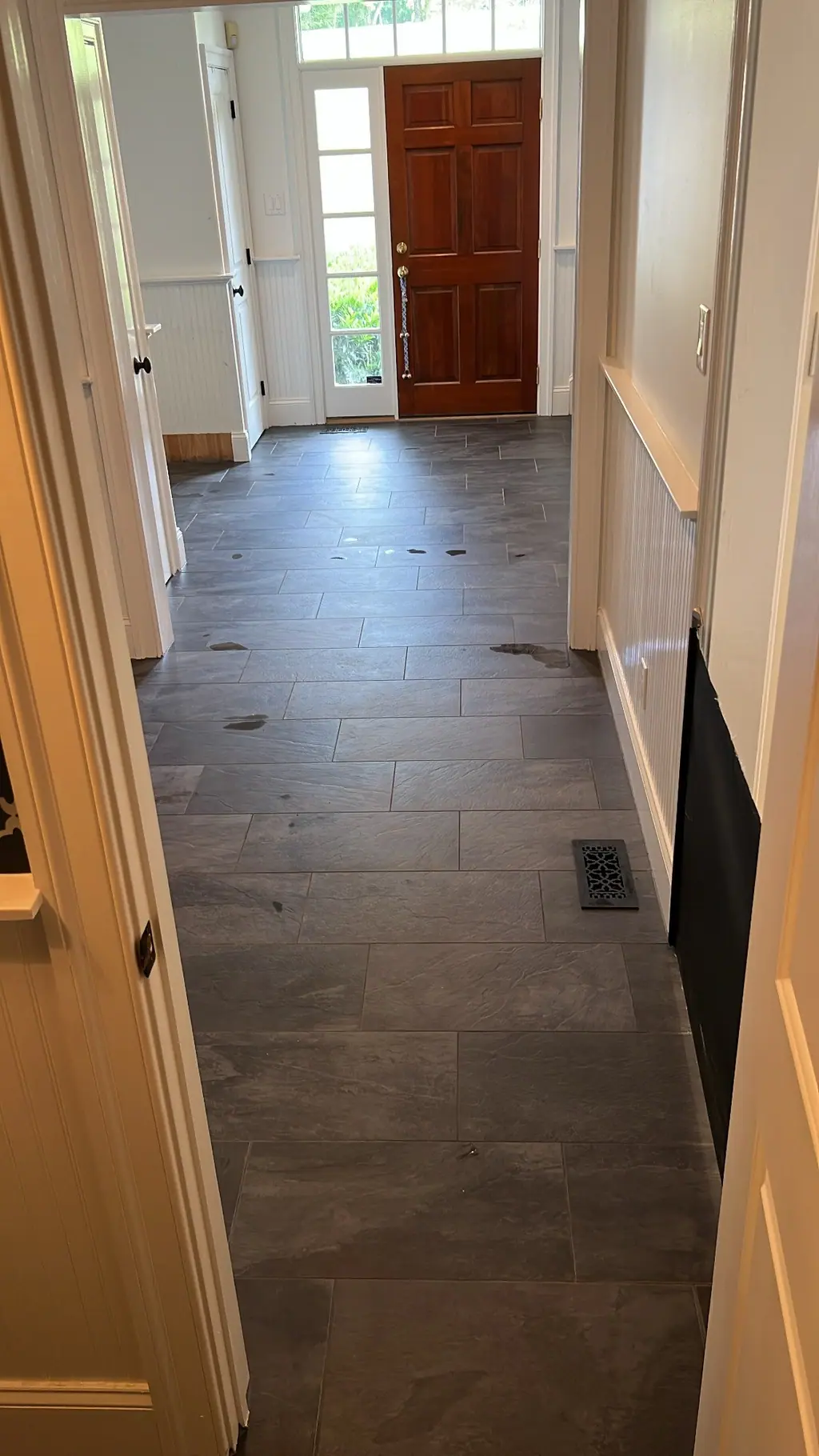
Floors were the first thing we did. F Tile started in 2019 setting tile, and flooring installation in Media, PA is still a big part of the work: large-format porcelain in open first floors, herringbone in hallways, wood-look tile in kitchens, and luxury vinyl plank and hardwood where they fit better.
A good floor depends on what's under it. Before we quote, we look at how the floor moves when you walk on it, how flat it is across a long straightedge, and what's already down there. That inspection decides whether a room is ready for tile or needs work first.
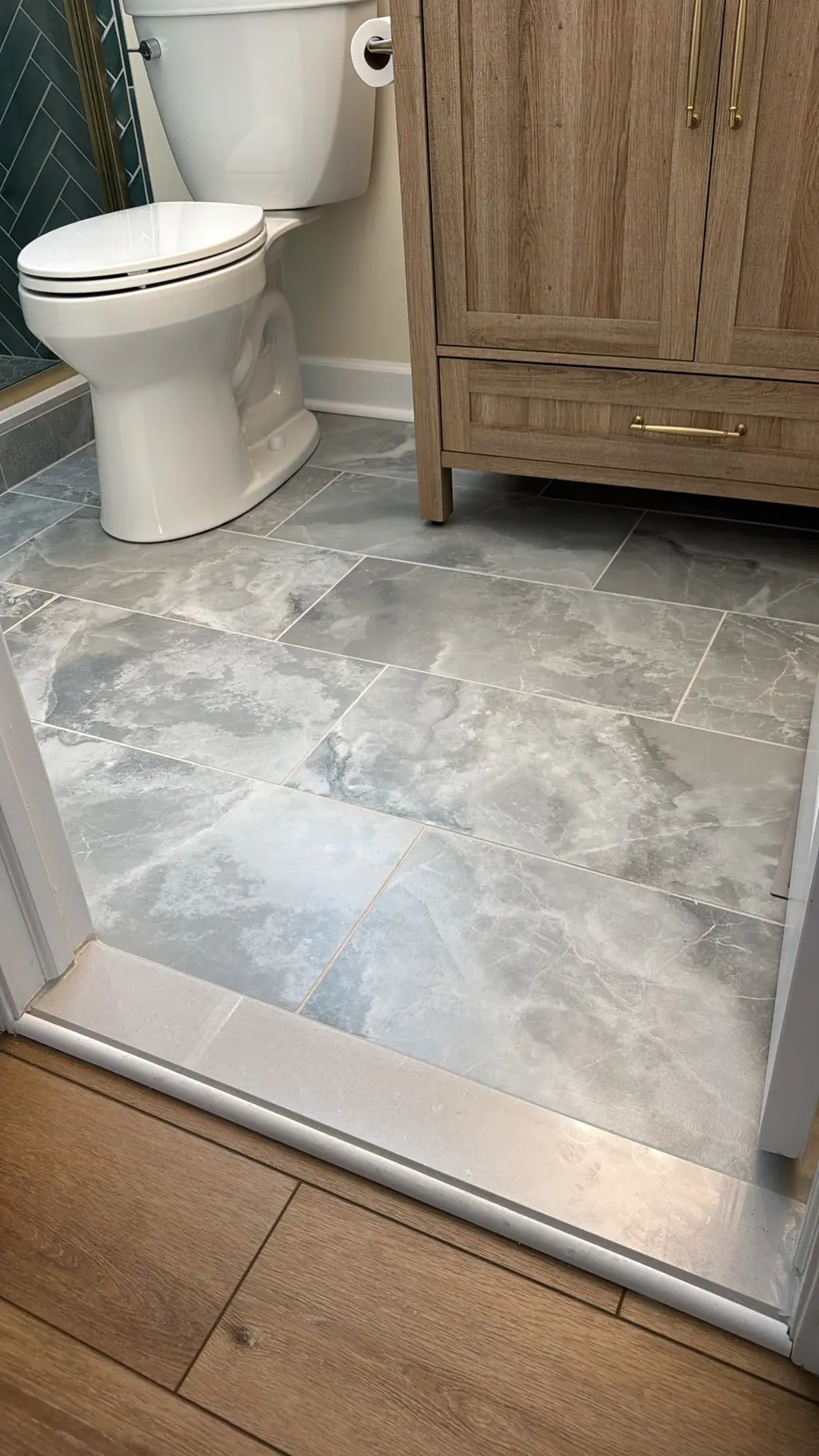
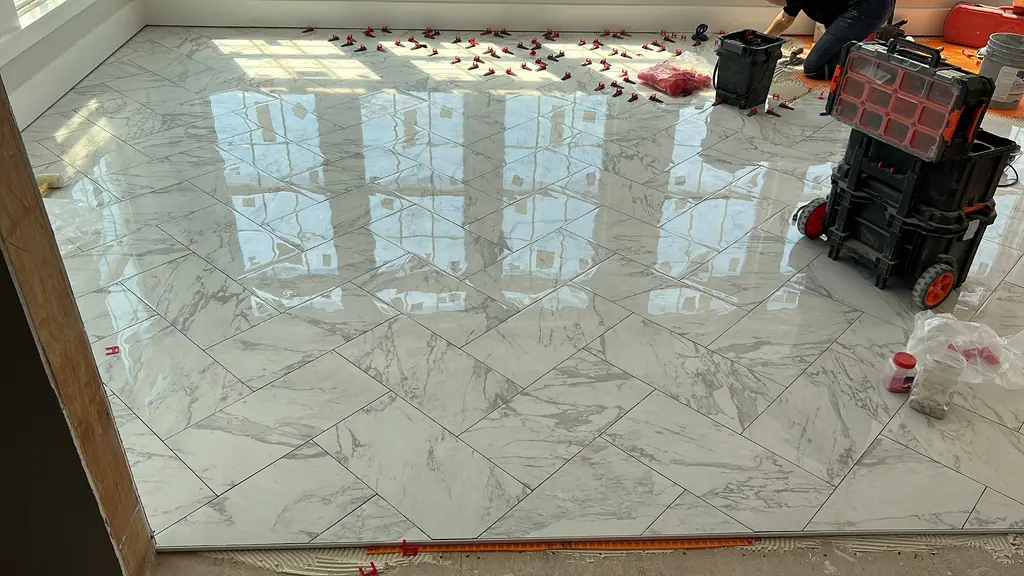
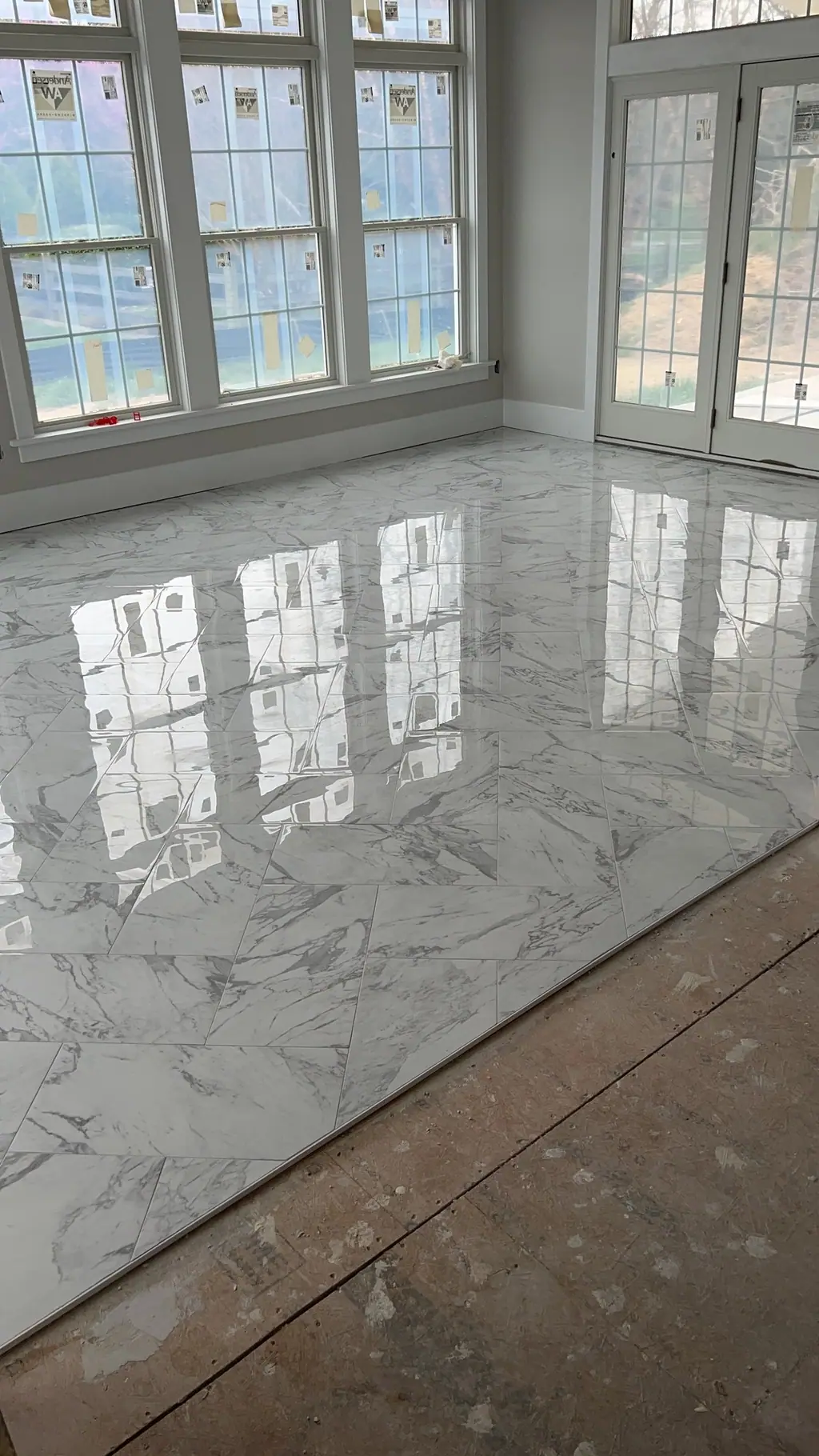
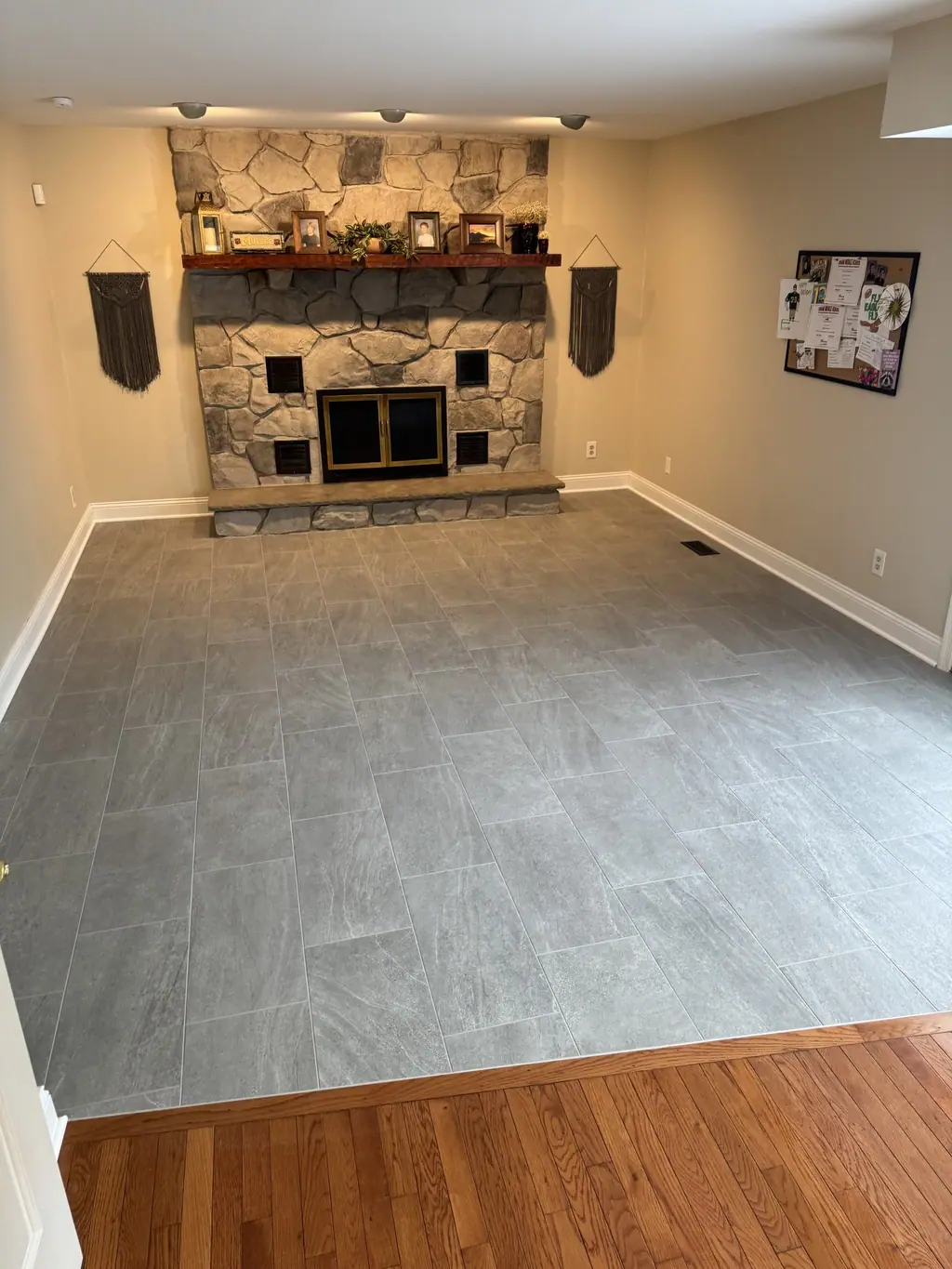
Subfloors in older Delaware County houses
Many older twins and singles in Media Borough, Lansdowne and Drexel Hill have original oak strip flooring, sometimes hidden under carpet, laid over diagonal plank subfloor on sawn joists. That structure can be good for hardwood refinishing and new hardwood, but it usually needs added stiffness or a new plywood layer before tile. Ceramic and porcelain crack where a floor flexes, and natural stone needs a stiffer floor still.
Houses built after the war in Springfield, Broomall and Upper Providence more often have plywood subfloors, but decades of kitchen leaks and pet accidents can leave soft areas near sinks, toilets and back doors. We probe those spots and replace damaged sections instead of covering them.
Basements are their own category. Delaware County gets wet springs and humid summers, and plenty of basements show it. Tile and waterproof LVP handle below-grade moisture far better than hardwood or laminate, and we check for active water before any basement floor goes in.
What we handle
Porcelain and ceramic tile
Standard and large-format tile, set with proper trowel coverage and lippage control across long runs.
Herringbone and patterned floors
Herringbone, chevron, checkerboard and hex layouts, squared to the room and centered on the main sightline.
Wood-look porcelain
Plank tile with staggered joints kept short enough to avoid lippage from bowed planks.
Luxury vinyl plank
Click and glue-down LVP over leveled subfloors, including basements with confirmed moisture conditions.
Hardwood
Nail-down solid and engineered hardwood, acclimated before installation.
Subfloor repair and prep
Plywood replacement, added underlayment, uncoupling membranes and self-leveling where needed.
Old floor removal
Taking up carpet, vinyl, old tile and mortar beds so the new floor sits at the right height.
How the project runs
Walkthrough & estimate
We check deflection, flatness, moisture and existing layers, then give a written estimate that includes the prep the floor needs.
Material and layout
You choose the floor; we plan transitions at doorways and where the pattern starts so the room reads square.
Removal and prep
Old flooring comes up, subfloor repairs are made, and the surface is flattened and primed or underlaid.
Installation
Tile, plank or hardwood is installed, with movement joints at walls and in large tile fields.
Trim and walkthrough
Thresholds, base shoe or trim, cleanup, and a final look with you.
Choosing the right floor for the room
Kitchens, baths, mudrooms and basements are where porcelain and waterproof LVP make sense. Living and dining rooms in older Media homes often suit hardwood, especially where it continues from existing oak. Wood-look porcelain is popular in kitchens and first floors of houses with dogs, and it's common to run it continuously from the kitchen into a family room.
Cost is driven by the prep more than people expect. Two rooms of the same size can differ widely if one needs a mortar bed removed, a new plywood layer and self-leveler. Tile size and pattern matter too: herringbone takes more cuts, and very large tile needs a flatter floor. We price after the inspection so the prep is in the number from the start.
Flooring on its own rarely needs a permit, but structural repairs to joists may. If the floor inspection turns up framing problems, we'll explain what we found and what your borough or township is likely to require.
Areas we cover around Media
- Media Borough
- Upper Providence Township
- Springfield
- Broomall
- Drexel Hill
- Lansdowne
- Havertown
- Aston
- Brookhaven
- Wallingford
Flooring Installation in Media: FAQ
We found oak floors under our carpet. Should we tile over them?
Usually no. If the oak is in decent shape, refinishing it is often the better move. If you want tile in that room, the oak typically comes up or gets a new stiff underlayment, because tile over springy strip flooring tends to crack.
Can you put tile in a basement that gets damp?
Porcelain handles moisture well, but a floor can't fix a water problem. We check for active leaks, efflorescence and seepage first. If water is coming in, that needs to be solved before any new floor goes down.
How long do we need to stay off a new tile floor?
Typically light foot traffic the day after grouting and furniture a few days later, depending on the setting materials and temperature. We'll give you the specifics for your products.
Why do some large tile floors have uneven edges?
That's lippage. Large tiles have a slight bow from the kiln, and long planks set with a 50 percent offset exaggerate it. We keep plank offsets to about a third, use a leveling system on large tile and start with a flat floor. Our wood-look porcelain guide explains more.
Related reading
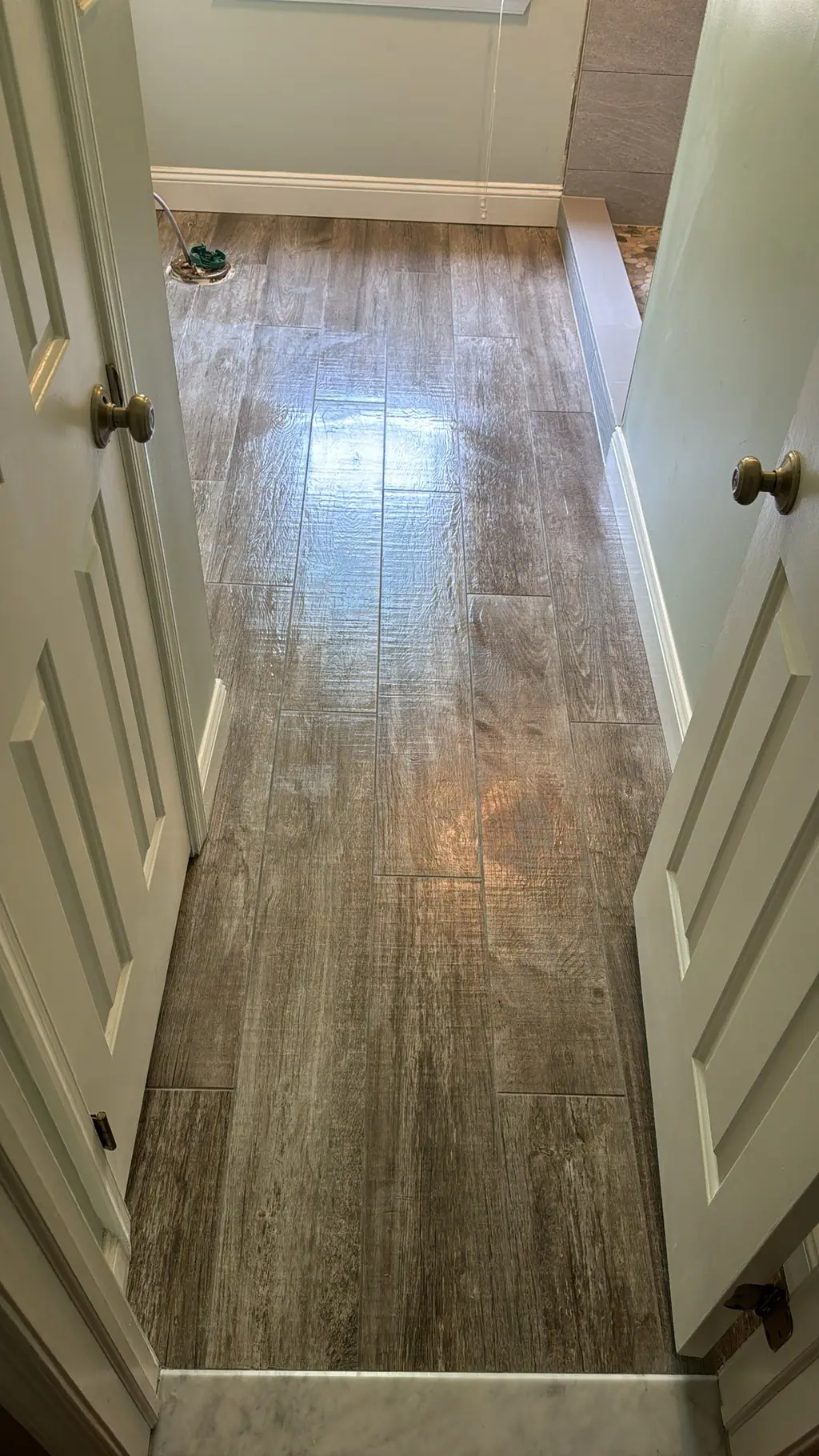
Wood-Look Porcelain Tile: A Practical Homeowner's Guide
Wood-look porcelain gives you the grain of a plank floor with the water resistance of tile. It also has quirks that decide whether the floor looks right.
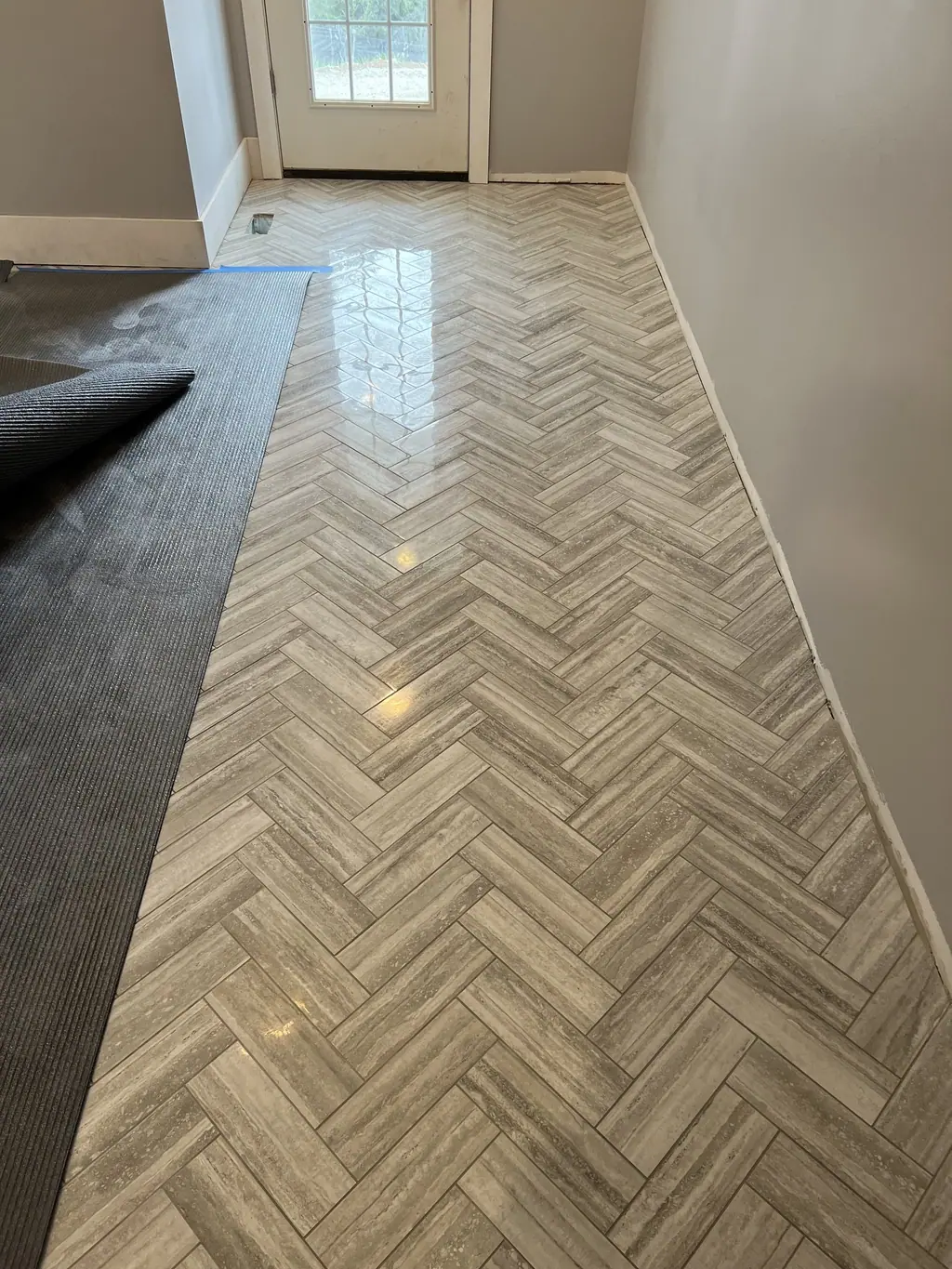
LVP vs. Tile vs. Hardwood: Choosing Floors for a Family Home
How luxury vinyl plank, porcelain tile and hardwood compare on water, wear, comfort and repair, and how to match each one to the rooms in a family home.
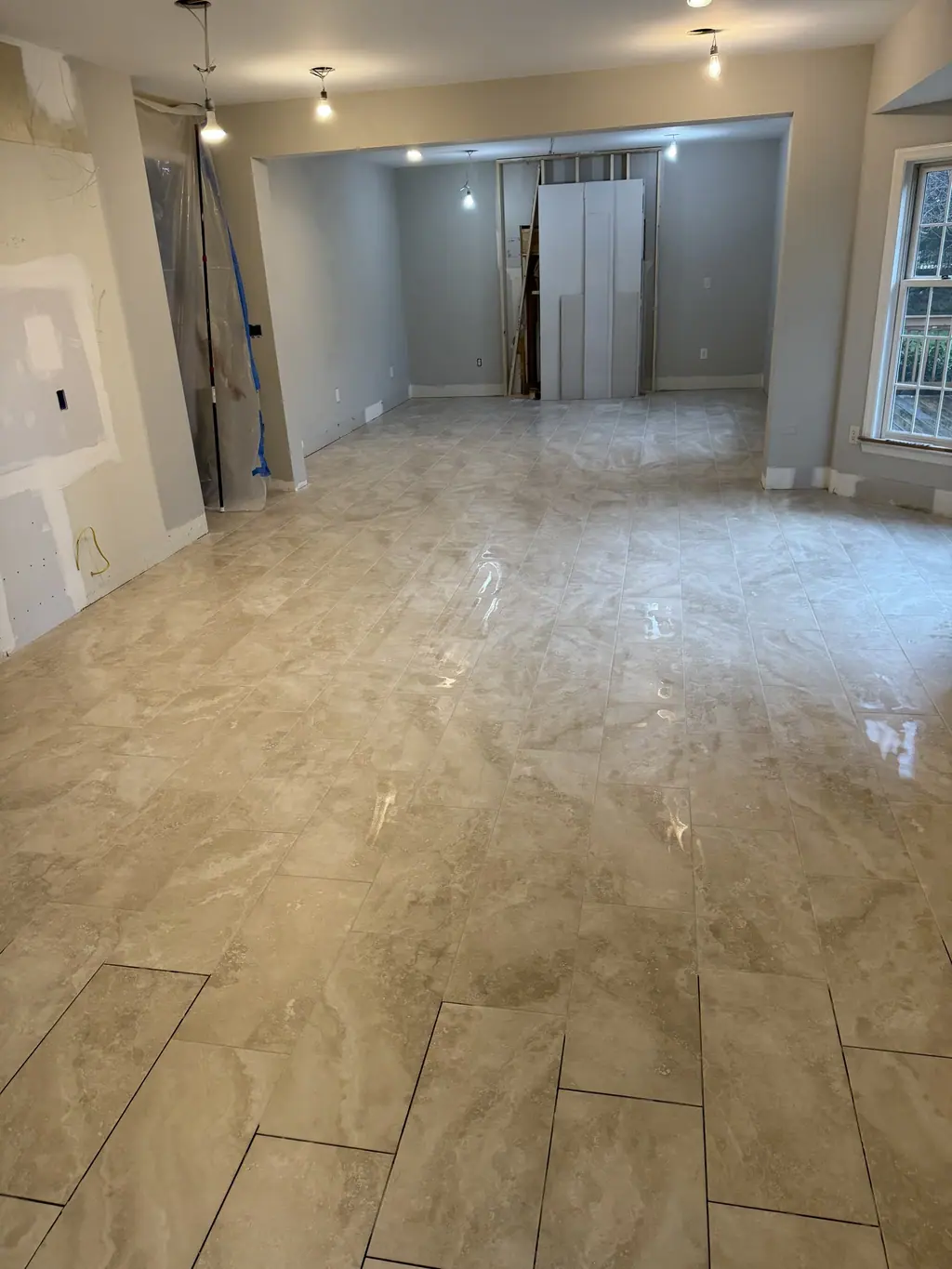
Tile Floors in Philadelphia Rowhomes: Joists, Subfloors and Prep
Old rowhome floors bounce, slope and sit on plank subfloors. Here is what has to happen under a tile floor so it stays flat and uncracked.