
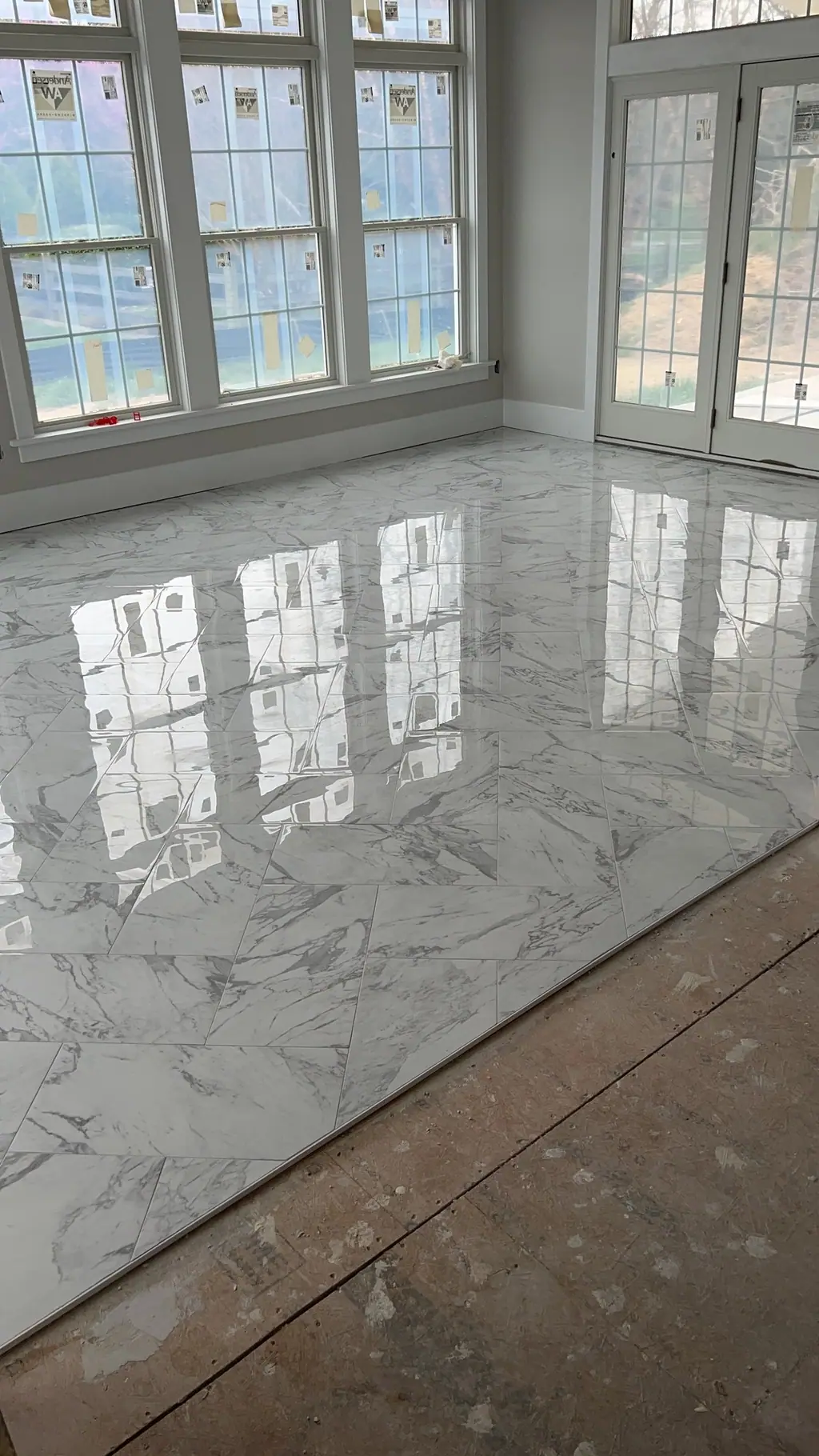
Flooring installation in Philadelphia starts below the finish. Older rowhome floors bounce, slope toward a party wall or sit on board subfloors with gaps between the planks, and a new floor installed over those problems inherits them. Tile cracks, vinyl plank telegraphs every ridge, and hardwood squeaks. We spend the first part of every job making the floor ready for the material you picked.
Floors were the original F Tile service when we started in 2019, and the crew has more than ten years of setting tile, including large-format porcelain and herringbone layouts. We also install luxury vinyl plank and hardwood. Our main flooring installation page covers the materials in more depth.
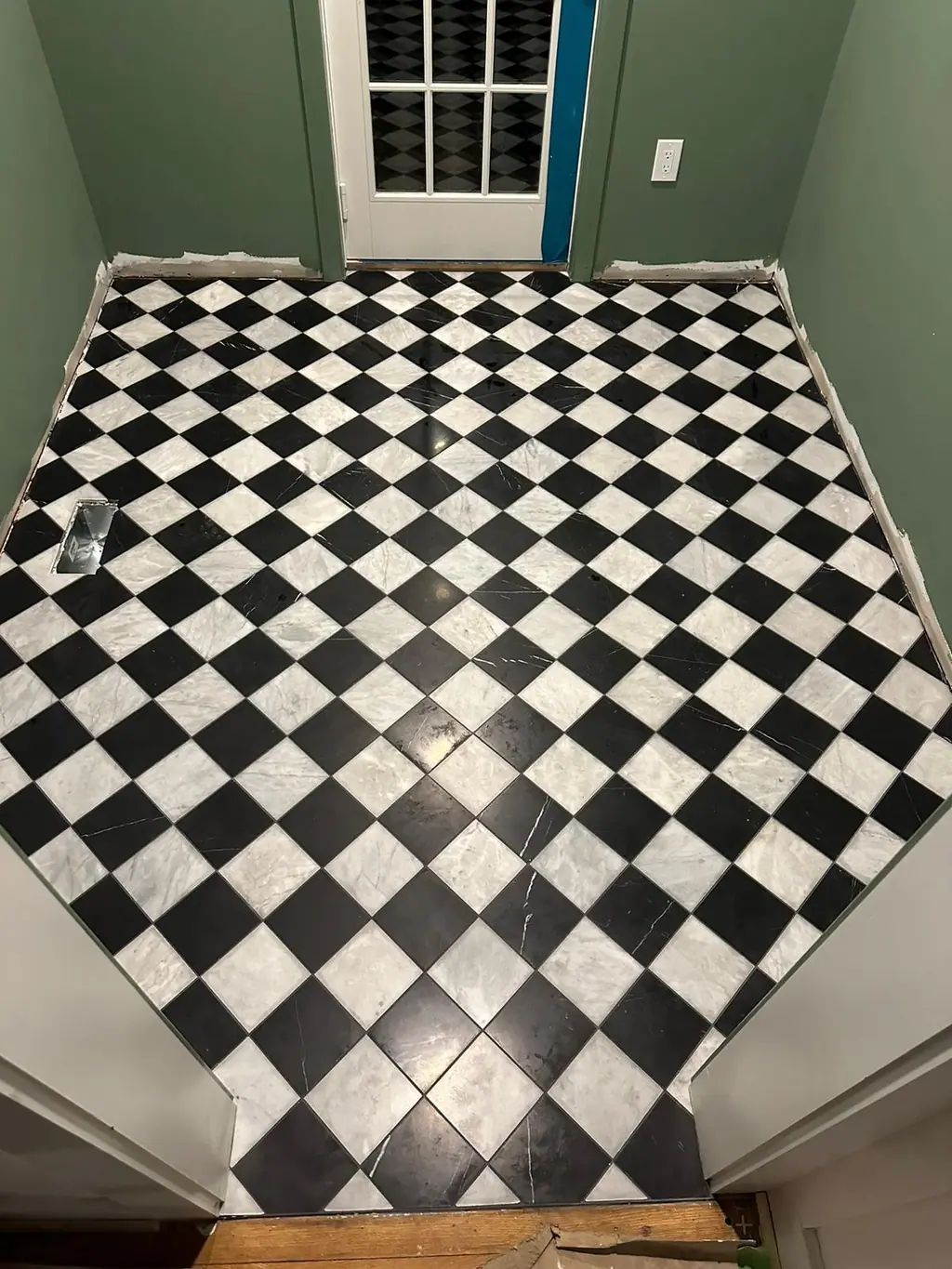
Philadelphia floors and what sits under them
Many pre-war rowhomes have pine plank floors laid directly over joists that span wall to wall between the party walls. Those planks are the subfloor. They can look great refinished, but as a base for tile they move too much and have gaps and cupping. For tile, we typically add a plywood layer screwed to the joists, then an uncoupling membrane, after checking that the joists themselves are stiff enough. Our post on tile floors in Philadelphia rowhomes explains the deflection numbers behind that decision.
Settlement is normal in 100-year-old brick houses, and floors often dip toward the middle of the room or run downhill toward the back. Self-leveling underlayment can correct some of that, but it adds weight and height at doorways. On some floors the better answer is to flatten the floor locally and accept a gentle overall slope that no one will notice once the floor is down.
Postwar rowhomes in the Northeast, in neighborhoods like Mayfair and Oxford Circle, usually have plywood or board subfloors with oak strip flooring, and the question there is often whether to match existing hardwood in a hallway. In Center City and Rittenhouse condo buildings, the subfloor is concrete, and the building's association may require a specific acoustic underlayment under any hard flooring. We ask for those rules before ordering materials.
What we handle
Porcelain and ceramic tile
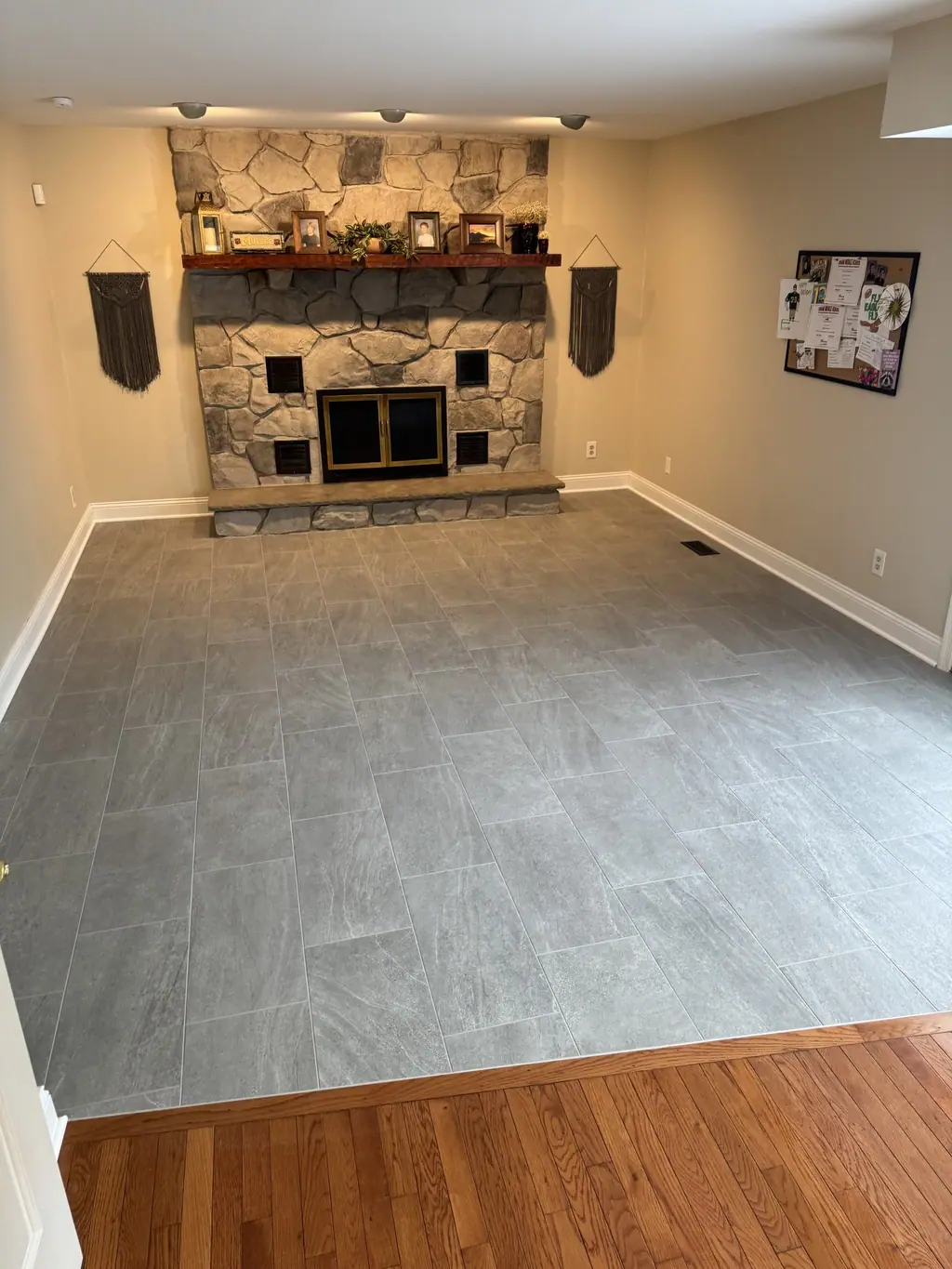
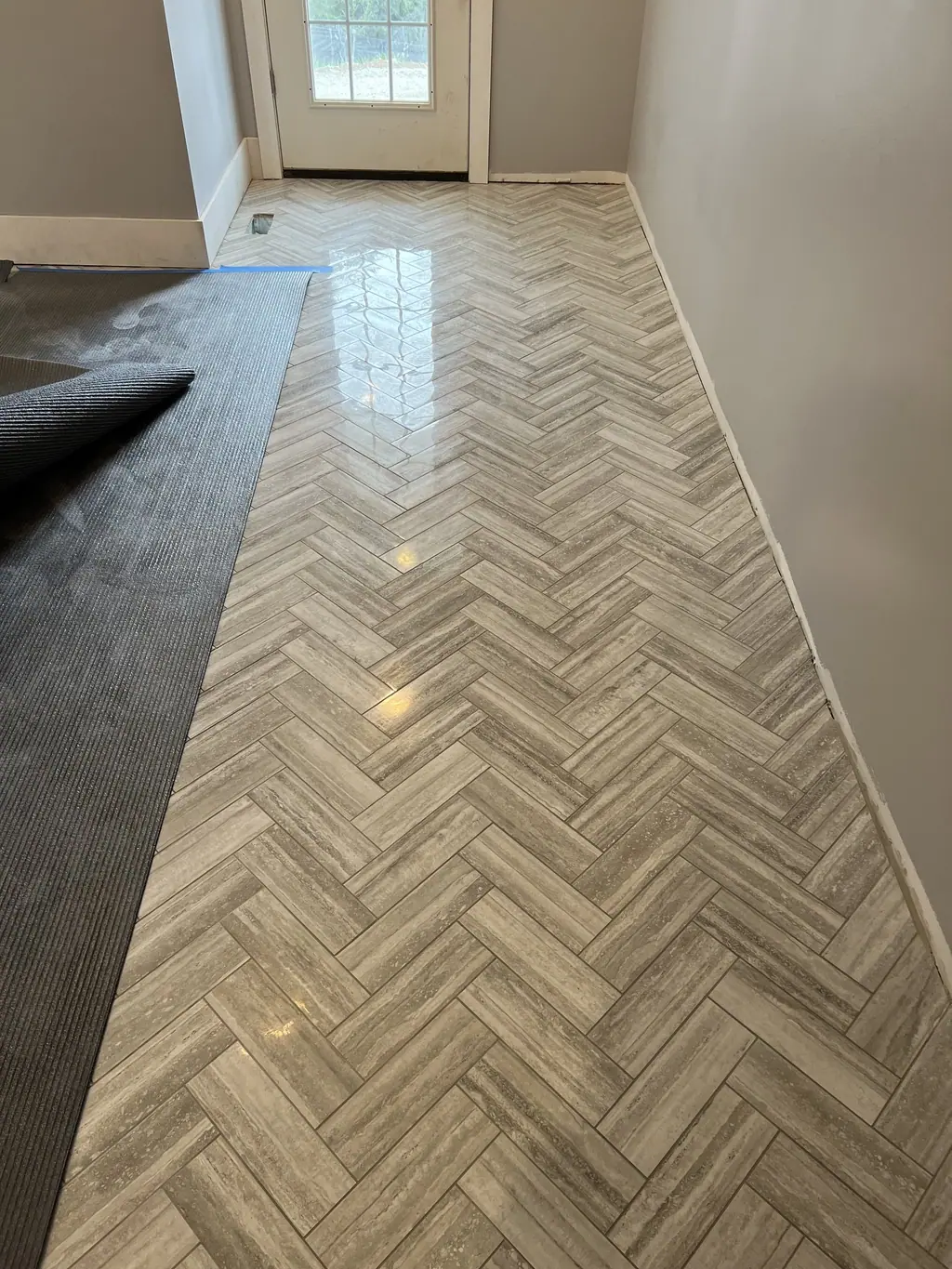
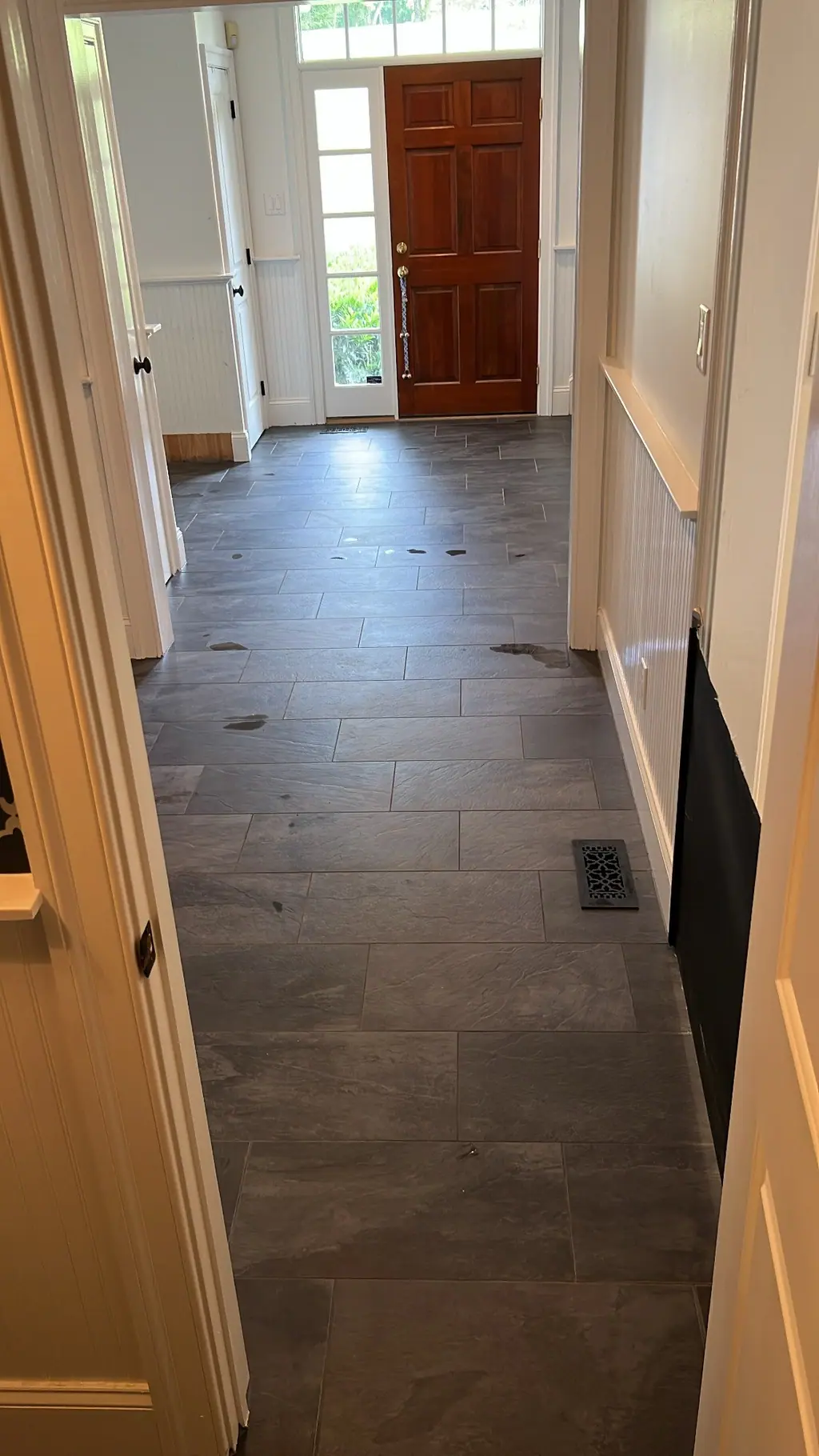
Kitchens, baths, entries and whole first floors, including large-format tile and herringbone, with an uncoupling membrane where the substrate calls for it.
Natural stone
Marble and other stone floors, which need a stiffer floor than porcelain. We tell you honestly when a floor is not a good candidate.
Luxury vinyl plank
Click-lock and glue-down LVP for kitchens, basements, rentals and condos, over a floor flattened to the manufacturer's tolerance.
Hardwood
Solid and engineered hardwood installation, including weaving new boards into existing floors where the species and width can be matched.
Subfloor and joist prep
Sistering or blocking weak joists, adding plywood over board subfloors, and leveling or grinding high spots.
Old floor removal
Removing carpet, vinyl and old tile, with suspect older flooring tested for asbestos before it is disturbed.
Transitions and trim
Thresholds, reducers and base trim so the new floor meets doorways and adjacent rooms cleanly.
How the project runs
Walkthrough & estimate
We look at the floor, feel for bounce, check for slope and, where possible, look at the joists from the basement. The estimate is free.
Material and prep plan
We confirm the material, underlayment and any structural or leveling work so there are no surprises once the old floor is up.
Removal and prep
Remove the old floor, repair or add subfloor, stiffen joists where needed and flatten the surface.
Installation
Lay out from the room's most visible line, install the floor and set transitions at doorways.
Finish and walkthrough
Grout and seal tile, install trim, clean up and walk the floor with you.
Radiators, stairs and other city details
A lot of Philadelphia homes still heat with hot-water or steam radiators, and the supply pipes come up through the floor. Tile and plank can be cut neatly around the pipes, but a clean job under a radiator often means having the radiator temporarily disconnected and lifted by a heating contractor. We tell you during the estimate if that makes sense for your room.
Everything comes in through the front door and up narrow stairs, including boxes of tile that weigh more than most people expect. We stage materials so the house stays passable, and in houses without a rear alley we plan deliveries around street parking.
Areas we cover around Philadelphia
- Center City
- Rittenhouse
- Fairmount
- Brewerytown
- Pennsport
- Port Richmond
- East Falls
- Roxborough
- Mayfair
- Oxford Circle
Flooring Installation in Philadelphia: FAQ
My rowhome floor bounces. Can I still have tile?
Often, yes, after the joists are stiffened. Bounce is a sign of deflection, and tile needs a stiff floor. Sistering joists, adding blocking or adding a plywood layer can get a floor there. An uncoupling membrane helps with movement but does not fix a floor that flexes too much.
Is LVP a good choice for a Philadelphia basement?
It is one of the better options, because most LVP cores are not damaged by water. It does not stop moisture coming through the slab, though, so we check for dampness first and use the underlayment or vapor barrier the manufacturer specifies.
Can you match the oak floors in the rest of my house?
We can install new strip oak of the same width and species and weave it into the existing floor. An exact color match usually means refinishing the whole connected area together, which is done by a floor refinisher.
Does my condo building need to approve a new floor?
Many Philadelphia condo associations have rules for hard flooring, usually a required acoustic underlayment. Check your bylaws or ask the property manager before you choose a material, and we will install to those requirements.
Related reading
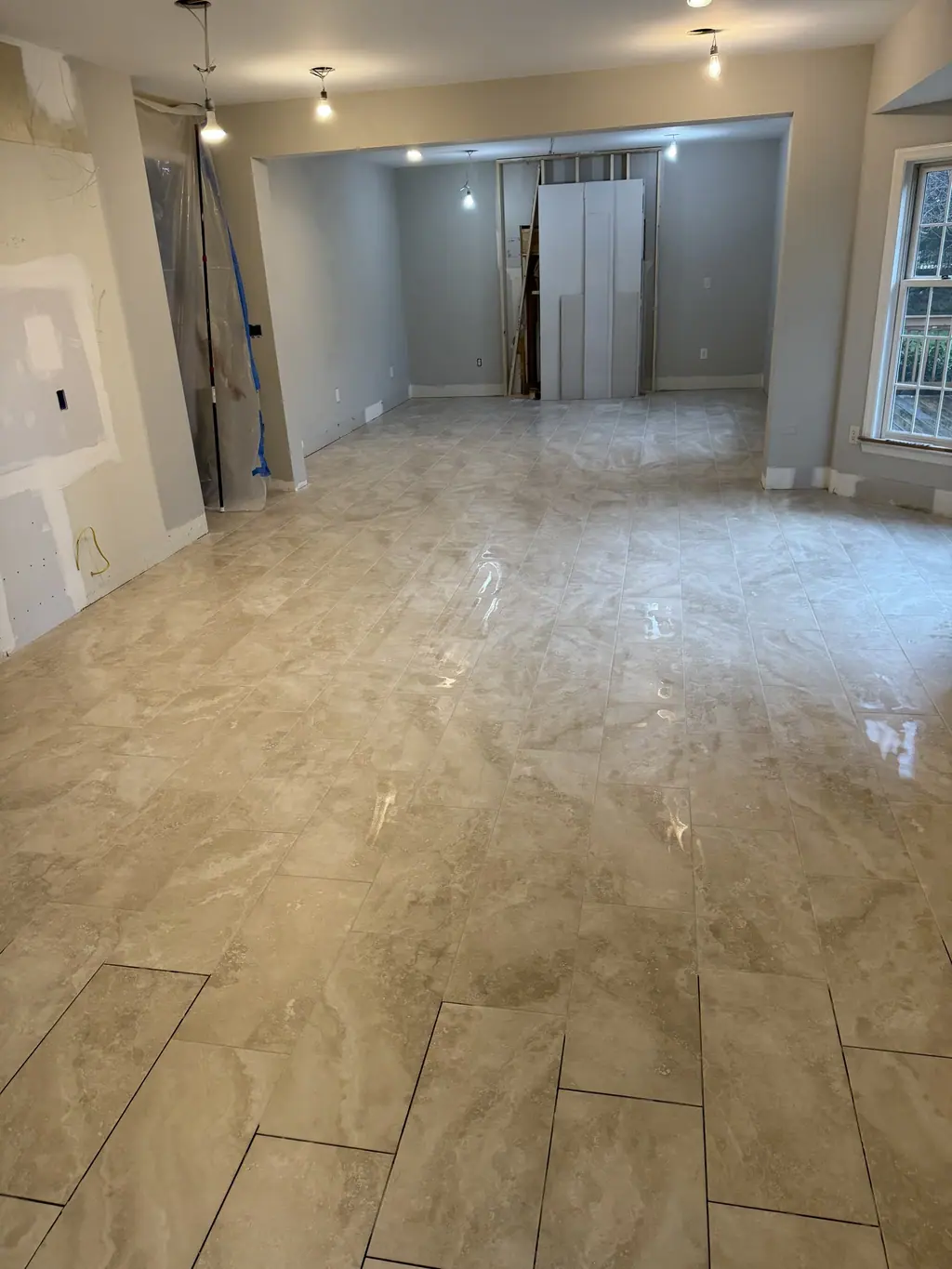
Tile Floors in Philadelphia Rowhomes: Joists, Subfloors and Prep
Old rowhome floors bounce, slope and sit on plank subfloors. Here is what has to happen under a tile floor so it stays flat and uncracked.
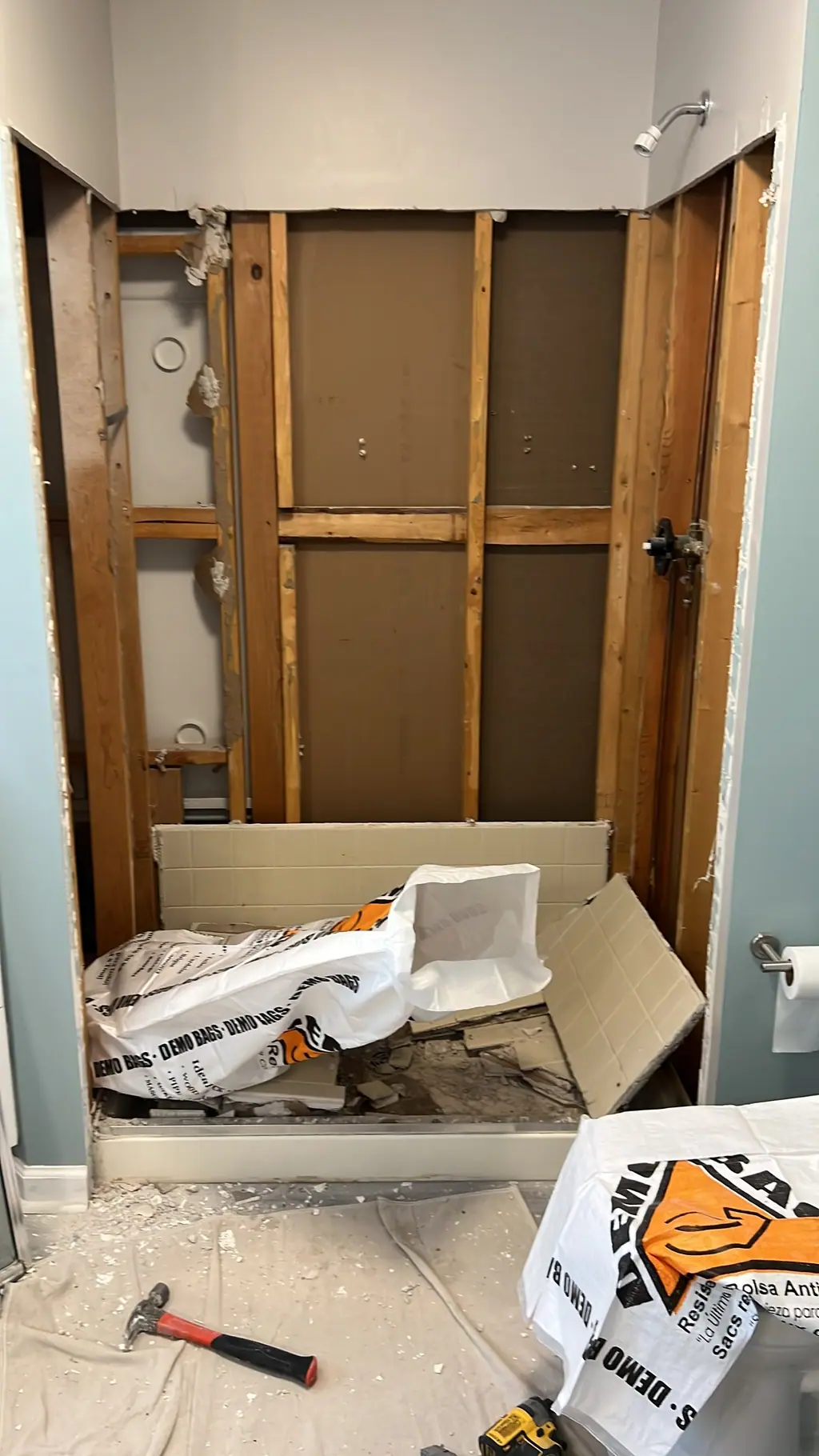
Demolition in Older Philadelphia Homes: Plaster, Lead and Dust
Before opening walls in an older Philadelphia house, know what is in them: plaster and lath, mud-set tile, lead paint and sometimes asbestos. Here is how to handle it safely.
LVP vs. Tile vs. Hardwood: Choosing Floors for a Family Home
How luxury vinyl plank, porcelain tile and hardwood compare on water, wear, comfort and repair, and how to match each one to the rooms in a family home.