
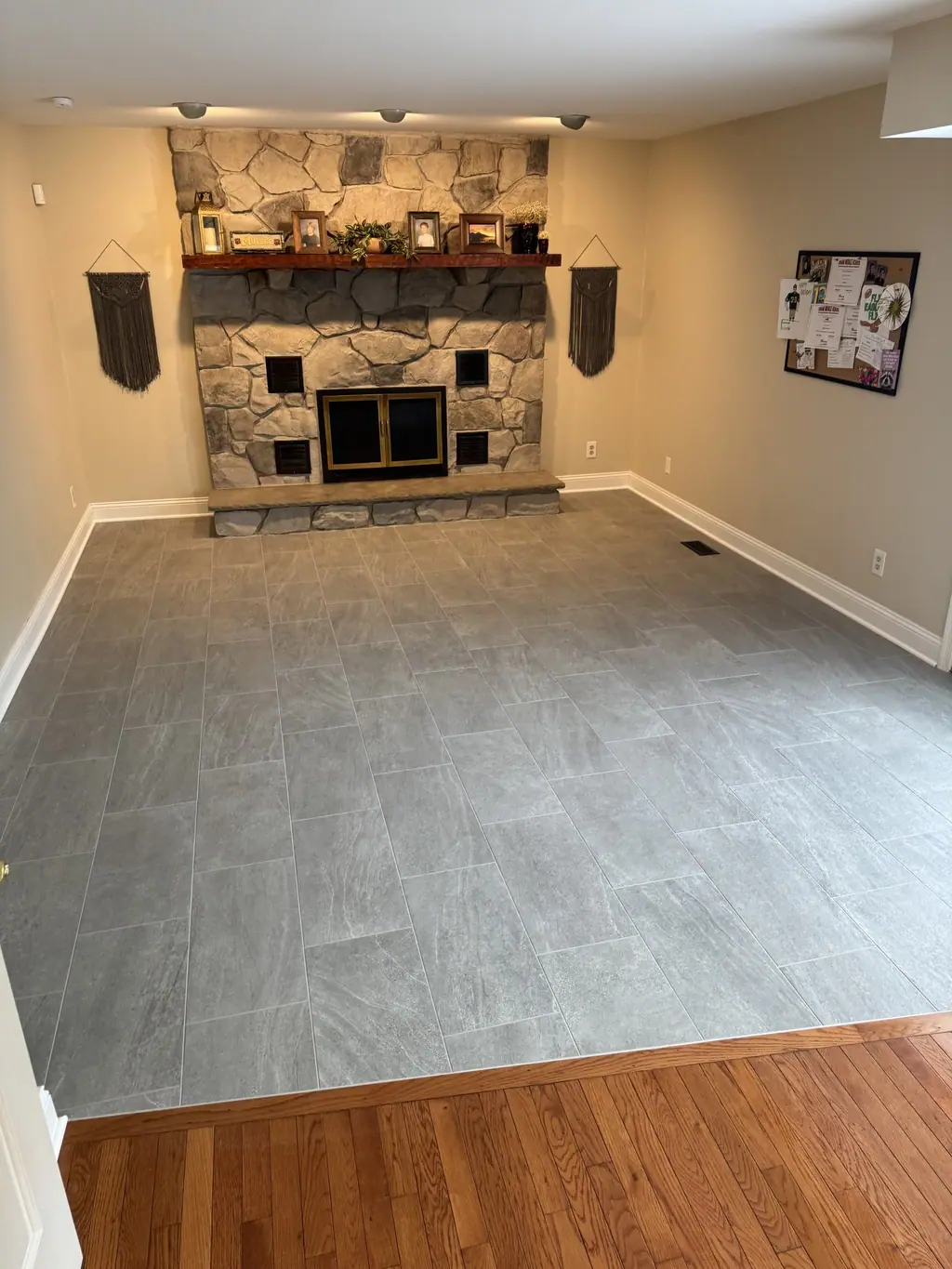
F2 Home Improvement provides flooring installation in King of Prussia and across Upper Merion Township. Flooring was the original F Tile service, and tile floors are still a large part of what we do: large-format porcelain, herringbone hallways, marble-look baths and wood-look plank tile. We also install luxury vinyl plank and hardwood, and we help homeowners decide which one suits each room.
The finished floor only lasts as long as what is underneath it. Before we quote, we look at the subfloor or slab, check for bounce and dips, and figure out how the new floor will meet stairs, doors and neighboring rooms.
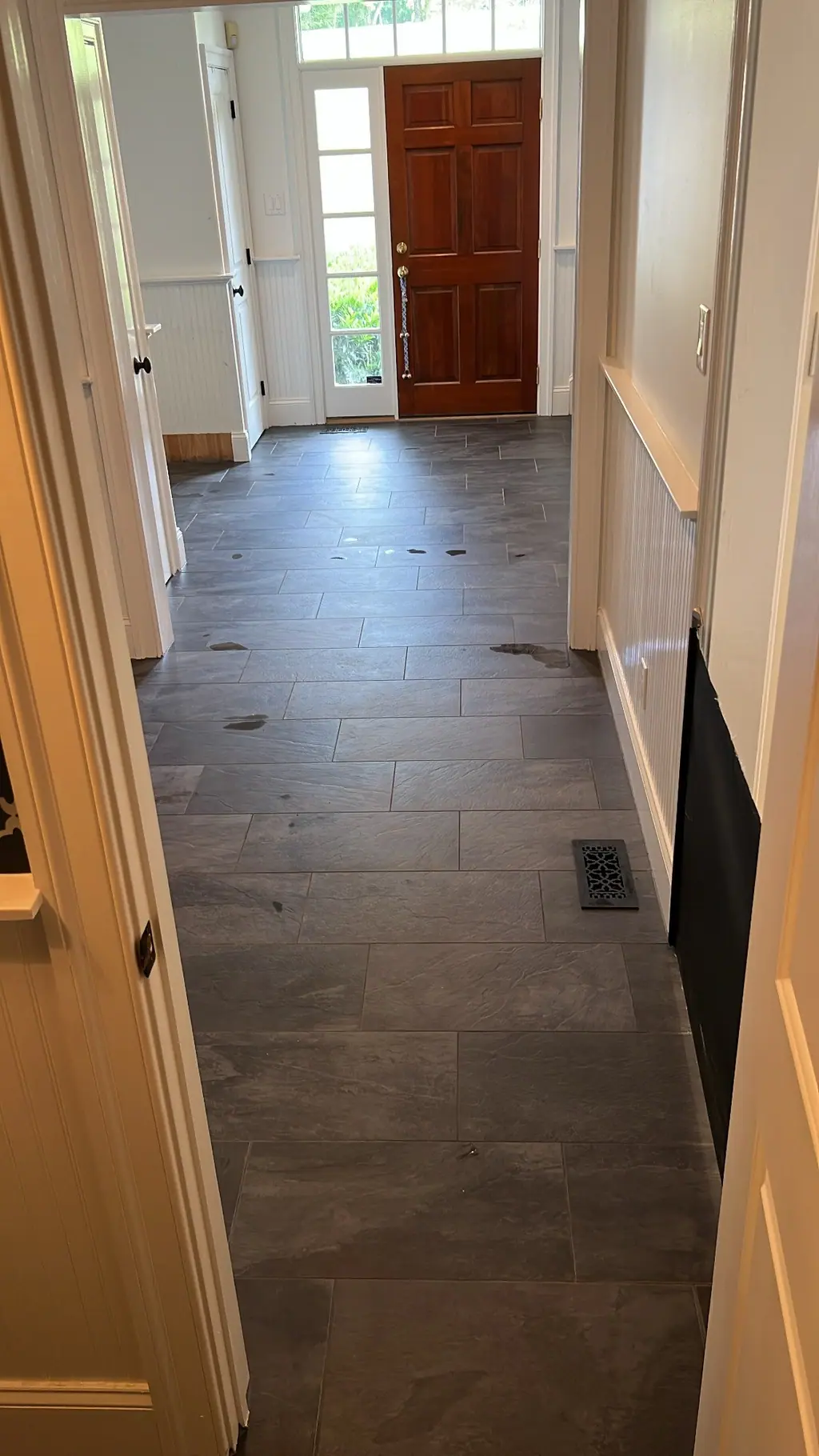
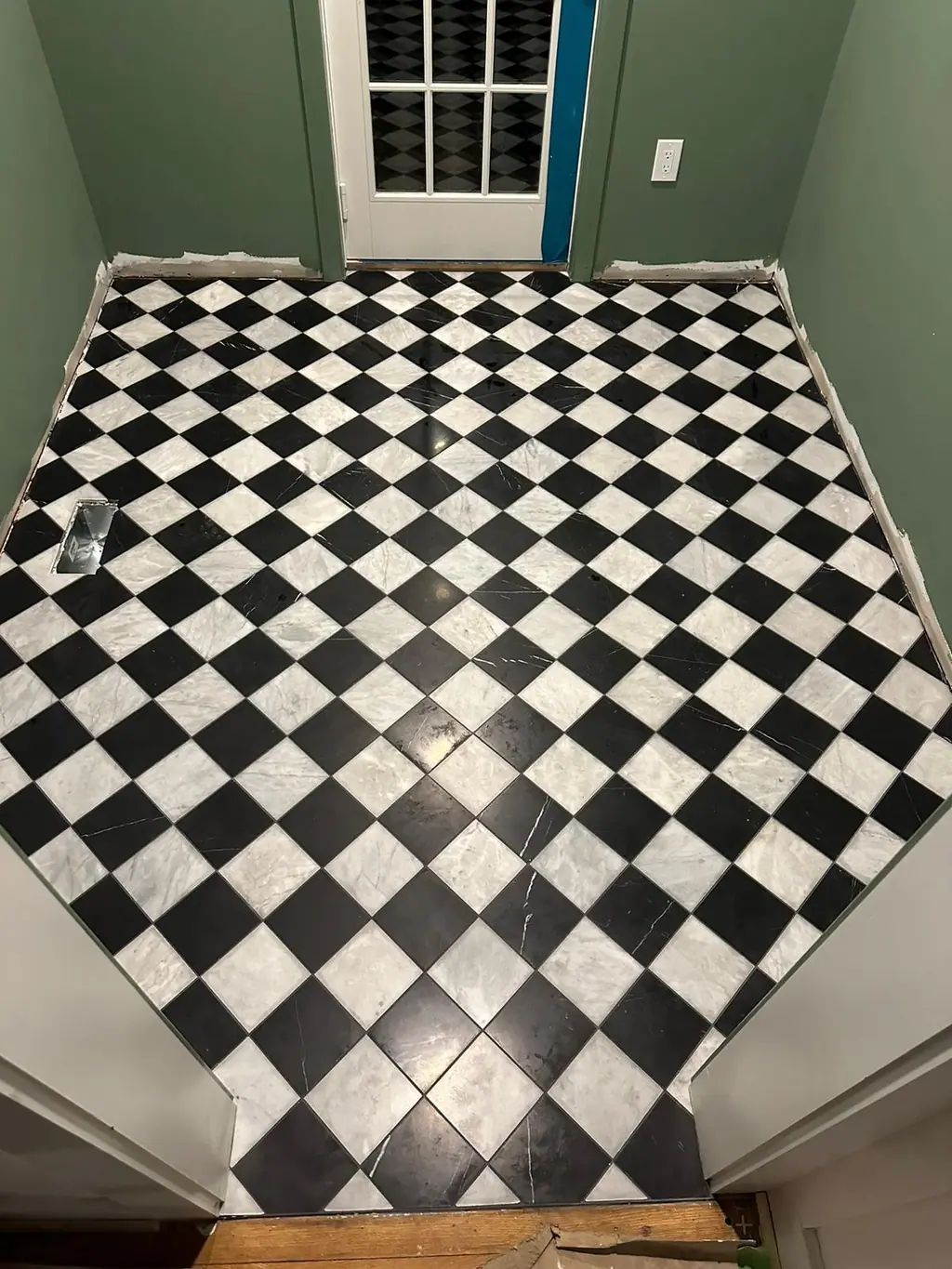
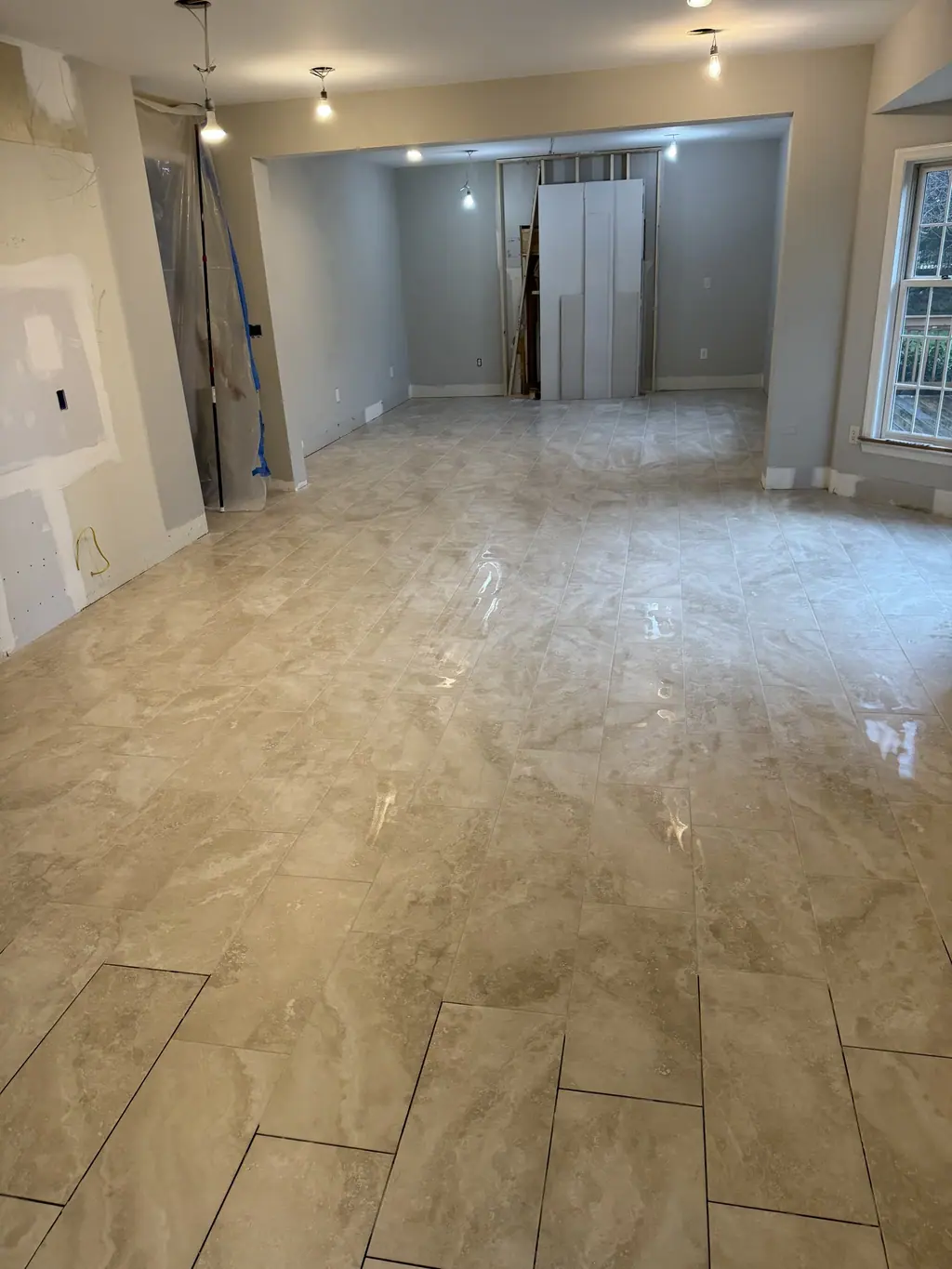
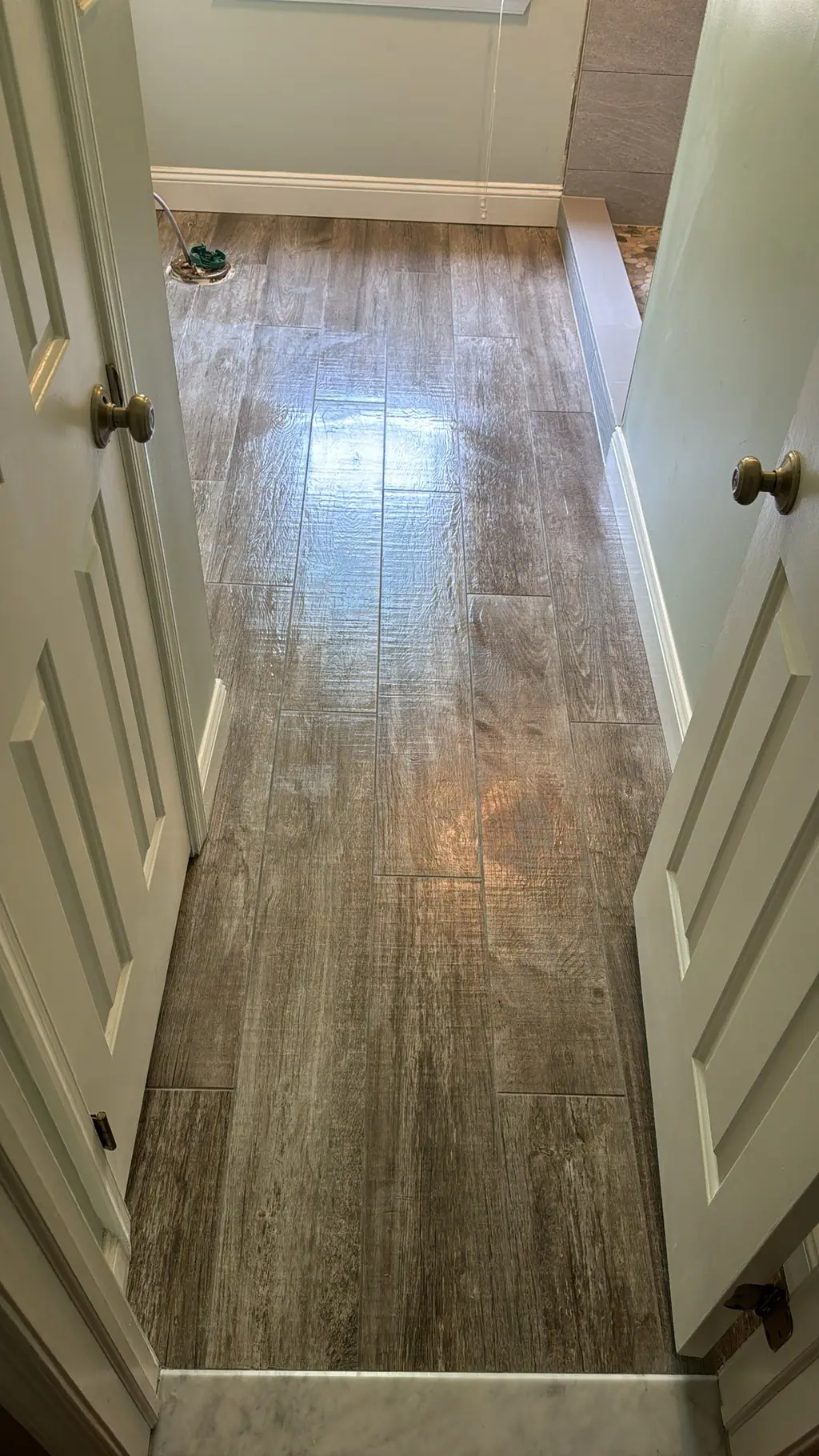
Floors in split-levels, ranches and townhomes around King of Prussia
Split-level homes are common in King of Prussia, and they are some of the trickiest houses to floor well. The lower-level family room is often built on a concrete slab at or near grade, which can be cool and can carry moisture up from the ground. The middle and upper levels sit on wood framing. That means one house may need two different approaches: a moisture-tolerant floor on the slab and a stiffer, tile-ready assembly upstairs, plus clean transitions at each short run of stairs.
Many 1950s and 1960s ranches and colonials in the township still have oak strip flooring under wall-to-wall carpet. Sometimes it is worth refinishing and keeping in the living areas while the kitchen, baths and entry get tile. Older homes can also have 9-inch vinyl tiles or black mastic under later flooring; those materials may contain asbestos and should be tested before anyone sands or tears them up. In townhome communities, some associations have rules about sound transmission for hard floors on upper levels, which is worth checking before you choose a product.
What we handle
Porcelain and ceramic tile
Kitchens, baths, entries and laundry rooms, including large-format tile that needs a very flat substrate.
Patterned tile floors
Herringbone, checkerboard and mosaic layouts, centered on the room and planned around doorways.
Luxury vinyl plank
Floating click-lock and glue-down LVP, a practical choice for slab family rooms and busy households.
Hardwood
Solid and engineered hardwood on wood-framed floors, with engineered options for areas where solid wood is not recommended.
Subfloor prep
Removing old layers, fastening loose subfloor, leveling low spots and installing uncoupling membrane under tile where it makes sense.
Stairs and transitions
Matching nosings, reducers and thresholds so each level meets the next without a trip edge.
How the project runs
Walkthrough & estimate
We measure, check the floor for flatness and movement, test slabs for moisture concerns and ask how the room is used. Free estimate.
Material and layout plan
We help choose the product, work out plank or tile direction and where cuts will land, and list what prep is needed.
Removal and prep
Old flooring comes up, the subfloor or slab is repaired and flattened, and membranes or underlayment go down.
Installation
Flooring is installed to the manufacturer's requirements, with expansion gaps, trim and transitions finished at each doorway.
Picking the right floor for each level
On a slab that stays cool and slightly damp, solid hardwood is a poor match. Tile and quality luxury vinyl plank both handle it well, and we check the slab before recommending either. On upper floors over wood joists, tile needs a floor that does not flex much. Longer spans and undersized joists can be improved with blocking or added subfloor, but sometimes the honest answer is that a plank floor is the better choice for that room.
Freeze-thaw winters and humid summers in this part of Pennsylvania make indoor humidity swing through the year, which affects wood floors most. Hardwood should acclimate before installation and needs its expansion gap at the walls. Tile does not move with humidity, but it does need movement joints at the perimeter and in large rooms.
We compare the three materials in more detail in LVP vs. tile vs. hardwood for family homes. Cost depends on the product, square footage, how much old flooring comes out, prep work and the number of stairs and transitions. We quote after measuring.
Areas we cover around King of Prussia
- Gulph Mills
- Bridgeport
- Swedesburg
- Valley Forge
- Wayne
- Norristown
- Conshohocken
- Plymouth Meeting
- Audubon
- Phoenixville
Flooring Installation in King of Prussia: FAQ
What floor works best in the lower level of a split-level?
For most slab family rooms, porcelain tile or a good luxury vinyl plank rated for below-grade or on-grade use. We check the slab for moisture and flatness first and recommend based on what we find and how the room is used.
There is old oak under my carpet. Should I keep it?
Often, yes. If the boards are in reasonable shape, refinishing can be a good value in living and dining rooms. We can pair it with tile in the kitchen and baths and plan the transitions so the two floors meet cleanly.
Can you install tile over my existing vinyl floor?
Sometimes, but we usually recommend removing it so we can see and repair the subfloor. If the old vinyl or its adhesive may contain asbestos, it should be tested before removal, and in some cases covering it is the safer route.
My townhome HOA has flooring rules. Can you work with them?
Yes. If your association requires a specific sound-rated underlayment for upper floors, we include it in the plan and can provide product information for your approval request.
Related reading
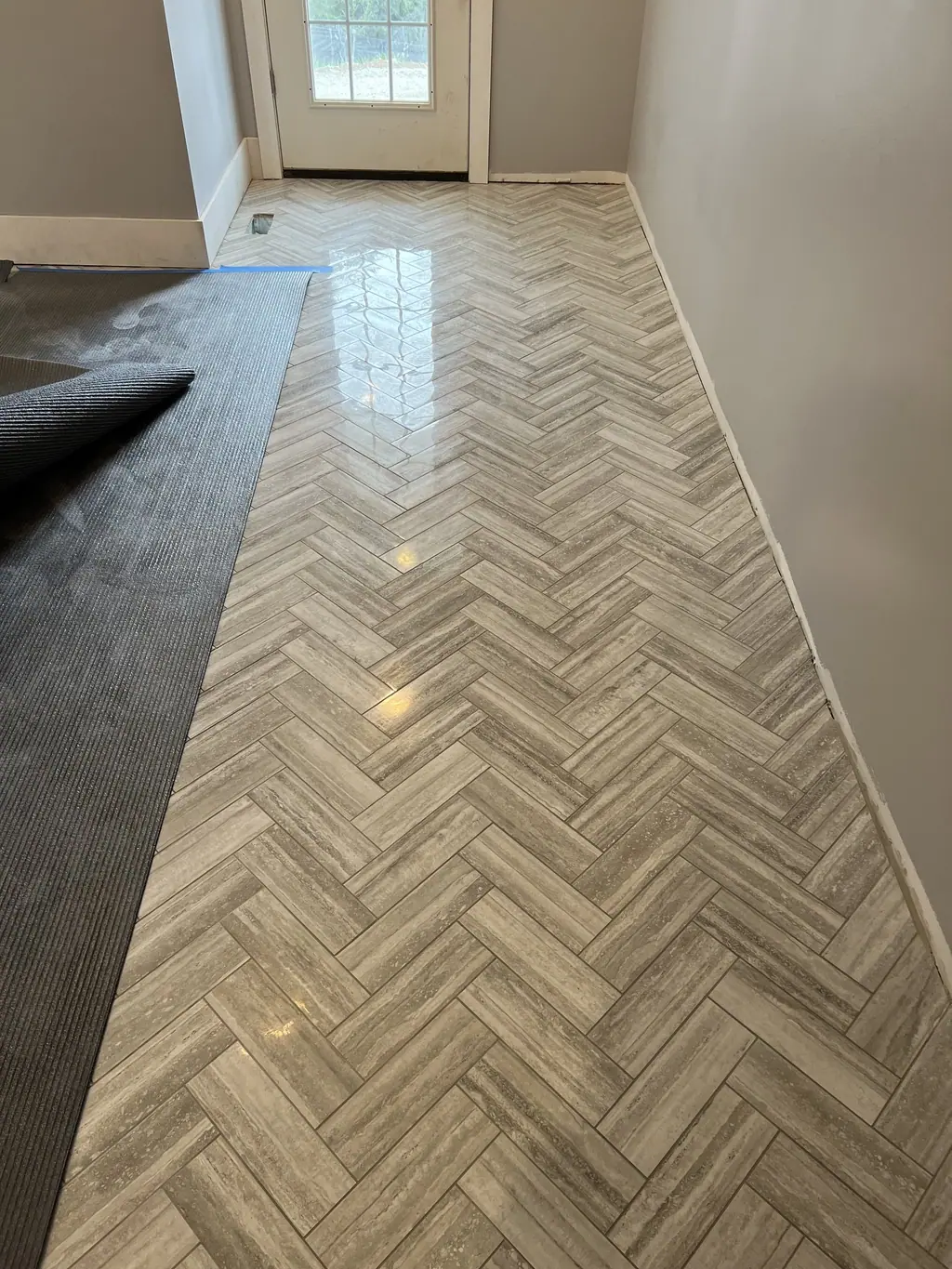
LVP vs. Tile vs. Hardwood: Choosing Floors for a Family Home
How luxury vinyl plank, porcelain tile and hardwood compare on water, wear, comfort and repair, and how to match each one to the rooms in a family home.
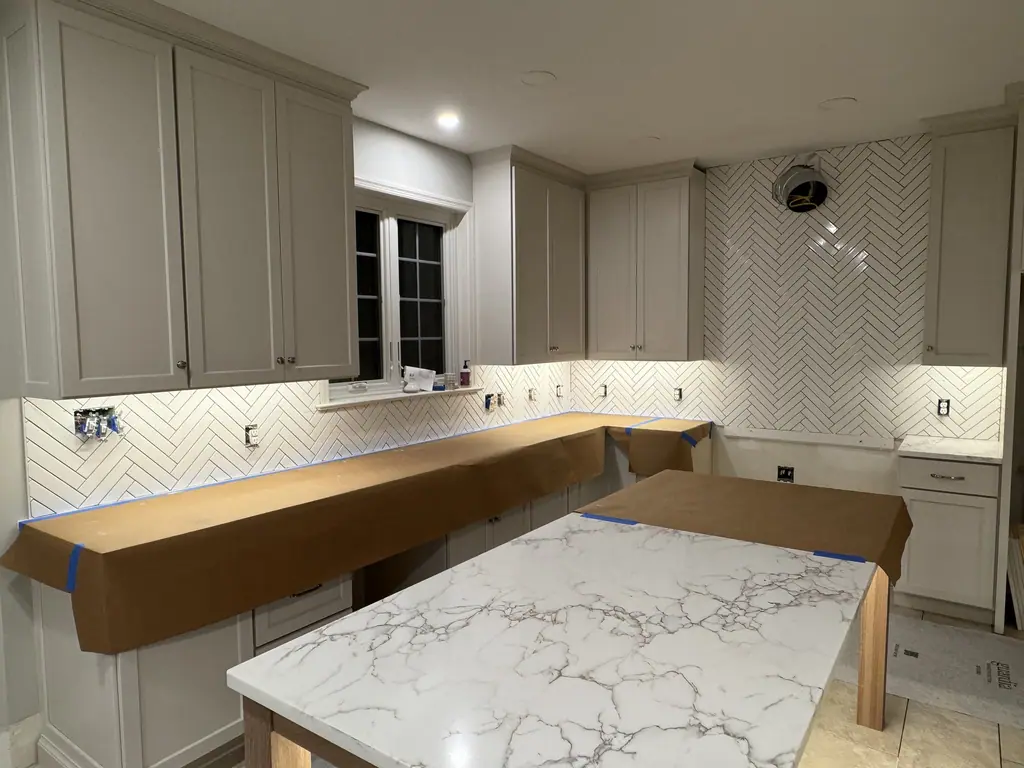
Kitchen Backsplash Ideas for Montgomery County Homes
Subway, herringbone, hexagon and slab-look tile, and how to pick a backsplash that suits the kitchens in King of Prussia's colonials, split-levels and townhomes.
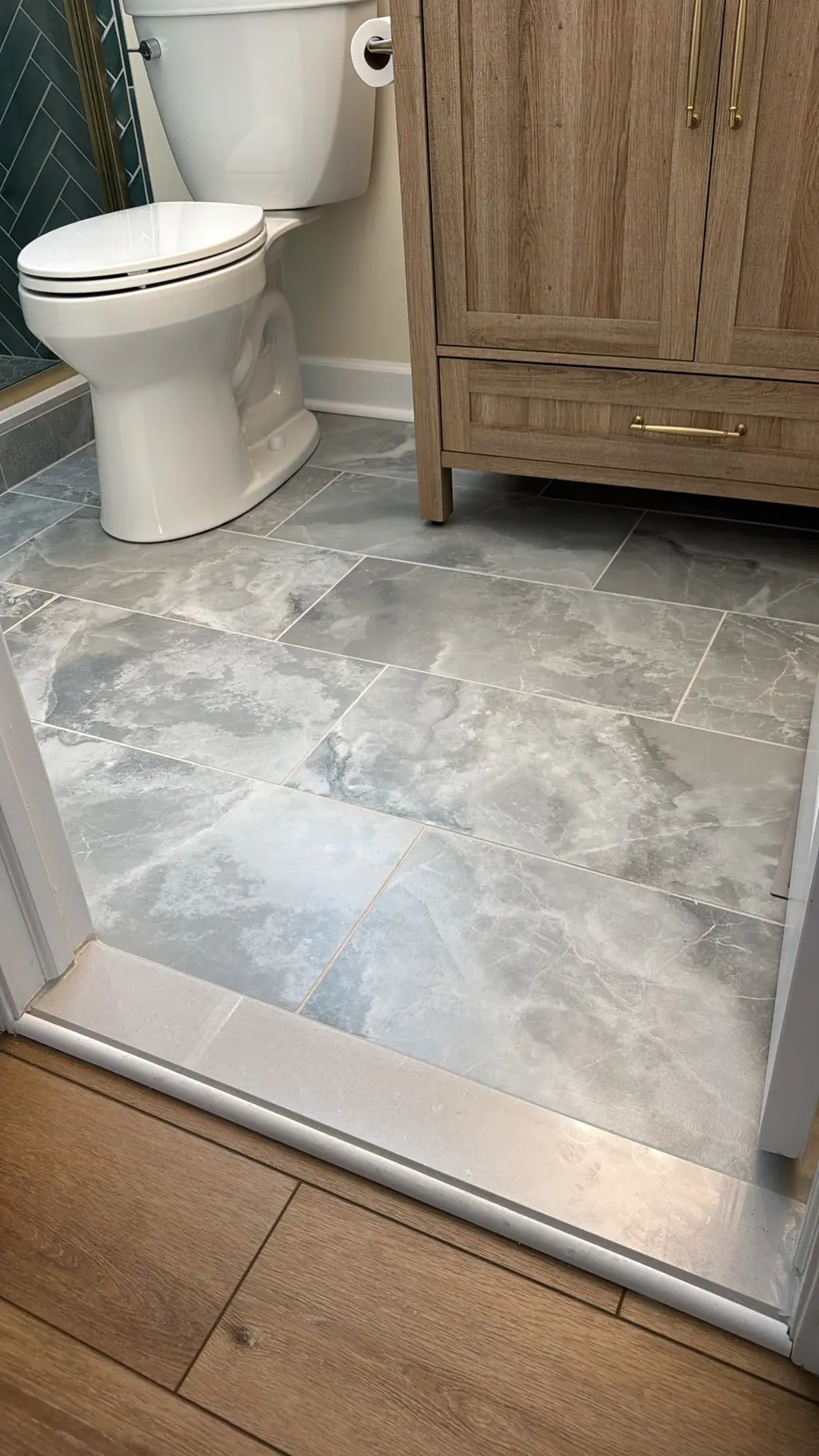
Choosing Tile for High-Moisture Rooms: Porcelain, Ceramic, Stone
A plain-language guide to picking tile for bathrooms, laundry rooms, mudrooms and basements, including what water absorption, PEI and DCOF ratings actually tell you.