
We install stone veneer in King of Prussia homes on interior fireplaces, feature walls and exterior foundation bases. Stone veneer is a smaller part of our work than tile, and our past projects include a stacked-stone fireplace surround. The skills overlap closely with tile setting: a sound substrate, careful layout and clean cuts, with extra attention to how each stone is placed so the finished wall looks natural rather than patterned.
Stone veneer comes in two main types. Manufactured stone is a cast concrete product made to look like fieldstone, ledgestone or stacked stone. Thin natural stone is real stone sawn to a thin profile. Both are lighter than full-bed masonry, so they can go on walls that were never built to carry real stone.
Where stone fits on King of Prussia houses
The split-levels and ranches built across Upper Merion in the 1950s and 1960s often have a family room with a brick fireplace wall, sometimes painted, sometimes a dark red brick that makes the room feel heavy. Covering that brick with stacked stone or ledgestone is one of the most common ways to update the room without rebuilding the fireplace. Brick in sound condition can often serve as the base for the stone, after cleaning and preparation to the manufacturer's requirements.
Outside, many of these homes have an exposed concrete block or parged foundation along the front, below siding. Adding a stone veneer band along the base, or wrapping the columns on a front porch, gives the exterior more depth. Exterior stone is where installation details matter most. The region's freeze-thaw winters will find any place water is trapped behind the stone, so the wall assembly has to let water drain out.
What we handle
Fireplace surrounds
Covering brick or drywall fireplace walls with stacked stone, ledgestone or fieldstone, including the hearth face.
Interior accent walls
Stone on a family room, basement bar or entry wall, installed over cement board or metal lath as the surface requires.
Foundation bases
Stone veneer bands on exposed foundation walls, with a weep screed and drainage behind the stone.
Porch columns and piers
Wrapping existing columns or piers in stone, finished with caps that shed water.
Grouted or dry-stack look
Mortar joints struck to your preference, or tight-fitted stone with no visible joint.
Removal of old veneer
Taking off failed or dated stone and repairing the wall behind it before new work goes on.
How the project runs
Walkthrough & estimate
We look at the wall, check what is behind the surface, and talk through stone profiles and colors. Free estimate.
Stone selection and layout
You choose a product, and we lay stones out on the ground before setting so sizes and colors are mixed evenly across the wall.
Substrate prep
Brick is cleaned, drywall is replaced with cement board where needed, and exterior walls get water-resistive barrier, lath and a scratch coat.
Setting and finishing
Stones are set in mortar, joints are pointed and struck, and edges, caps and trim are finished.
Getting stone veneer right, inside and out
Indoors, the main questions are weight and heat. A painted drywall wall is not a suitable base on its own, and the area around a firebox has clearance and material requirements set by the fireplace manufacturer and code. For a gas insert or a wood-burning fireplace, we check those requirements before choosing the stone and the backing.
Outdoors, the stone is not the waterproofing. Water will get behind any veneer, so the wall needs a water-resistive barrier, corrosion-resistant lath, a weep screed at the bottom and proper clearance above soil and paving. Skipping those steps can trap moisture against the sheathing or foundation. Where stone meets windows, doors and siding, flashing and sealant joints need to be detailed.
Cost depends on the wall area, the product (manufactured stone usually costs less than thin natural stone), the number of corner pieces, and how much prep the wall needs. We quote after seeing the wall. For design ideas, see our post on stone veneer fireplaces.
Areas we cover around King of Prussia
- Gulph Mills
- Bridgeport
- Valley Forge
- Wayne
- Radnor
- Norristown
- Plymouth Meeting
- Conshohocken
- Audubon
Stone Veneer in King of Prussia: FAQ
Can stone veneer go directly over my painted brick fireplace?
Often, but not over the paint as-is. Mortar needs a surface it can bond to, so painted brick is usually cleaned and prepared, or covered with metal lath and a scratch coat first. We look at the brick's condition and follow the stone manufacturer's instructions.
Manufactured or natural thin stone, which is better?
Manufactured stone offers consistent sizing and a wide range of colors at a lower cost. Thin natural stone has more natural variation and color that goes all the way through. Both perform well when installed correctly; the choice usually comes down to look and budget.
Will exterior stone hold up through freeze-thaw winters?
It can, provided water can drain out from behind it. A proper water-resistive barrier, lath, weep screed and clearance above grade are what protect the wall. Installs that skip those details are the ones that tend to have problems.
Does adding stone to my front foundation need a permit?
Exterior veneer work may fall under the Uniform Construction Code depending on its scope and height. We check with Upper Merion Township for your project before starting.
Related reading

Stone Veneer Fireplaces for Chester County Homes
Stone veneer can turn a plain brick or drywall fireplace into a room's focal point. Here is how to choose the stone and what the installation requires.
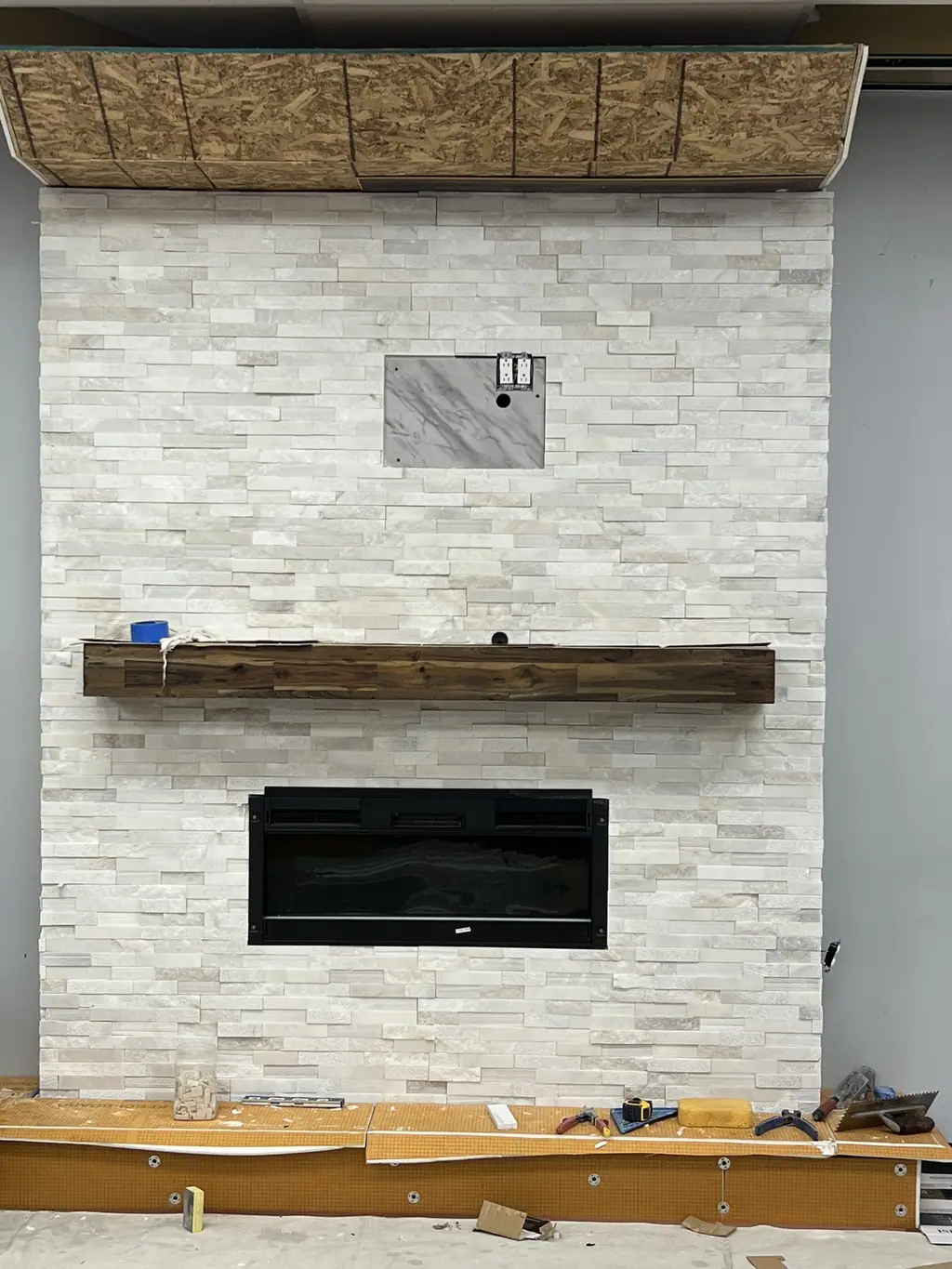
Exterior Stone Veneer on Bucks County Homes: What to Know
Natural or manufactured stone, the drainage layers behind it, and the details that decide whether exterior veneer on a Bucks County house lasts through freeze-thaw winters.
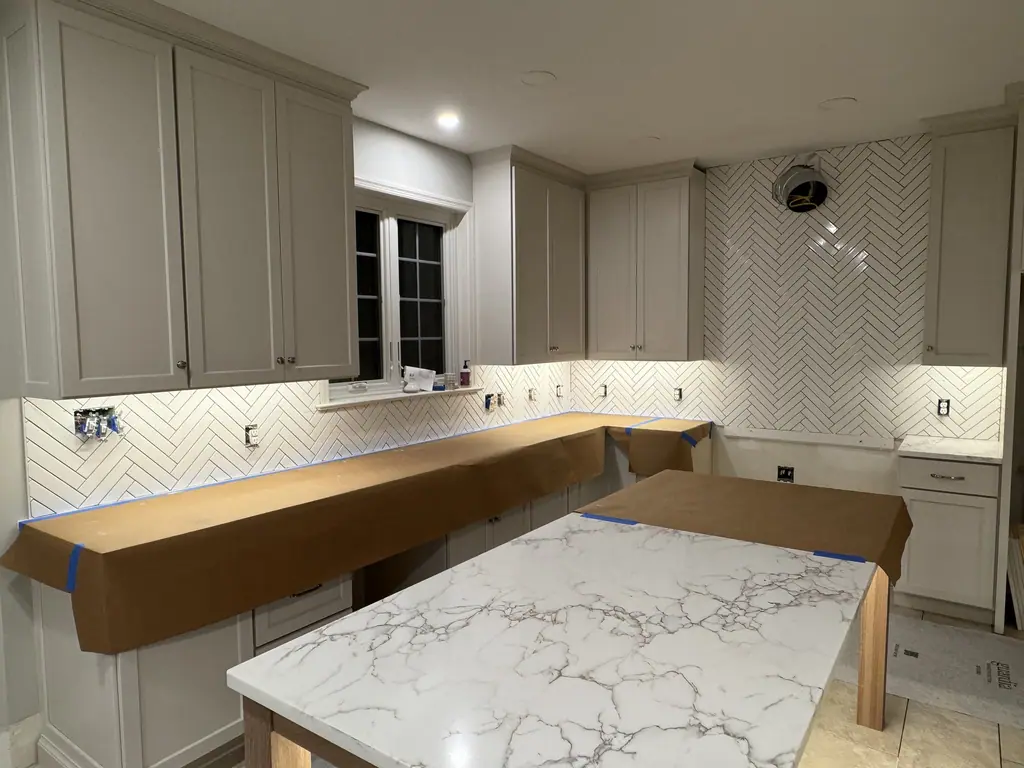
Kitchen Backsplash Ideas for Montgomery County Homes
Subway, herringbone, hexagon and slab-look tile, and how to pick a backsplash that suits the kitchens in King of Prussia's colonials, split-levels and townhomes.